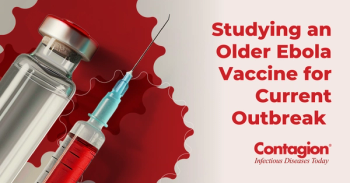
Investigators accessed longitudinal human data from ebola virus vaccination for signals of efficacy against the Bundibugyo species now surging in the Democratic Republic of Congo.
The MRSA infection investigation was halted by the data and safety monitoring board due to concerns over acute kidney injury.
Standard treatment for Methicillin-resistant Staphylococcus aureus (MRSA) infection is not more efficacious than combination therapy, according to new research
Investigators from the Peter Doherty Institute for Infection and Immunity at the University of Melbourne conducted a randomized clinical trial across 27 hospital sites in 4 countries in order to determine if combination therapies would be more effective than standard therapy alone in patients with MRSA infections. The study took place between August 2015 and July 2018, included 352 hospitalized adults with MSRA. Originally, the investigators hoped to enroll 440 patients in the trial. The median age of participants was 64 years and baseline characteristics were similar between the 2 groups.
The patients were split into groups that received either the standard intravenous vancomycin or daptomycin therapy plus an antistaphylococcal β-lactam (intravenous flucloxacillin, cloxacillin, or cefazolin) or the standard therapy alone. The study authors wrote that combining standard therapy plus antibiotics has been associated in other research with reduced mortality, though adequate trials have yet to be conducted.
The investigators were primarily measuring 90-day composite mortality, as well as persistent infection at day 5, microbiological relapse, and microbiological treatment failure. They also measured duration of intravenous antibiotics and acute kidney injury.
By day 90, 35% of combination therapy patients and 39% of standard therapy patients reached composite mortality, the study authors said. And while there was little difference among mortality between the two treatment cohorts, persistent infection at day 5 was less common in the combination therapy group (11%) than in the standard therapy group (20%).
Additionally, patients who received combination therapy were found to have more acute kidney injury (23%) than the patients who received standard therapy (6%). Because of this,
When sent questions about the study via email, Tong pointed Contagion® to his Twitter thread that discussed the findings of the study.
Acute kidney injury was also the most recorded adverse event, appearing in 13 of 174 combination therapy patients and 1 of 178 of the standard therapy patients. There were 5 serious adverse events, including 4 episodes of acute kidney injury and 1 seizure.
“Clinicians now have the latest evidence as to what works and what doesn’t when treating MRSA bloodstream infections, and this trial shows more is not better,” Tong said in a
Given the time to complete the investigation, the study authors wrote in their discussion, they may have been able to demonstrate the composite primary endpoint. However, they admitted, any potential gains in efficacy with combination therapy would be offset by the increased toxicity.
Their research will continue, though, as Australia’s National Health and Medical Research Council awarded a $5 million grant to conduct the Staphylococcus aureus Network Adaptive Platform trial (SNAP), the press release added.
“This grant brings together a global collaboration to conduct the largest ever clinical trial for Staphylococcus aureus bloodstream infections and address common questions around how to best treat these infections for patients all over the world,” Tong concluded in the statement.