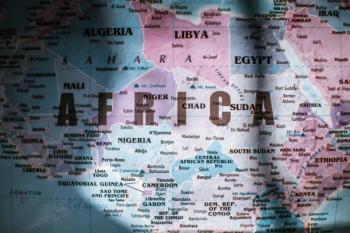
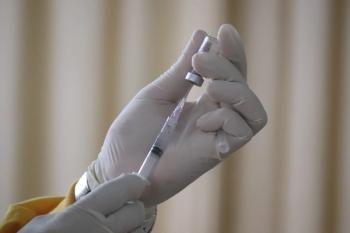
Last week the government of the Democratic Republic of the Congo (DRC) made a formal request to obtain Merck’s Ervebo vaccines from the global Ebola virus disease vaccine stockpile, managed by the International Coordinating Group on Vaccine Provision (ICG). The request for the vaccine was to try to find a way to stem the current Ebola outbreak still raging in the DRC.1
The vaccine has been used successfully in previous outbreaks of Ebola; however, it is not known whether it will have the same utility again this rare strain of Ebola, the Bundibugyo virus. Thus far, early laboratory and animal data suggest it may provide some protection, according to the World Health Organization (WHO).1
The ICG released 70,000 doses, with 20,000 doses going towards a phase 3 clinical trial, and 50,000 doses for frontline health workers.1 The ICG was established in 1997 after major African meningitis outbreaks, and was founded by the International Federation of the Red Cross and Red Crescent Societies, MSF, WHO and UNICEF. Together they coordinate emergency supplies of vaccines and antibiotics to countries facing major outbreaks.1
The trial is expected to provide data, which will help inform policymakers about future use of the vaccine for this strain.1 The Ervebo vaccine was first FDA approved for use in individuals 18 years of age and older in December 2019, and in June 2023, it was expanded to include children 12 months through 18 years of age.2
Current Numbers, DRC’s Challenges
As of August 26, there have been 5,713 confirmed cases and 2,744 related deaths in the DRC. 3 Additionally, 770 patients are currently hospitalized in isolation. These latest numbers represent an increase of 57 new confirmed cases and 29 additional deaths compared from the previous day.3
Although Uganda shares a border with the DRC, government officials in that country recently declared the outbreak over. Gavin Harris, MD, associate medical director, Serious Communicable Diseases Program (SCDP), Emory University, says there are several ongoing challenges with trying to control the outbreak in the DRC.
“The region in which this virus has been spreading is a very unstable region in terms of economics, in terms of culture, and in terms of politics. There is a lot of armed militias that are constantly vying for power and vying for land and territory…so it's very challenging to manage effective emergency responses,” Harris said. “It's difficult to get supplies and much-needed healthcare workers into the region themselves, and there's a great danger to the healthcare workers themselves because of these armed militias, because of the distrust and mistrust there is of not just the healthcare community, but also of the government of the DRC itself.”
Geographically, Harris says there are remote mountainous regions, which adds another difficulty for travel for medical personnel, and in the urban areas, Ebola can spread very quickly.

Learn More About Emory's Serious Communicable Diseases Unit
Through our Media Day series, Emory invited us to discuss their work treating patients with high-consequence infectious disease, such as Ebola.
Learn more about their work here:
Emory Healthcare Media Day
Prevention, Testing, and Treatment
Harris says all 3 phases of clinical care have their own challenges associated with this virus. As previously mentioned, there is no government approved vaccines for this strain. And at this stage, the Ervebo vaccine being deployed is experimental without definitive proof of its efficaciousness.
Harris does caution that vaccine and treatment data needs to be collected in a manner that ensures safety for patients and healthcare workers. The WHO says that the people who are offered the vaccine in the trial and otherwise, receive information of the risks, potential benefits and limitations related to the use of the vaccine are provides with informed consent.
In terms of testing, this strain of Ebola is not picked up on by the current assays being used.
“The current rapid diagnostic testing for Ebola that is largely deployed to this region in Africa does not traditionally detect Bundibugyo virus, nor is it validated to do so,” he said. “And this is the GeneXpert Ebola assay that has been the mainstay of Ebola diagnostics in the field for a long period of time.”
In terms of treatment, a long-standing treatment priority has been what Harris says is “supportive aggressive critical care.”
“Supporting people who may have excessive fluid and electrolyte losses, so ensuring levels of sodium and potassium are adequately replenished, and supporting people who may have oxygen needs, renal failure—supporting the kidneys in these situations is incredibly important.”
“Beginning with the West African outbreak in in 2014, there were some landmark studies, one of which showed that the time to delay from diagnosis and symptom onset to the initiation of supportive treatment unfortunately worsens mortality by at least 11%. So early interventions in terms of this supportive approach are absolutely essential.”
Experimental treatments are being deployed in the current outbreak. Harris says there is a monoclonal antibody cocktail, MBP134, which has been shown to improve survival in non-human primates, and is being employed in the PARTNERS trail in Africa. He says remdesivir, which became well-known during the COVID pandemic, as well as other targeted therapeutics are also being prioritized for treatment.
With all these challenges, Harris expects the outbreak to continue for some time.
Preparedness
Harris believes these outbreaks will continue to happen with increasing frequency marking the need for greater preparation.
“The fact that this is a strain that we don't often see really again means we need to expand our approach in terms of preparedness strategies to a broader look at specific viral families that are at increased risk of causing these outbreaks,” Harris said.
“The second thing is that an international response and an early international response is truly important for containing these outbreaks. We suspect that this virus had been circulating for several weeks, if not months, before it was declared a pandemic of international concern by the World Health Organization. We think that improving and investing in early surveillance and detection strategies—we talked about opportunities for improving our diagnostic approaches—all these investments could assist with early interventions and potentially mitigating these outbreaks at their source.”
In the coming weeks, look for our series around how the US handles cases of Ebola and what measures the country has in place to prevent widespread outbreaks.
References
1. WHO and Africa CDC welcome the allocation of Ebola vaccines to the Democratic Republic of the Congo. WHO press release. August 20, 2026. Accessed August 26, 2026. https://www.who.int/news/item/20-08-2026-who-and-africa-cdc-welcome-the-allocation-of-ebola-vaccines-to-the-democratic-republic-of-the-congo
2. FDA Roundup: July 28, 2023. FDA press release. July 28, 2023. Accessed August 26, 2026.
https://www.fda.gov/news-events/press-announcements/fda-roundup-july-28-2023
3. Ebola Disease Outbreak in the Democratic Republic of the Congo and Uganda. European Center for Disease Prevention and Control. August 27, 2026. Accessed August 27, 2026.
https://www.ecdc.europa.eu/en/ebola-outbreak-democratic-republic-congo-and-uganda