

|Videos|November 16, 2022
Defining SARS-CoV-2 Bivalent Vaccines and Optimizing Protection Through Vaccination
Wendy Wright, DNP, ANP-BC, FNP-BC, FAANP, FAAN, FNAP; Jacinda Abdul-Mutakabbir, PharmD; and Rodney E. Rohde, PhD, MS, SM(ASCP)CM, SVCM, MBCM, FACSc; review what encompasses a bivalent vaccine and give their perspective on how to communicate the role of the vaccine in optimizing protection for patients.
Advertisement
Advertisement
Related to this article
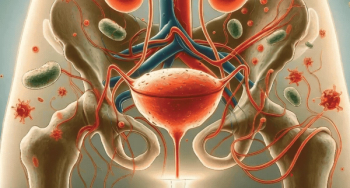
Recent urinary tract infection guideline updates from multiple international
medical societies highlight evolving recommendations, including a major shift
in classification, moving from anatomy- and risk factor–based definitions
toward distinguishing localized from systemic infections.

A study finding clesrovimab comparable to palivizumab in protecting at-risk infants in their first RSV season was extended to demonstrate clesrovimab effective and well-tolerated when administered in their second season.
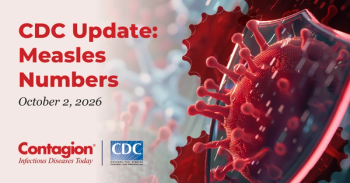
The latest CDC numbers show a 6.2% increase of measles cases from week-to-week. Last week there was a 5.4% increase in cases showing a continuing steady increase dictated by ongoing outbreaks across the US.

Lori Handy, MD, provides guidance in these areas including presentation before rash onset, when patients should be considered for the inpatient setting, and what treatment looks like.

IDSA/ESCMID panel member Henry Chambers, MD, explains why the new S aureus bacteremia guidance replaces the complicated vs uncomplicated label with risk stratification, and how the statements are akin to the stages of cancer in guiding treatment decisions associated with this bacteremia.

Jason Pogue, PharmD, BCPS, BCIDP, contextualizes preliminary data looking at this trial and other extended-spectrum beta-lactamase (ESBL) studies, which reopens the debate around carbapenem-sparing treatment options.

Following World Rabies Day and a CDC health advisory on a 17% rise in exposure-related calls, Rodney E. Rohde, PhD, explains what the increase means, what people should do when they have an animal bite or scratch, and how clinicians should assess risk and administer post-exposure prophylaxis (PEP).

In the phase 3 LIBERTY study, the investigational monoclonal antibody, VYD2311, had significantly fewer adverse events than an mRNA COVID-19 vaccine, and it did not blunt vaccine-induced neutralizing titers when the two were given together.
Advertisement
Advertisement
Trending on Contagion Live
1
Recent Guideline Updates in the Management of Urinary Tract Infections
2
Clinical Considerations for Measles: Presentation, Treatment, and Hospitalization
3
FAQ: Rising Rabies Exposure Calls PEP Decisions Back in Focus
4
Measles Update: October 2, 2026
5