

|Videos|November 10, 2022
Defining Variants of Interest vs Variants of Concern
Expert health professionals share their thoughts on variants of concern vs variants of interest of the SARS-CoV-2 strains as they relate to clinical practice.
Advertisement
Episodes in this series
Rodney Rohde, PhD, MS, SM(ASCP)CM, SVCM, MBCM, FACSc: Madeline, in your work, do you talk about the differences between variants of concern and variants of interest, or that type of information around these strains?
Madeline King, PharmD, BCIDP: That’s a great question. In the clinical setting, if I’m talking to patients, I’m not going to talk about the scientific names of anything. I might mention that the current circulating variant is Omicron or Delta, because people hear those names in the news. In the United States, we’re seeing a lot of the BA.5 variant. There’s a new one that’s starting to stick out its ugly head: the BA.4.6 variant. Based on what I’ve seen, it seems that the current vaccine, the new booster, is going to have some coverage. But we don’t typically use the scientific names in clinical practice. We use them in the science and laboratory areas. But of the variants of interest now, BA.5 is the most prevalent in the United States.
Rodney Rohde, PhD, MS, SM(ASCP)CM, SVCM, MBCM, FACSc: OK, thanks.
Wendy Wright, DNP, ANP-BC, FNP-BC, FAANP, FAAN, FNAP: In my patient population, we talk a lot about the different variants, at least in primary care. Patients are coming in and saying, “Is this the new bivalent vaccine? Is it the one targeting Omicron and its variants?” We talk about it, at least in my practice, because people want to know if they’re getting the vaccine targeting those circulating strains.
We also use the variants to talk about is how genetically different COVID-19 is today from what it was 2½ years ago, making it a little less recognizable by those native vaccines that we gave, which is why it’s so important that our patients get the booster shots that are targeted toward what we’re seeing today. The other thing I love to talk about with them is that they have this impression that Omicron is a mild illness. It may be for some, but it’s so contagious that hospitalization rates are up. Particularly if you’re 0 to 4 years old, your risk of being hospitalized from it is 5 times greater. I want to take that clinical piece from my end back and say that we use this to have a conversation about what we’re seeing so that I can push people to get a vaccine, particularly the boosters that are out.
Rodney Rohde, PhD, MS, SM(ASCP)CM, SVCM, MBCM, FACSc: Yes. Thank you.
Jacinda Abdul-Mutakabbir, PharmD: I’m definitely in agreement with Wendy. We talk about variants of concern and variants of interest. I try to make people stakeholders of these terms because, at the end of the day, they impact all of us. It’s a matter of explaining exactly what they are. But as Wendy stated, it’s important that we reinforce just how serious these variants are and teach the community that a variant of interest is when we see a bit more mutations than we saw previously. It’s something that we aren’t really worried about in terms of COVID-19. At the end of the day, we expect viruses to change a bit.
But when we get to the variants of interest, we’re interested and looking at it. I tell them that this is something they’re going to look for more in laboratory testing. Are they going to continue to see these strains with these same types of mutations? Then I explain that we’re at that point with Omicron. This is a variant of concern because it’s changing how easy the virus can go from person to person. As Wendy and Madeline stated, this is why we have to have these bivalent vaccines, because we’ve gone from a variant of interest to a variant of concern. This is a problem we have to deal with. It’s important that we continue to use these terms and that that we make the folks we talk with stakeholders of what these terms mean and how serious they can be in terms of COVID-19 and how it’s changing.
Transcript edited for clarity
Advertisement
Related to this article
The latest CDC numbers show an 8.1% increase in measles cases from week-to-week, bringing the 2026 US total to 4410 confirmed cases. A CDC disease detective is going to Pennsylvania to aid in the state's massive outbreak, and the agency reports on a rare measles complication that is uniformly fatal.

Serial bloodstream isolates from two critically ill London patients showed heteroresistance, CRZ1 escape mutations, and drug-induced polyploidy despite wild-type FKS1 and susceptible MICs.

Projected disease burden from declining childhood vaccine coverage shows increases in vaccine-preventable diseases. Benjamin Lopman, PhD, provides insights on how VaxImpactMap works and the potential long-term disease consequences of decreased immunization rates.

Approximately 12% of all new cases of cancer worldwide in 2024 were attributable to an infection, with most of the infections preventable or treatable before cancer develops.
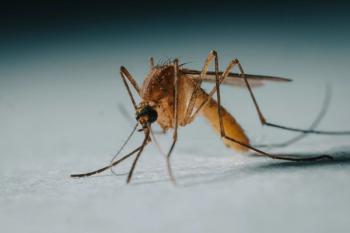
After 2 adults died of West Nile virus in central North Carolina this month, this FAQ explains how the mosquito-borne virus spreads, who faces the greatest risk of severe neuroinvasive disease, and how clinicians can diagnose, manage, and help prevent infection when no vaccine or antiviral treatment exists.

North Carolina health officials confirmed two West Nile virus deaths among adults in the central part of the state, where CDC data show 11 human cases this season.

A 39-year-old unvaccinated Franklin County woman has died after a recent measles diagnosis. Nationally, numbers continue to increase and the US has passed 4,000 cases.

The National Foundation for Infectious Diseases (NFID) recently held its respiratory season kick-off, which included the release of its annual respiratory disease survey. This year, the survey revealed the gap between vaccine support and uptake. Robert Hopkins Jr, MD, medical director of NFID delves deeper into the findings of the survey and the vaccine uptake challenges associated with certain immunizations.
Advertisement
Advertisement