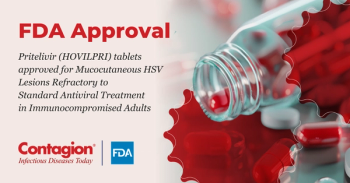
The guidelines issued by the Department of Health and Human Services (HHS) have been updated with recent, evidence-based consensus of The Panel for the Use of Antiretroviral Agents in Adults and Adolescents.
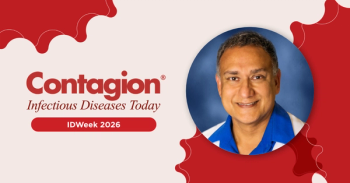
Joanne D. Stekler, MD, MPH, discusses why many Americans still miss HIV diagnosis—and how opt-out screening, rapid tests, self-tests, and same-day treatment close the gap.
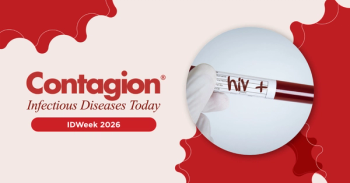
Every year in the United States, tens of thousands of people are diagnosed with HIV without knowing their status—some for months, others for years. The CDC estimates that approximately 13% of people living with HIV in this country remain unaware of their infection,1 a figure that represents not just an individual health crisis but a structural failure of a healthcare system that has had the tools to close this gap for decades.
Undiagnosed HIV is among the most significant drivers of ongoing transmission: people who don't know their status cannot access treatment, cannot make fully informed decisions about prevention for themselves and their partners, and are statistically most likely to transmit the virus to others.2 In the decades since HIV testing became widely available, the field has made remarkable progress, but the final gap has proven stubborn, and the reasons are more systemic than individual.
The testing infrastructure in the US was built, in large part, around risk-based models: clinicians identify
READ MORE>>
The barriers are not primarily technical. Point-of-care testing has improved dramatically, self-testing options have expanded to include both oral fluid and fingerstick formats with FDA approval, and same-day treatment initiation is now feasible in many settings, meaning that a positive result no longer marks the beginning of a prolonged and uncertain wait for care.6 The barriers are clinical culture, workflow design, and the weight of an already overburdened primary care system being asked to add one more item to visits that grow shorter every year. Addressing them requires practical strategies rather than aspirational guidelines—concrete approaches to opt-out framing, patient reluctance, test selection by setting, and warm handoff into care for patients who receive a reactive result in a context where an HIV specialist may not be immediately available.
Joanne Stekler, MD, MPH, is a professor in the Division of Allergy and Infectious Diseases at the University of Washington, where her research has focused on HIV testing implementation, acute HIV diagnosis, and the clinical and structural barriers to routine testing in non-HIV settings. She has studied point-of-care and self-testing modalities extensively and has worked to identify the conditions under which testing programs succeed in reaching populations who would not otherwise be screened.
WATCH NOW>>
In this conversation, conducted as part of Contagion's HIV Awareness Month series—and with National HIV Testing Day on June 27—Stekler addresses the clinical realities of expanding HIV testing beyond ID practice: why routine implementation has lagged despite clear guidelines, how to approach patients who are reluctant or who have never tested despite ongoing risk, how to counsel patients through a preliminary reactive result in an acute care setting, and how to match testing modality to clinical context.
Transcript edited for clarity.
Joanne Stekler, MD, MPH: Both the USPSTF and CDC recommend one-time routine HIV testing for adolescents and adults (with a slight variation in the age range) and more frequent testing for individuals at ongoing risk for HIV acquisition. While we’ve done a great job over the years in identifying most individuals with HIV infection through risk-based testing, the reasons for the recommendation are varied. Some individuals diagnosed with HIV are diagnosed in late-stage HIV, with lower CD4 counts, making it harder for antiretroviral therapy to have as robust a response as it would if started early. And we know that many people diagnosed with HIV had actually sought healthcare (for HIV-related or unrelated reasons) and could have been tested then.
The reasons for the lower than desired uptake are multifactorial and boil down to the fact that providers don’t think their patient populations are at risk and don’t buy into and sell the idea of opt-out testing. And primary care providers are, without a doubt, overburdened by all the things they need to do in shorter and shorter visits, and it’s just one more thing.
Stekler: It depends on whether we’re talking about a preliminary reactive point-of-care test or a test that has had supplemental testing and been confirmed. A preliminary positive should be couched as such: this is an initial result, and it needs confirmation.
No test is 100% specific, which means that there are false positives. But, whether this is a POC test or a confirmed test, I always reassure people that living with HIV infection is very different from what it was in the 1980s. We have one-pill once-a-day regimens that have few adverse effects. People can live full lives. They can have children if that’s something that they want. Most importantly, we want the clinician to be reassuring and also do as warm a hand-off as possible into HIV care. Same-day treatment starts can also be done.
Stekler: It would depend on whether this is a one-time relationship or a primary care setting. It’s helpful to provide some of the same reassurance with a preliminary positive. There’s also the possibility of home self-testing if someone is worried about other people knowing their result. We have both an oral fluid and a fingerstick self-test that are FDA-approved now.
Stekler: Again, it will depend on the context. These tests all have their uses. The best tests are laboratory-based tests. For individuals receiving PrEP and those with a higher likelihood of recent HIV acquisition—and certainly someone with signs or symptoms of acute HIV infection (A.K.A. seroconversion symptoms: fever, rash, sore throat, muscle aches, joint aches, “flu-like” illness, etc)—we want folks to be tested with a blood draw and laboratory-based testing.
POC tests are great for settings where you may not have the ability to contact someone again—ERs, mobile testing—or where you want to reduce the risk of exposure to the worker. We know that people who have a reactive HIV test are more likely to get their results if they’re tested with a POC test confirmed with a laboratory test, and then they could go on to establish care and change behavior to reduce the risks of ongoing transmission to their sex partners.
Self-tests are a great option, particularly as a gateway for folks who have never tested before, folks who are in rural and other settings where access is an issue, and those who fear potential stigma getting a test in a healthcare setting.