|Videos|November 21, 2017

Microbiology Labs Should Be Seen as Integral to Antibiotic Stewardship Efforts

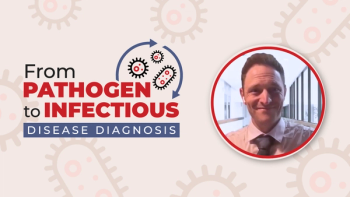
Daniel Diekema, MD, explains why microbiology labs should be seen as an integral part of antimicrobial stewardship efforts.

Daniel Diekema, MD, professor of Infectious Diseases at the University of Iowa, explains why microbiology labs should be seen as an integral part of antimicrobial stewardship efforts.

Interview Transcript (modified slightly for readability):

“I would like it if [clinicians] understood how much the microbiology lab needs to be and wants to be part of the stewardship program at every hospital and part of the infection prevention program. I think that rather than seeing the microbiology lab as being sort of supportive of these missions, the micro lab should really be seen as integral to these missions. And so, they should be at the table when we talk about initiatives to prevent infection and initiatives to improve the way we treat infections.

One good example of the importance of having the lab at the table is the lab might introduce a new method for testing that’s very sensitive, like the Clostridium difficile PCR test. And if the infection prevention program is not aware of that, or involved in some of that decision-making, they will be very surprised to find that suddenly the C. difficile infection rate has increased by 50% to 100%. And so, situations like that, which really require advance planning and preparation, when new tests are introduced, can avoid some of these pitfalls or problems.”


Related to this article

How The Food Safety Surveillance Infrastructure Works in the US
In the first episode of our news series looking at the food safety network, Lynette Johnston, PhD, offers insights into how the federal government surveillance infrastructure operates, and how epidemiologists serve as food detectives in determining bacterial pathogens and potential foodborne outbreaks.
This Week's Top 5 Infectious Disease News Stories: September 12-September 18, 2026
In this week's top infectious disease stories, a Pennsylvania teen became the state's fourth measles death in weeks, the CDC reported a 17% summer surge in rabies exposure calls, new research revisited whether cefepime raises mortality risk, a multihospital review examined ceftriaxone's safety after state alerts, and examining Legionella pneumonia diagnostics.
Ceftriaxone Safety: Separating Signal From Risk
A retrospective multihospital study found that severe adverse events occurred at similarly low rates with ceftriaxone and other IV cephalosporins suggesting there is no evidence to support avoiding ceftriaxone despite recent health department safety alerts.
Treatment of Latent Tuberculosis in a Trice
A retrospective study of 225 patients across Cook County Department of Health clinics found that the novel 1-month 1HP regimen (isoniazid plus rifapentine) for latent TB infection had a completion rate comparable to standard longer regimens and was well tolerated, suggesting it may be a viable shorter alternative.