Outcomes from treating orthopedic infection with debridement and implanted antibiotic were similar whether followed by short or standard duration of systemic antibiotic.
A study conducted at the Salvador Zubirán National Institute of Health Sciences and Nutrition found that there were no cases of active tuberculosis detected in HSCT patients.
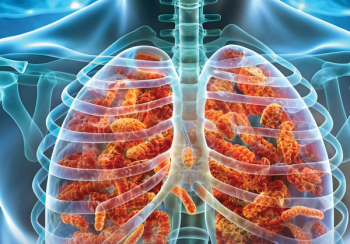
Immunocompromised patients who have received a hematopoietic stem cell transplant (HSCT) have an incidence of active tuberculosis infection that is 10 to 40 times higher than the general population. The elevated risk is also accompanied by higher rates of morbidity and mortality.
In a new study, a team of investigators from Mexico set out to determine the presence and incidence of both latent and active tuberculosis in recipients and donors living in Mexico, a nation where tuberculosis is endemic.
The investigators’ research was fueled by the fact that approximately one-third of the world’s population is affected by latent tuberculosis infection. The findings of the study were presented in a poster presentation at the 2019 Transplantation and Cellular Therapy Meetings of ASTCT and CIBMTR.
For the study, the investigators conducted a retrospective analysis of clinical data from patients who underwent a HSCT between January 2010 and December 2016 at the Salvador Zubirán National Institute of Health Sciences and Nutrition.
In the analysis, the investigators included 200 patients made up of 63 allogeneic-HSCT recipients, 74 autologous-HSCT recipients, and 63 HSCT donors. The median age of the study participants was 36 years (11-68) and 57.5% of the study participants were male (n = 115).
The main baseline diagnosis that led to HSCT in the participants were: acute leukemia in 27.7%, lymphoma in 23.4%, and monoclonal gammopathy in 20.4%. Further, the HSCT was peripheral blood in 83 patients, bone marrow in 21, and primed-bone marrow in 21 patients.
The authors also note that “allo-HSCT donors were matched-related (MRD) in 85.7%, matched unrelated (MUD) in 6.3%, and haploidentical in 9%.”
Prior to the transplant, all patients were evaluated with tuberculin skin tests and chest x-ray. Fifty-four patients had positive skin tests and were evaluated further to rule out active tuberculosis with chest-CTs and smear cultures in either sputum (n = 28), gastric fluid (16), and urine (27), with no positive results.
The study found that rates of latent tuberculosis were 17% in all-HSCT recipients, 24% in auto-HSCT, and 39% in donors.
Patients diagnosed with latent tuberculosis received treatment with 300 mg of isoniazid for at least 6 months. The analysis found that most cases were detected in areas with lower socioeconomic status and related to migration corridors.
“To our knowledge, this is the first study that evaluates the prevalence of LTBI among HSCT recipients in a Latin American country where TB is endemic,” the investigators wrote.
The investigators identified a prevalence of latent tuberculosis infections similar to the estimations of the World Health Organization, however, but did not encounter incidence of active tuberculosis in the study population despite taking place in an endemic country.
The study, “