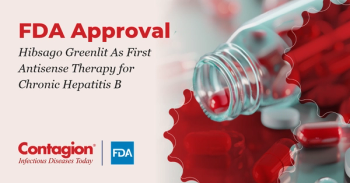
The FDA approved bepirovirsen (Hibsago; GSK) with nucleos(t)ide analogue therapy for chronic hepatitis B, based on B-Well 1 and 2 functional cure rates of 19% vs 0% with placebo.
Emerging evidence suggests that confirming hepatitis C cure at 4 weeks post-treatment could improve patient engagement and reduce barriers to care without compromising accuracy. Meghan D. Morris, PhD, MPH, offers insights around her study on this subject.
The question of when to confirm cure in
This issue is particularly salient for people who inject drugs and others navigating housing instability, stigma, and limited healthcare access. For these individuals, requiring multiple post-treatment visits can create unnecessary barriers to confirming cure. Shortening the confirmation window has the potential to simplify care, reduce patient burden, and strengthen engagement by delivering timely, definitive results. As efforts to eliminate hepatitis C continue, rethinking traditional milestones like SVR12 may be essential to making care more accessible, equitable, and effective in real-world settings.
The study’s senior author, Meghan D. Morris, PhD, MPH, professor of Epidemiology and Biostatistics University of California, San Francisco, spoke with Contagion about their findings and what this means to clinicians and patients.
Contagion: How could shortening the hepatitis C cure confirmation window from 12 weeks to 4 weeks change patient outcomes, particularly for underserved populations?
Morris: Confirming HCV cure sooner matters on multiple levels. Practically, it reduces the number of follow-up visits required, which is significant for people facing housing instability, food insecurity, or other barriers to consistent healthcare engagement. But beyond the logistics, there's something important about being able to tell someone earlier that they are cured. Few medical treatments cure disease. And Hepatitis C carries real stigma, and for people who have struggled to access care, earlier confirmation can strengthen their relationship with the healthcare system and reinforce that treatment was worth pursuing.
In our relatively small sample, every individual with undetectable HCV RNA at SVR4 also achieved cure at 12 weeks, and the one individual with detectable RNA at SVR4 also had detectable RNA at SVR12, giving us 100% positive and negative predictive values in both directions. While these results need to be replicated in larger samples, that level of concordance is encouraging and suggests we may not always need to wait three months to know whether treatment worked. For people who inject drugs and other marginalized populations who are often lost to follow-up before that 12-week window, SVR4 could be the difference between knowing their outcome and never finding out at all.
Contagion: What are the biggest barriers patients face in completing follow-up care for hepatitis C, and how does a "test-and-treat" approach help address them?
Morris:The biggest barrier is navigating a healthcare system that was not designed with marginalized communities in mind. Completing follow-up care requires access to transportation, insurance, time, health literacy, and, critically, a baseline level of trust that the system will treat you with dignity. For people who have experienced stigma, discrimination, or medical mistreatment, that trust is often absent, and understandably so.
The No One Waits model was specifically designed to reduce the number of steps between diagnosis and treatment, from 4 or 5 in the standard algorithm to just 2. We brought care to the community, offered wraparound services, including food and harm-reduction supplies, and worked with staff trained in trauma-informed care. The goal was not to ask people to navigate a system, but to bring the system to where people already were. Adopting earlier endpoints like SVR4 fits naturally into that philosophy: fewer visits, less burden, without sacrificing the quality of care.
There's also a practical restructuring possibility worth considering. Rather than adding a visit, programs could potentially replace the end-of-treatment visit with an SVR4 visit, keeping the total number of contacts the same while capturing a more clinically meaningful endpoint. Community-based models are well-positioned to test whether that kind of restructuring works in practice.
Contagion: Given that earlier studies focused on patients with stable healthcare access, how significant is it that this research validates early cure prediction in real-world, community-based settings?
Morris: I think it's an important contribution, even with the limitations of our sample size. The data supporting SVR4 as a cure milestone came primarily from randomized clinical trials and pharmaceutical development programs, populations that tend to be more medically stable, more consistently engaged with healthcare, and frankly more demographically homogeneous than the people most affected by hepatitis C. In our study, 97% of participants were living below the national poverty line, 55% had slept outside or in a vehicle in the past year, and 83% had injected drugs in the past year. These are the people who need this kind of research most, and they are consistently underrepresented in the data that drives clinical guidelines.
That our findings are consistent with the existing SVR4 literature in this population and community setting is encouraging. It suggests that the simplification of HCV cure confirmation may hold beyond controlled-trial conditions, though larger studies are needed to confirm this with confidence. Building that evidence base is essential if we're serious about HCV elimination.
Contagion: What steps would be needed for clinical guidelines to adopt earlier endpoints like SVR4 as a standard measure of cure?
Morris: I'll be upfront that the regulatory pathway is outside my area of expertise, but I can offer some context. The shift from SVR24 to SVR12 as the standard cure endpoint required the FDA to review substantial evidence that the earlier timepoint reliably predicted long-term outcomes across diverse patient populations and treatment regimens. A similar process would likely apply to broader adoption of SVR4.
What studies like ours can contribute is real-world evidence from populations historically absent from that evidence base, which matters, because guidelines should reflect the people most affected by the disease. Guideline-setting bodies such as AASLD and IDSA have already acknowledged SVR4 as an acceptable alternative endpoint in certain uncomplicated cases. Whether that gets extended more broadly will depend on accumulating larger samples across diverse community settings.
Our data also raises a question worth sitting with: the positive predictive value and negative predictive value at the treatment completion visit for SVR12 were 97% and 100%, respectively. For certain uncomplicated cases, cure confirmation at the end of the treatment course may be sufficient, which would matter most for patients least likely to return for post-treatment visits. That's an avenue worth exploring in future research and, eventually, guideline discussions, though we'd want more data before drawing firm conclusions.