According to a new announcement from Basecamp Research, the company's EDEN biological AI model is now available through Claude Science, Anthropic's AI workbench for life sciences research, enabling researchers to design potent antibiotic candidates and prioritize vaccine targets against emerging pathogens in a matter of minutes rather than months.1 In collaboration with researchers at the University of Pennsylvania, EDEN-designed antibiotic peptides demonstrated activity against 97% of World Health Organization (WHO) priority pathogens tested in the laboratory.
Drug-resistant infections are estimated to play a role in nearly 5 million deaths per year globally, and the pharmaceutical industry has largely retreated from antibiotic development, creating a critical pipeline deficit.1 The WHO's priority pathogen list, which includes carbapenem-resistant Acinetobacter baumannii, extended-spectrum beta-lactamase-producing Enterobacterales, and methicillin-resistant Staphylococcus aureus, represents the organisms most urgently in need of new therapeutic options. Access to last-resort antibiotics remains limited in lower-income countries where resistance is spreading fastest.
"Microbes have been producing antibiotics and evolving resistance to each other for billions of years," said Glen Gowers, co-founder and chief executive officer of Basecamp Research, in a statement.1 "EDEN learned from history, and now, through Claude, researchers all over the world can design successful new antibiotics in minutes, not years."
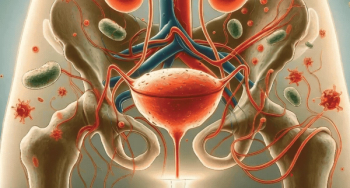
EDEN antibiotic design: lab validation against WHO ESKAPE pathogens including MDR Acinetobacter baumannii
EDEN is trained on BaseData, described by Basecamp Research as the largest biological database currently available, derived from expeditions to more than 200 locations across 30 countries and comprising over 10 billion novel genes.1 The model draws on the diversity of biological evolution across understudied ecosystems, including thermal springs, deep-sea sediments, and polar ice, to generate antibiotic designs not constrained by the narrow set of well-studied organisms on which most biological AI is trained.
In lab testing with the University of Pennsylvania's Machine Biology Group, 97% of EDEN-designed antibiotic peptides were active against WHO priority pathogens.1 One candidate, EDEN-7, was evaluated in a mouse model of infection with multidrug-resistant (MDR) Acinetobacter baumannii—a critical-priority ESKAPE pathogen associated with hospital outbreaks and ventilator-associated pneumonia worldwide—and demonstrated efficacy in the same range as a last-line antibiotic. EDEN-7 was produced zero-shot, meaning the model generated it without subsequent optimization or iterative engineering.
Frequently Asked Questions
What is EDEN and how does it design antibiotics?
EDEN is a biological AI model from Basecamp Research trained on BaseData, the world's largest biological dataset. It generates antibiotic peptide candidates by drawing on evolutionary diversity across understudied organisms, producing active compounds against WHO priority pathogens without requiring iterative optimization.
What pathogen did EDEN-7 show efficacy against?
EDEN-7 demonstrated efficacy in a mouse model of multidrug-resistant Acinetobacter baumannii infection, a critical-priority ESKAPE pathogen associated with hospital outbreaks, ventilator-associated pneumonia, and limited last-resort treatment options, with efficacy in the same range as an existing last-line antibiotic.
How can researchers access EDEN?
EDEN antibiotic design and vaccine target prediction models are now available through Claude Science and Claude.ai via Anthropic's connectors directory, enabling researchers to run antibiotic design and vaccine target prioritization workflows through a conversational interface.

Vaccine target prioritization capability and implications for outbreak response
Beyond antibiotic design, EDEN includes a vaccine target prediction capability, identifying which pathogen proteins are most likely to trigger a protective immune response.1 The model outperformed comparable genomic foundation models on this task. When integrated with Claude Science, researchers can describe a pathogen of concern in natural language and have the model run a prioritization workflow against the pathogen's genetic sequence, compressing several weeks of laboratory-based target identification into a single AI-assisted conversation.
For ID researchers and public health scientists, the vaccine target capability has particular relevance for emerging pathogen response, where the speed of target identification has historically been a bottleneck between pathogen emergence and vaccine candidate generation. The integration with Claude Science means researchers can access both capabilities through a conversational interface without requiring computational biology expertise.1
"This collaboration shows how frontier biological foundation models can be paired with rigorous experimental validation to accelerate antibiotic discovery," said César de la Fuente, PhD, Fleming Prize winner and Presidential Associate Professor at the University of Pennsylvania's Machine Biology Group.1 "Antimicrobial resistance is one of the greatest existential threats facing humanity."
Basecamp Research's data collection operates under informed-consent and benefit-sharing agreements, with each sequence traceable to country-specific collection permits and a portion of revenue flowing back to the communities where biological data was originally sourced. EDEN models are integrated with Claude Science, developed by Anthropic. The EDEN capabilities described in this article are available through Anthropic’s connectors directory.
References
Basecamp Research. Basecamp Research brings EDEN’s antibiotic and vaccine design models to Claude Science. Published June 30, 2026. Accessed July 2026. https://www.prnewswire.com/news-releases/basecamp-research-brings-edens-antibiotic-and-vaccine-design-models-to-claude-science.html
Antimicrobial Resistance Collaborators. Global burden of bacterial antimicrobial resistance in 2019: a systematic analysis. Lancet. 2022;399(10325):629-655. doi:10.1016/S0140-6736(21)02724-0