“Febrile seizures can be frightening, but nearly all children who have a febrile seizure recover quickly. Febrile seizures do not cause any permanent harm and do not have any lasting effects.”1
Guidance for Parents and Caregivers
For families who have a young child who experiences this, Nachman, chief of pediatric infectious diseases at Stony Brook Children's Hospital, offers some guidance.
“They will see arms and legs perhaps shaking at the same time, and with the fever and those arms and legs shaking, the thing to do is just make sure that their child’s head [is] turned to the side and that they are not falling off a bed or falling off any kind of item—they're not in their high chair at the time—and you're protecting their airway. These seizures are quite brief, and oftentimes, they may lose urine at the same time. These are toddlers; they're all wearing diapers, and they may be a little drowsy afterwards. That is not surprising. That's what we see after someone has a seizure. They're a little drowsy, a little confused. That is perfectly OK. It is reasonable to call their child's pediatrician, but it should not mean that they have to go to the emergency room to get a spinal tap or anything like that, because these are febrile seizures, and the correct monitoring of kids with febrile seizures is to keep their fever down.”
She says parents want to consider a medication that will keep the fever down, so Tylenol, Advil, or the generic equivalent of these can help in doing so.
Nachman believes keeping parents informed is very important and sees warning labels as another way to keep people aware of these very rare occurrences.
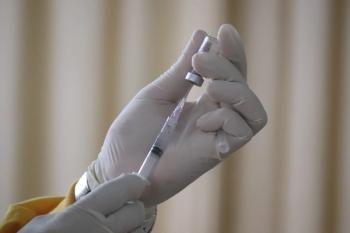
“I think the [vaccine safety] warning is very helpful, because I think it should be part of what we tell parents. ‘Your child will make an immune response to this vaccine. Part of your immune response is to have fever and, with that sudden increase, [the] drop in fever. Your child could have a very brief febrile seizure, which actually has no long-term sequelae. Be warned, and don't be worried,’” Nachman said.
Reference
1. Febrile seizures and vaccines. Centers for Disease Control and Prevention. December 20, 2024. Accessed February 1, 2026. https://www.cdc.gov/vaccine-safety/about/febrile-seizures.html