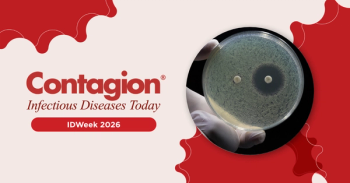
MBL producers rose from 20.4% to 48.6% of US carbapenem-resistant Enterobacterales from 2021 to 2025, while aztreonam-avibactam stayed active against 97.7% of them.
Leonard Sigal, MD, discusses different causes of persisting symptoms after Lyme disease infection.
Leonard Sigal, MD, clinical professor and former chief of the Division of Rheumatology at Robert Wood Johnson UMDNJ Medical School, discusses different causes of persisting symptoms after Lyme disease infection.
Interview Transcript (modified slightly for readability):
“Some patients with Lyme disease who are treated will have ongoing symptoms that don’t resolve or resolve very slowly. And so, for the latter group, you just have to wait; it’s called tincture of time. Just wait, and as long as they’re not getting worse, as long as they’re not showing new symptoms, if things are beginning to quiet down, then you can say to yourself, ‘Okay, this is the course that Lyme disease sometimes follows; we just wait.
If a person, after having antibiotic therapy, develops new manifestations in what you think is Lyme disease, then you have to either assume that they have been re-infected, which is sort of unlikely—not impossible—but unlikely, or what you gave them was insufficient. And then what you do is go back and retreat. Then, the question, of course, is are you treating ongoing Lyme disease, Borrelia burgdorferi infection, or are you treating something else entirely? And that is up to the clinician to decide.”