
News|Videos|March 2, 2026
With Endemic Measles on the Horizon, a Future With Greater Morbidity, Mortality and Healthcare Costs Seem Inevitable
A new modeling analysis shows the potential increases in cases, hospitalizations, deaths, as well as the healthcare costs associated with declining vaccination rates. Patricia Stinchfield, RN, MS, CPNP, offers commentary on the evolving measles outbreaks, discusses the vulnerable populations that are more at risk for contracting severe measles, and strategies to increase vaccination.
Advertisement
Late last week, the Centers for Disease Control and Prevention (CDC) reported there were
And while safe, highly-efficacious measles, mumps, and rubella (MMR) vaccines have been in use for years, the disinformation machine, magnified by the COVID-19 epidemic, has hastened the rate at which more people do not trust vaccines and are choosing to forgo immunizations.
Go to any social media platform to find posts around vaccines and read the comments. You will see common themes like the vaccines are “poison” or that “physicians are profiting from vaccines.” These types of comments are quite often coming from older populations that are themselves vaccinated and you have cognitive dissonance being played out in real time.
Much of this is coming from disinformation and misinformation that is circulating, and damaging our core trust in medical science and public health.
Results from a survey conducted last summer show that although most US adults (82%) would recommend that eligible children in their household receive the MMR vaccine, the percentage has declined significantly since November 2024, when 90% of respondents would recommend the vaccines.2
The Annenberg Public Policy Center of the University of Pennsylvania in Philadelphia conducted the survey, which was done between August 5 to 18, 2025, among nearly 1,700 US adults on a nationally representative panel.2
This is an 8% drop in the span of 9 months, showing how disinformation and misinformation are eroding vaccine confidence.
“Why are our immunization rates so low in the first place? And there's lots of reasons for that. Not as much that has to do with access or affordability or things like that. It has much more to do with the problem of mis- and disinformation and fears that parents have by way of vaccine Information on social media. That is a much bigger problem,” said Patricia Stinchfield, RN, MS, CPNP.
And this could lead to long-term effects both from a human standpoint, but also healthcare. In terms of measles cases, Stinchfield points out some statistics including:
- About 1 in 20 will be hospitalized
- About 1 in 20 will get pneumonia
- About 1 in 1000 will develop encephalitis, which is a brain inflammation, that can lead to blindness, deafness, and permanent neurological problems.
She also points to what she says is “the scariest” complication of measles: subacute sclerosing panencephalitis.
“The virus gets into the nervous system, and this can happen in about 1 in 600 babies, especially those that are less than a year old and get measles. With this virus, over a 7 to 10 year period, it slowly deteriorates their nervous system until they die. It is a fatal outcome of measles. If you're older than a year, it's about 1 in about 1,400 and so this is absolutely not a disease we want to play with,” Stinchfield said.
She says that people who are immunocompromised, pregnant women, and young babies are some of the most vulnerable populations who are at a greater risk for severe disease and complications.
Predicting how bad measles in the US will get is challenging to quantify, but the Yale School of Public Health did a modeling analysis that showed a sustained 1% annual decline in MMR vaccine coverage could lead to more than 17,000 measles cases, 4,000 hospitalizations, and 36 preventable deaths each year. In addition, this could lead to billions of dollars to the US health system and economy by 2030. The analysis predicts that over the next 5 years, declining measles vaccination rates could cost $1.5 billion annually and add approximately $7.8 billion in cumulative costs.3
Stinchfield says clinicians need to have open discussions with parents and finding out why they are choosing not to get their kids vaccinated.
“Maybe they are just confused…Those visits take time to listen; to try to tease out what the actual problem is. Maybe they still have the old trope in their mind that the measles, mumps, rubella vaccine causes autism. So, you want to be ready to talk about that.”
Stinchfield mentions a new organization,
“They probably had measles,” Stinchfield said. “They can tell you what it feels like. They remember having siblings who maybe died of measles. And so those voices really need to be much more present. I think this new group Grandparents for Vaccines, is doing a good job of telling those stories, because people whose children got measles are not really wanting to step up and say, ‘you know, I made a mistake, or I wish I hadn't done that.’ But the parents that I've talked to in the hospital who chose not to vaccinate, and now are looking at their child in an ICU bed, they basically wonder why they skipped the MMR vaccine, and they have significant regret that they did that.”
*It is important to note that the CDC says on its website that the federal agency is aware of probable measles cases being reported by jurisdictions. However, the data on this page only include confirmed cases that jurisdictions notified the CDC about. Therefore, there could be higher numbers in the US overall.
References
1.Measles Cases and Outbreaks. CDC. February 27, 2026. Accessed March 2, 2026.
https://www.cdc.gov/measles/data-research/index.html
2.Public not highly knowledgeable about safety of MMR vaccine or risks of getting measles. Annenberg Public Policy Center. October 30, 2025. Accessed March 2, 2026. https://www.annenbergpublicpolicycenter.org/public-not-highly-knowledgeable-about-safety-of-mmr-vaccine-or-risks-of-getting-measles/
3. More Illness, Greater Cost Spotlight Brief: Childhood Immunizations. Common Health Coalition. Accessed March 2, 2026.
chrome-extension://efaidnbmnnnibpcajpcglclefindmkaj/https://commonhealthcoalition.org/wp-content/uploads/2026/02/SpotlightBrief_ChildImms.pdf
Advertisement
Related to this article

Projected disease burden from declining childhood vaccine coverage shows increases in vaccine-preventable diseases. Benjamin Lopman, PhD, provides insights on how VaxImpactMap works and the potential long-term disease consequences of decreased immunization rates.
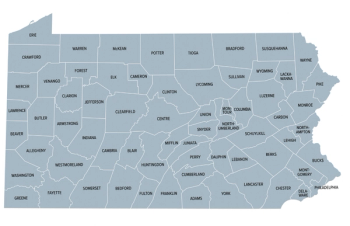
A 39-year-old unvaccinated Franklin County woman has died after a recent measles diagnosis. Nationally, numbers continue to increase and the US has passed 4,000 cases.
The latest CDC numbers show a 5.0% increase of measles cases from week-to-week. The US total reached 4080 confirmed cases, 78% above all of 2025.
With US measles cases nearing 3,900 this year and Pennsylvania reporting its fifth measles-related death, here is a review of how the virus spreads, how it is prevented and managed, and what severe disease looks like.
The latest CDC numbers show an 8.1% increase in measles cases from week-to-week, bringing the 2026 US total to 4410 confirmed cases. A CDC disease detective is going to Pennsylvania to aid in the state's massive outbreak, and the agency reports on a rare measles complication that is uniformly fatal.

The National Foundation for Infectious Diseases (NFID) recently held its respiratory season kick-off, which included the release of its annual respiratory disease survey. This year, the survey revealed the gap between vaccine support and uptake. Robert Hopkins Jr, MD, medical director of NFID delves deeper into the findings of the survey and the vaccine uptake challenges associated with certain immunizations.
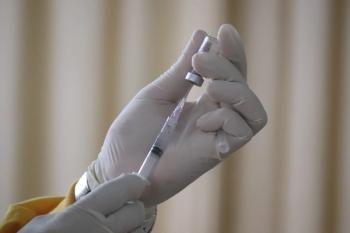
Vaxcyte's 31-valent pneumococcal conjugate vaccine candidate met every prespecified primary immunogenicity and safety endpoint against PCV20 and PCV21 in the OPUS-1 trial of 4,047 US adults.
The latest CDC numbers show a 6.2% increase of measles cases from week-to-week. Last week there was a 5.4% increase in cases showing a continuing steady increase dictated by ongoing outbreaks across the US.
Advertisement
Advertisement