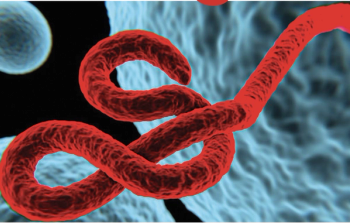
As the Bundibugyo virus outbreak in the Democratic Republic of the Congo surpasses 9300 confirmed cases and 4400 deaths, this FAQ explains how the virus spreads, how it presents, why it is hard to diagnose and treat, which vaccines and therapies are being tested, and why CDC considers the risk to the United States low.
As of October 15, CDC reports 9235 confirmed cases and 4444 deaths in the Bundibugyo virus Ebola outbreak in the DRC, now the second-largest on record.
Karen B. Jacobson, MD, MPH, of Kaiser Permanente Northern California, presented data at IDWeek 2026 showing 58.2% of children younger than five years exposed to active hepatitis B in the home were exposed by someone other than their birth mother, a risk maternal screening alone would miss under the CDC’s revised birth dose recommendation.
In the phase 3b ENCORE trial, adding amikacin liposome inhalation suspension (ALIS) to azithromycin and ethambutol significantly improved culture conversion in newly diagnosed MAC lung disease, while treatment-emergent amikacin (2.2%) and macrolide (1.1%) resistance stayed rare. Kevin Winthrop, MD, provides insights around the study.
The FDA approved bepirovirsen (Hibsago; GSK) with nucleos(t)ide analogue therapy for chronic hepatitis B, based on B-Well 1 and 2 functional cure rates of 19% vs 0% with placebo.
Projected disease burden from declining childhood vaccine coverage shows increases in vaccine-preventable diseases. Benjamin Lopman, PhD, provides insights on how VaxImpactMap works and the potential long-term disease consequences of decreased immunization rates.