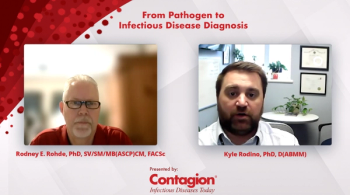
Rodney E. Rohde, PhD, SV/SM/MB(ASCP)CM, FACSc, offers some insights on the latest diagnostics, susceptibility testing for newer antimicrobials, and how infectious disease clinicians and laboratory professionals can collaborate on challenging cases.

Rodney E. Rohde, PhD, SV/SM/MB(ASCP)CM, FACSc, offers some insights on the latest diagnostics, susceptibility testing for newer antimicrobials, and how infectious disease clinicians and laboratory professionals can collaborate on challenging cases.

Panelists discuss the pivotal role of microbiology laboratories and rapid diagnostic technologies in managing multidrug-resistant infections, highlighting their impact on timely treatment, antibiotic stewardship, and the need for interdisciplinary collaboration to effectively interpret and act on resistance data.

Panelists discuss emerging therapies for multidrug-resistant Gram-negative pathogens, focusing on the rising threat of antimicrobial resistance, evolving resistance mechanisms like extended-spectrum β-lactamases (ESBLs) and New Delhi metallo-β-lactamases (NDMs), regional variability in pathogen prevalence, and the clinical implications for treatment in inpatient and outpatient settings.

Jacinda Abdul-Mutakabbir, PharmD, MPH, provides insights on her recently published study on this topic and how the 2 are connected.

Pranita Tamma, MD, MHS, continues her conversation about a study she was involved in that compared ceftolozane-tazobactam and ceftazidime-avibactam. She discusses how an analysis of infection source and treatment patterns found no evidence that combination therapy improves outcomes in patients with drug-resistant Pseudomonas, consistent with prior studies and clinical trials.

In the second interview segment with leaders from UNC's Special Pathogen Center, they discuss what it is like to be in the field during an outbreak caring for patients with high-consequence infectious diseases, and offer insights on how well prepared the US is for these situations.

David Margolis, MD discusses his team’s work at UNC looking at combination treatment that includes the cancer drug, vorinostat, and immunotherapy as a potential HIV cure.

This becomes the first state in the United States to do so, and of course, this decision will affect the childhood vaccine schedule in Florida. Infectious Diseases Society of America (IDSA) President, Tina Tan, MD, weighs in on this decision and what this could mean for an increase of vaccine-preventable diseases and who would be vulnerable to them.

Pranita Tamma, MD, MHS, continues her conversation about a study she was involved in that compared ceftolozane-tazobactam and ceftazidime-avibactam. She discusses how clinicians can help reduce the emergence of antimicrobial resistance by using higher doses with extended infusions, limiting treatment duration, ensuring source control, and avoiding unnecessary dose reductions during CRRT.

Joseph Eron, MD, provides insights on the unit's international reach as well as some of the important trials it has been involved in, notably the PURPOSE studies involving the landmark trials about lenacapavir for HIV prevention.

Leaders from the UNC Special Pathogens Response Center discuss how they plan and carry out biopreparedness trainings to address transport and care of patients with high-consequence infectious diseases, such as Ebola or Lassa fever.

Allergist and immunologist Juanita Mora, MD, urges vaccination, masking, and outreach to safeguard vulnerable communities.

In the second episode of Allegheny Health Network’s (AHN) Media Day, Cassandra Oehler, MD, provides insights on HIV care at AHN's Positive Health Clinic (PHC), including the comprehensive services they offer and how they are involved in clinical trials using long-acting injectables.

Pranita Tamma, MD, MHS, continues her conversation about a study she was involved in that compared ceftolozane-tazobactam and ceftazidime-avibactam. She discusses the usage of inverse probability weighting with propensity scores to balance patient groups and limit bias.

As virus season begins, Leilani Valdes, MD, MBA, FCAP, highlights the lab’s role in early detection and the importance of informed, respectful dialogue on vaccines.

Ep 2, Part 2 of 4, Robert Bransfield, MD, discusses how microbes may influence violent behavior and global instability through biological and environmental pathways.

Jose Alexander, MD, offers insights on these antimicrobial combinations when treating against this bacterium.

Pathologist Leilani Valdes, MD, MBA, FCAP, explains the role of PCR testing, early surveillance, and vaccine education in protecting community health.

Sharon Nachman, MD, breaks down the latest on Stratus and Nimbus variants and what families should consider as schools resume.

Emily Olsen, PhD, offers some insights on this underdiagnosed infection, including describing antimicrobial studies, particularly in biofilm and intracellular environments. Her findings look to create a standardized approach for treating all forms of the different presentations of bartonellosis.

Athena Hobbs, PharmD, BCIDP, looked at this issue through the lens of treating urinary tract infections.

Pediatric infectious disease expert Sharon Nachman, MD, explains how to identify symptoms, assess travel risk, and prevent mosquito-borne illness in kids.

Results from a recent study comparing ceftolozane-tazobactam and ceftazidime-avibactam for difficult-to-treat Pseudomonas aeruginosa infections found no statistically significant difference in resistance emergence but a surprising numerical trend favoring ceftazidime-avibactam. Pranita Tamma, MD, MHS, continues her conversation about this topic.

Sara Keely Schultz, MD, offers some insights on the Temple infectious disease fellowship and what sets the program apart from others.

In part 2 of the conversation, David Relman, MD, discusses the importance of the research and medical communities in shaping future work in this area as well as the potential severe consequences of Mirror Life in a worse case scenario.

David Relman, MD, discusses the theoretical issues of "mirror life," how the scientific community could potentially research natural chirality synthetic life, and how mirror molecules may be a way to extract beneficial research from the concept.

Heather Clauss, MD, explains why Temple hires many of its fellows into full-time positions, why it is important for young providers to seek out mentors, and some strategies in learning how to navigate careers early-on.

Epidemiologist Anders Peter Hviid leads research reassuring vaccine safety across autoimmune, allergic, and neurodevelopmental disorders.

Aaron Mishkin, MD, discusses the prolific transplantation department at Temple University and how the infectious disease team, including the fellows, supports these lifesaving procedures.

Raven Boone, DO, discusses her experience in the Temple University fellowship program and what she is exposed to in terms of cases and learning opportunities.