

Why ceftobiprole gains traction: infusion data and lab susceptibility reports help clinicians tackle stubborn Staph aureus bacteremia.
Why ceftobiprole gains traction: infusion data and lab susceptibility reports help clinicians tackle stubborn Staph aureus bacteremia.

While Americans are being affected by Ebola and Hantavirus, the federal government has made concerted efforts to decrease biopreparedness programs, including reducing funding, and downsizing personnel who study and address high-consequence infectious diseases (HCID). Despite these efforts, the US has had protocols, infrastructure, and medical personnel in place to deal with these current situations.
ERADICATE trial data show ceftobiprole is well-tolerated with mostly mild GI effects and no emerging resistance versus daptomycin.
The American Society for Microbiology (ASM) is leveraging its new phage therapy coordination efforts to connect researchers and clinicians, standardize approaches, and explore how bacteriophages could complement antibiotics in the fight against antimicrobial resistance. Colleen Kraft, MD, offers some insights on the organization's plans to help grow this medical modality.
A new multiplex blood-screening assay is streamlining transfusion safety by enabling simultaneous detection and discrimination of HIV, HBV, HCV, and hepatitis E in a single test, helping laboratories improve efficiency, reduce turnaround times, and strengthen blood supply resilience amid ongoing donation and staffing shortages. Nico Michel, PhD, of Roche Diagnostics, offers insights on this diagnostic.
A novel antimicrobial susceptibility testing platform, ATB Finder, is designed to improve treatment outcomes by evaluating antibiotics under conditions that closely mirror the infection site and microbial communities found in patients. George Tetz, MD, PhD, offers insights on this platform.

The FDA's accelerated approval of this therapy provides the first approved treatment option for chronic hepatitis delta in the US. Anu Osinusi, MD, discusses how this targeted therapy is designed to slow disease progression and improve patient outcomes.

Kelly Oakeson, PhD, explains how Utah public health officials are leveraging a statewide wastewater surveillance system to monitor measles activity, identify emerging outbreaks, and supplement traditional case reporting.
FDA- and EMA-approved ceftobiprole matches daptomycin outcomes, offering a new beta-lactam option for MRSA bloodstream infections.
Inside the ERADICATE study: ceftobiprole matches daptomycin for complicated MRSA/MSSA bloodstream infections, expanding treatment options.
In the second episode with Emory’s Gavin Harris, MD, he offers some insights about treating patients with the Andes virus, including supportive care as well as investigational antivirals.
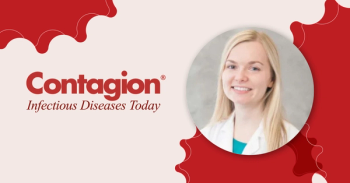
Incoming SIDP President Lisa Dumkow, PharmD, FIDP, BCIDP, highlighted plans to expand mentorship, strengthen research collaboration, and move the organization's initiatives forward. She also offered insights into the new combined MAD-ID/SIDP meeting.
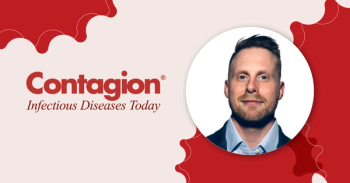
At the MAD-ID and SIDP 2026 annual meeting, Zachary Nelson, PharmD, MPH, BCIDP, discussed how urine-specific breakpoints can improve treatment decisions for urinary tract infections by accounting for drug concentrations in the urinary tract rather than relying solely on traditional blood-level interpretations.
Emory’s Gavin Harris, MD, discusses how getting patients this type of treatment is essential to reducing the severity of disease, as well as adapting the four “I’s” algorithm in dealing with high-consequence infectious disease outbreaks.
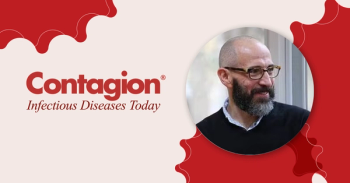
In the second episode of our conversation with David Wohl, MD, with the Institute for Global Health and Infectious Diseases at the UNC School of Medicine, he discusses the person-to person transmission, if we expect to see more cases and how it presents, including a serious complication of the virus.
Staph aureus bloodstream infections remain deadly worldwide; vancomycin and daptomycin anchor MRSA bacteremia care, but dosing complexity, toxicity, and resistance persist.
David Wohl, MD, with the Institute for Global Health and Infectious Diseases at the UNC School of Medicine, provides information on this strain, the quarantine protocols, and what the public should know about when the virus sheds and transmissibility of the disease to others.

People with substance use disorder (SUD) face a disproportionate burden of hepatitis infections, underscoring the importance of testing, vaccination, and access to curative treatment during Viral Hepatitis Awareness Month. Stephanie Spivack, MD, offers some insights on the disease burden for this patient population as well as the challenging aspects of getting them into care.
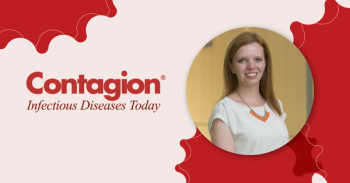
Emily Heil, PharmD, MS, FIDP, BCIDP, AAHIVP, discussed the growing prevalence of metallo-β-lactamase–producing organisms in the United States and highlighted emerging therapeutic strategies designed to overcome increasingly complex antimicrobial resistance mechanisms.
Preclinical in vitro and animal models remain essential for establishing antibiotic pharmacokinetic and pharmacodynamic targets, but experts say translating those findings into real-world patient care requires careful consideration of host factors, tissue penetration, and clinical context.
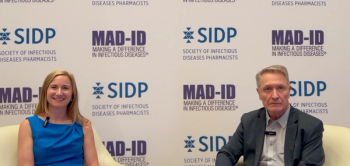
Leaders from SIDP and MAD-ID highlighted their new partnership and announced the launch of the Antimicrobials meeting in 2027, focused on combining cutting-edge science with clinical antimicrobial practice.
Meera Mehta, PharmD, says OPAT programs should move away from a “one-size-fits-all” monitoring model and instead tailor laboratory follow-ups based on patient risk factors, antimicrobial toxicity, and quality-of-life considerations.
SIDP President Erin McCreary, PharmD, BCIDP, FIDSA, explains how the new partnership between SIDP and MAD-ID brings together organizations with shared leadership and values to create a more accessible, collaborative meeting space for infectious diseases pharmacists and related specialties.
David Ha, PharmD, offers insights on how to build out a successful practice-based research project, including developing a strong research question, understanding IRB requirements early, and leveraging reliable institutional data sources and collaborations.
In the second installment of our interview with Andrew Handel, MD, he provides insights on Lyme Disease treatment in the pediatric population.
Stephanie Spivack, MD, discusses an upcoming healthcare provider symposium that will provide education around treating novel infections for patients with substance use disorder (SUD).
Despite longstanding antibiotics like vancomycin and daptomycin, complicated Staphylococcus aureus infections—particularly MRSA—remain difficult to treat due to toxicity concerns, dosing complexity, and emerging resistance.

The University of Nebraska's Mark Rupp, MD, weighs in on his institution's facilities where passengers are being housed during the quarantine protocol, insights on how they are monitored, and their current medical conditions.
With spring here and tick bites on the rise, Andrew Handel, MD, provides tips on prevention as well as when to consider medical care for a bite.
Luis A. Marcos, MD, who has treated a patient with hantavirus, provides insights around the Andes virus, which is the species involved in the ongoing outbreak cluster on the cruise ship, as well as its transmissibility and treatment.