What You Need to Know
Pennsylvania is experiencing its worst measles outbreak in more than 3 decades, with 693 cases across 38 counties and 4 deaths (an 18-year-old, a 40-year-old woman, and 2 infants)—the state's first measles deaths since 1991.
The 18-year-old's death was linked to acute disseminated encephalomyelitis (ADEM), a rare but often fatal measles complication that mostly affects children over 4 years and typically strikes days to weeks after infection.
Because infants can't get their first MMR dose until around 1 year, they depend on community herd immunity (roughly 95% vaccination coverage) for protection, making the outbreak especially dangerous for the youngest residents.
This fourth measles-related death in just the last few weeks marks the first time since 1991 that there have been measles-related deaths in Pennsylvania. In 2025, there were 3 reported measles-related deaths across the United States, though none occurred in Pennsylvania.
Pennsylvania is in the throes of its worst measles outbreak in decades. As of September 15, 2026, the state’s Department of Health reported 693 cases in 38 of the 67 counties. In late August, the state reported 393 cases across 28 counties, representing a 300-case increase in just a few weeks.
What Is Acute Disseminated Encephalomyelitis (ADEM)?
This complication is rare, occurring in 1 of every 1000 cases, and mostly in children over the age of 4 years. The disease onset is acute and usually occurs within days to weeks after measles and is often fatal.2
Symptoms of ADEM usually follow a viral or bacterial infection but vary in severity based on where the inflammation occurs. These symptoms can include fever, headache, nausea or vomiting, confusion, and fatigue. Additional neurological symptoms may include numbness or a tingling sensation in the arms and legs, difficulty swallowing, optic neuritis, muscle weakness, difficulty walking, and seizures.
Herd Immunity Offers Community Protection
Within the last few weeks, Pennsylvania health officials reported 2 measles-related deaths in babies. One was a newborn who died shortly after birth, and the other was a 6-week-old infant.
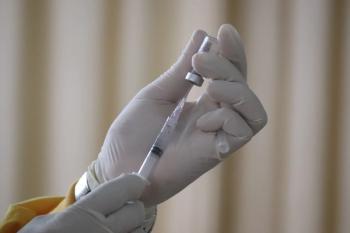
Typically, the first dose of the MMR vaccine is not administered until a child is approximately 1 year old. This means neonates and young babies need external protection from the local community, which is achieved in particular through herd immunity conferred by vaccinated people. Without herd immunity, those who are not vaccinated are vulnerable to measles. To achieve herd immunity in local communities, the MMR vaccine rate needs to be approximately 95% of the population.
2. Griffin, DE. Measles virus and the nervous system. In: Tselis AC, Booss J, eds. Handbook of Clinical Neurology. 2014;123:577-590. Elsevier BV. doi:10.1016/B978-0-444-53488-0.00027-4