
News|Articles|October 23, 2026
Measles Update: October 23, 2026
Author(s)Matt Hoffman
The latest CDC numbers show a 4.0% increase in measles cases from week-to-week, bringing the 2026 US total to 4588 confirmed cases. Ninety-six percent of cases are outbreak-associated.
Advertisement
Today, the Centers for Disease Control and Prevention (CDC) reported there were 4588*
The increase is smaller than last week's 8.1% rise, when CDC added 330 cases.2 The 2026 total is now roughly double the 2289 cases reported for all of 2025.1
CDC said there were 4570 measles cases reported by 47 jurisdictions: Alabama, Alaska, Arizona, California, Colorado, Connecticut, Delaware, District of Columbia, Florida, Georgia, Idaho, Illinois, Indiana, Iowa, Kansas, Kentucky, Louisiana, Maine, Maryland, Massachusetts, Michigan, Minnesota, Missouri, Montana, Nebraska, New Jersey, New Mexico, New York City, New York State, North Carolina, North Dakota, Ohio, Oklahoma, Oregon, Pennsylvania, Rhode Island, South Carolina, South Dakota, Tennessee, Texas, Utah, Vermont, Virginia, Washington, West Virginia, Wisconsin, and Wyoming. A total of 18 measles cases were reported among international visitors to the United States.1
The federal agency reports there have been 43 new outbreaks** reported in 2026, and 96% of confirmed cases (4404 of 4588) are outbreak-associated (3020 from outbreaks starting in 2026 and 1384 from outbreaks starting in 2025).1 One new outbreak was added since last week.2
Hospitalizations and Age Distribution in 2026 Measles Cases
CDC reported 479 hospitalizations among the 4588 cases, or 10%.1 Last week, the agency reported 451 hospitalizations, which means 28 more patients were hospitalized week-over-week.2
Hospitalization rates varied by age. Children younger than 5 years had a rate of 16% (119 of 766), and adults 20 years and older had a rate of 14% (268 of 1881).1 Those aged 5 to 19 years had a rate of 5% (91 of 1914).1
People younger than 20 years account for 58% of cases (2680 of 4588).1 Adults 20 years and older make up 41% (1881 cases), and the age of 27 cases is unknown.1
Vaccination Status and Coverage Trends
Ninety-six percent of 2026 patients were unvaccinated or had unknown vaccination status, while 2% had received 1 MMR dose and 2% had received 2 doses.1 CDC lists 3 measles deaths in 2026, a number the agency says is subject to change as reviews are completed.1
Kindergarten MMR coverage has fallen from 95.2% in the 2019-2020 school year to 92.4% in 2025-2026, leaving approximately 280,000 kindergartners at risk.1 CDC is also working with the Council of State and Territorial Epidemiologists to develop a standardized case definition for measles deaths.1
*It is important to note that the CDC says on its website that the federal agency is aware of probable measles cases being reported by jurisdictions. However, the data on this page only include confirmed cases that jurisdictions notified the CDC about. Therefore, there could be higher numbers in the US overall.
**CDC reports the cumulative number of measles outbreaks (defined as 3 or more related cases) that have occurred this year in the US; states have the most up-to-date information about cases and outbreaks in their jurisdictions.
Continue to check back with Contagion for our weekly updates, news announcements around the disease, and clinician commentary. In addition, we have a
References
Measles Cases and Outbreaks. CDC. Updated October 23, 2026. Accessed October 23, 2026. https://www.cdc.gov/measles/data-research/index.html
Measles Update: October 16, 2026. Contagion. October 16, 2026. Accessed October 23, 2026.
https://www.contagionlive.com/view/measles-update-october-16-2026
Advertisement
Related to this article
The latest CDC numbers show an 8.1% increase in measles cases from week-to-week, bringing the 2026 US total to 4410 confirmed cases. A CDC disease detective is going to Pennsylvania to aid in the state's massive outbreak, and the agency reports on a rare measles complication that is uniformly fatal.
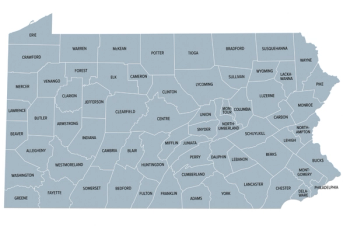
A 39-year-old unvaccinated Franklin County woman has died after a recent measles diagnosis. Nationally, numbers continue to increase and the US has passed 4,000 cases.
The latest CDC numbers show a 5.0% increase of measles cases from week-to-week. The US total reached 4080 confirmed cases, 78% above all of 2025.
With US measles cases nearing 3,900 this year and Pennsylvania reporting its fifth measles-related death, here is a review of how the virus spreads, how it is prevented and managed, and what severe disease looks like.

In the phase 3b ENCORE trial, adding amikacin liposome inhalation suspension (ALIS) to azithromycin and ethambutol significantly improved culture conversion in newly diagnosed MAC lung disease, while treatment-emergent amikacin (2.2%) and macrolide (1.1%) resistance stayed rare. Kevin Winthrop, MD, provides insights around the study.

Oral zelicapavir cut time to complete RSV symptom resolution by up to 1 week in high-risk adults, but it did not meet its primary end point in a phase 2 trial.

Projected disease burden from declining childhood vaccine coverage shows increases in vaccine-preventable diseases. Benjamin Lopman, PhD, provides insights on how VaxImpactMap works and the potential long-term disease consequences of decreased immunization rates.

The National Foundation for Infectious Diseases (NFID) recently held its respiratory season kick-off, which included the release of its annual respiratory disease survey. This year, the survey revealed the gap between vaccine support and uptake. Robert Hopkins Jr, MD, medical director of NFID delves deeper into the findings of the survey and the vaccine uptake challenges associated with certain immunizations.
Advertisement
Advertisement
Trending on Contagion Live
1
Pritelivir Cuts Hospital Days in Refractory HSV in Phase 3 PRIOH-1
2
Inhaled Amikacin Shows Low Resistance Rates in MAC Lung Disease in ENCORE
3
Zoliflodacin Holds Gonorrhea Cure Rates in Chlamydia Coinfected Patients
4
Cefiderocol-Xeruborbactam Active Against Carbapenem-Resistant Bacteria
5