
Opinion|Videos|November 13, 2026
Building the Formulary Case for Novel AMR Antibiotics
Securing formulary access to novel gram-negative agents depends on local epidemiology, outcome data, and electronic order safeguards, communicated clearly to committees that often lack infectious diseases expertise.
Advertisement
Episodes in this series
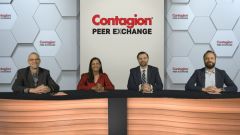
Bringing novel gram-negative agents onto a hospital formulary requires a persuasive case grounded in local epidemiology, outcome data, and practical safeguards, especially when committee members lack infectious diseases expertise. Dr. Tamma asks Dr. Pogue how clinicians can justify costly agents with overlapping spectra to pharmacy and therapeutics (P&T) committees and how institutions should choose among them.
Dr. Pogue notes that the case is far easier today than when these agents first launched, because accumulated evidence across Pseudomonas, carbapenem-resistant Enterobacterales, and now Acinetobacter shows that novel therapies improve outcomes. At the institutional level, he recommends defining the problem pathogens and resistance mechanisms locally, testing banked isolates against the new agents, and selecting those that fill specific niches.
Dr. Tamma raises the scenario of a hospital that rarely encounters CRAB but suddenly needs sulbactam-durlobactam. Dr. Pogue argues that formulary status matters even when an agent is rarely used, because it allows the drug to be built into the electronic medical record with renal dosing, interaction checks, and allergy screening. He adds that institutions can arrange access through health system partners or regional hospitals that keep the agent in stock.
Dr. Shields offers the perspective of a P&T committee member, reminding colleagues that most members do not know the acronyms that dominate these discussions and may question why yet another beta-lactam-beta-lactamase inhibitor is necessary. He compares the process to a campaign, in which clinicians must explain the value of each agent clearly, and adds that strong clinical data, mechanism-directed selection, and converging prices have made the argument easier. Clinicians should arrive at P&T discussions prepared with local data and a clear rationale.
Laboratory readiness and clinician education take center stage in "Microbiology Lab Readiness and Education in AMR Care."
Advertisement
Related to this article

Los Angeles has been experiencing this challenging bacteria in recent years with the potential of it becoming carbapenem-resistant in the future. Shaun Yang, PhD, D(ABMM), FIDSA, MLS(ASCP), provides commentary about his team's work in this area and the role of genomic sequencing to uncover this troublesome pathogen.
Cefiderocol MICs fell against Pseudomonas aeruginosa and Klebsiella pneumoniae, and the drug showed marked synergy with LL-37 against resistant Acinetobacter baumannii. Jacinda Abdul-Mutakabbir, PharmD, MPH, AAHIVP, discusses her team's findings around this therapy and these pathogens.
Shionogi data presented at IDWeek 2026 demonstrated a 76.7% clinical response with cefiderocol in carbapenem-resistant respiratory infections and high in vitro activity against resistant P aeruginosa VAP isolates. Christine Slover, PharmD, vice president, Infectious Diseases US Medical Affairs, Shionogi, offers insights on the data as well as clinical considerations for providers when weighing the antibiotic for patients.
Advertisement
Advertisement