
News|Videos|March 30, 2026
Combining Immunotherapy With Fungal Therapeutics: The Future of Treatment?
Author(s)Jatin Vyas, PhD, MD, John Parkinson
Jatin Vyas, PhD, MD, discusses where the research is headed as it takes a page from the oncology world in trying to harness the immune system and combining with fungal therapeutics to treat these difficult infections.
Advertisement
This is a short series discussing fungal infections including newer treatment concepts, the distinct geography of clades and the increasing spread of Candida auris, and insights around developing therapeutics for fungal infections.
There are inherent challenges in developing therapeutics for fungal infections, explains Jatin Vyas, PhD, MD, professor of Medicine, Columbia University, associate dean for Academic Innovation, and director of Physician- Scientist Programs at the Vagelos Institute for Biomedical Research Education.
“Unlike antibacterials, bacteria being a prokaryotic organism, fungi are eukaryotic organisms. And what does that mean? They're closer to the cellular structure to mammals than they are to bacteria. They have an enclosed nucleus. They have many of the enzymatic machinery that closely mimics what we have as mammals. And so the challenge is that the targets that we can use are actually considerably smaller,” said Vyas. “There's many agents that can treat fungal organisms, the problem is they have unacceptable side effects, because those are the same mechanisms that our body uses for normal metabolism and normal life. And so the world where we can find distinctions between here's something that a fungal organism is using, like Canada auris, but is not operational in mammalian cells, is actually relatively small, and so that limits the number of targets that we have available, and that becomes a significant challenge in terms of finding better antifungals.”
Lessons from Immunotherapy
One of the novel concepts emerging in fungal infection treatment is the idea of taking immunotherapy and combining it with fungal infections. As an example, Vyas notes a recently published article in the New England Journal of Medicine, that details the case of a young patient who had disseminated coccidiomycosis. Investigators identified issues that were going on with that patient’s immune system, and they were able to skew the child’s immune system in one direction to another direction, he said.
“In combination with antifungals, they were able to affect a cure where antifungals for a year were not capable…so this leads to this concept that if we could harness the power of the immune system and combine it with antifungals, we may have the best shot of curing patients,” Vyas said.
He says there is a significant parallel in looking at how they are successfully treating cancer today and potentially applying it to infectious disease.
Other Episodes
“If we can combine immunotherapy with cancer chemotherapy, we oftentimes can see a significant improvement in those patients’ response rates as well as survival. And so we're taking a page out of that oncology part and now applying this to infectious disease. Hopefully we will get to a point where, in the future, infectious disease physicians will both identify the organism, let's say, in this particular situation, a patient with Candida auris, identify what is the right antifungal, and then try to identify what are the ways by which we can boost the immune system in that particular patient so that they can affect a cure and therefore decrease their morbidity and mortality associated with these invasive fungal infections.”
In the next episode, Vyas talks about Candida auris including geographic clades and insights around its spread.
Advertisement
Related to this article
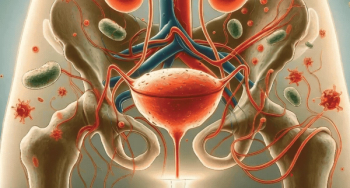
Recent urinary tract infection guideline updates from multiple international
medical societies highlight evolving recommendations, including a major shift
in classification, moving from anatomy- and risk factor–based definitions
toward distinguishing localized from systemic infections.
A study finding clesrovimab comparable to palivizumab in protecting at-risk infants in their first RSV season was extended to demonstrate clesrovimab effective and well-tolerated when administered in their second season.
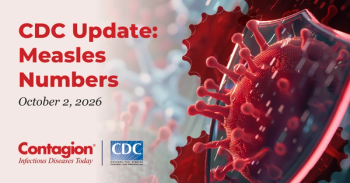
The latest CDC numbers show a 6.2% increase of measles cases from week-to-week. Last week there was a 5.4% increase in cases showing a continuing steady increase dictated by ongoing outbreaks across the US.
Lori Handy, MD, provides guidance in these areas including presentation before rash onset, when patients should be considered for the inpatient setting, and what treatment looks like.
IDSA/ESCMID panel member Henry Chambers, MD, explains why the new S aureus bacteremia guidance replaces the complicated vs uncomplicated label with risk stratification, and how the statements are akin to the stages of cancer in guiding treatment decisions associated with this bacteremia.
Jason Pogue, PharmD, BCPS, BCIDP, contextualizes preliminary data looking at this trial and other extended-spectrum beta-lactamase (ESBL) studies, which reopens the debate around carbapenem-sparing treatment options.

Following World Rabies Day and a CDC health advisory on a 17% rise in exposure-related calls, Rodney E. Rohde, PhD, explains what the increase means, what people should do when they have an animal bite or scratch, and how clinicians should assess risk and administer post-exposure prophylaxis (PEP).
In the phase 3 LIBERTY study, the investigational monoclonal antibody, VYD2311, had significantly fewer adverse events than an mRNA COVID-19 vaccine, and it did not blunt vaccine-induced neutralizing titers when the two were given together.
Advertisement
Advertisement
Trending on Contagion Live
1
Recent Guideline Updates in the Management of Urinary Tract Infections
2
Clinical Considerations for Measles: Presentation, Treatment, and Hospitalization
3
FAQ: Rising Rabies Exposure Calls PEP Decisions Back in Focus
4
Measles Update: October 2, 2026
5