
News|Videos|April 1, 2026
Multidrug Resistance and Limited Financial Incentives Challenge Antifungal Development
Author(s)Jatin Vyas, PhD, MD, John Parkinson
In the final installment of the short series around fungal infections, Jatin Vyas, PhD, MD, discusses the challenges of developing antifungals.
Advertisement
This is a short series discussing fungal infections including newer treatment concepts, the distinct geography of clades and the increasing spread of Candida auris, and insights around developing therapeutics for fungal infections.
Multidrug resistance (MDR) for antifungals has been an ongoing concern for some years. It is important to look at this issue through the lens of treatment for Candida auris, one of the most severe fungal infections. For starters the number of cases has exploded over the last decade, and according to the Centers for Disease Control and Prevention (CDC), about 90% of US Candida auris isolates are resistant to fluconazole, 30% are resistant to amphotericin B and >2% are resistant to echinocandins.1 The federal agency does note these proportions may include multiple isolates from the same individuals and may change as more isolates are tested.
Jatin Vyas, PhD, MD, professor of Medicine, Columbia University, associate dean for Academic Innovation, and director of Physician-Scientist Programs at the Vagelos Institute for Biomedical Research Education, says the amphotericin resistance is especially troubling, and “gives us significant pause as infectious disease clinicians, and that's why we consider this a multidrug resistant organism.”
Traditionally, he says the limited efficaciousness of azoles made it difficult to rid these infections and led to their continued proliferation in healthcare facilities.
“We saw a fairly high amount of mortality associated with Candida auris infections, and it had a lot to do with the fact that upfront therapy oftentimes wasn't sufficient…azole-based therapies were being used, and that led to patients not getting optimal therapy early in their infection, which led to excess mortality,” Vyas said.
Although the first-line treatment paradigm has shifted away from azole-based therapies to echinocandins, Vyas points out this latter class is mostly administered intravenously, and can be problematic for some patients.
A Limited Pipeline
In terms of new agents, there have only been a handful of antifungals that have been FDA approved in the last several years. And Vyas points out the pipeline remains limited.
“We're really in a drought, so to speak, of new agents that are coming through the pipeline, he said.
Vyas talks about the lack of financial incentives for pharmaceutical companies to invest in antifungals. He notes it is a long, laborious process with a steep financial investment to only find a limited market share for approved antimicrobials.
“Historically, what ends up happening is a new antibiotic or a new antifungal comes onto market, that those are not taken up and used vigorously,” Vyas said. “Oftentimes, infectious disease clinicians will actually hold them back and restrict the use of those thinking that those are really good agents that will use in the most severe cases. And so from a financial point of view, that becomes a difficult proposition for a lot of companies to be able to pursue when they have other choices to make that may not sit in the infectious disease space.”
PASTEUR Act
One potential incentive to help pharmaceutical companies with antimicrobial development is the
“We really wanted to make sure that the bill would deliver the drugs that patients most urgently need, that there was as strong of a guarantee as possible to make sure that the drugs that get past our contracts really are drugs that are truly innovative and truly going to make a difference for patients,” said Amanda Jezek, senior vice president for public policy and government relations at the Infectious Diseases Society of America. Jezek leads a team at the organization that has been working on the bill for years and understands the bill uniquely. “So what the bill would do now is direct HHS [US Department of Health and Human Services] to develop an objective scoring methodology, and the scores that a drug would get would determine, are they eligible for a contract, and how big is that contract going to be?”
Despite bipartisan support in Congress, the bill has not been signed into law. The bill was reintroduced in Congress for the fourth time earlier this year. Although
References
1. Antifungal Susceptibility Testing for C. auris. CDC. April 24, 2024. Accessed April 1, 2026.
https://www.cdc.gov/candida-auris/hcp/laboratories/antifungal-susceptibility-testing.html
2.Newly introduced legislation provides pathway to spur antimicrobial development. IDSA press release. Updated February 4, 2026. Accessed February 5, 2026.
https://www.idsociety.org/news--publications-new/articles/2026/newly-introduced-legislation-provides-pathway-to-spur-antimicrobial-development/
Advertisement
Related to this article

A new study in infants challenges the long-standing belief about the pathogen’s effects in the youngest pediatric population. Senior author Joseph Zackular, PhD, provides insights around his work including how it reshapes gut development and offers potential intervention strategies to shield neonates.

In the first episode of our new series looking at the food safety network, Lynette Johnston, PhD, offers insights into how the federal government surveillance infrastructure operates and how epidemiologists serve as food detectives in determining bacterial pathogens and potential foodborne outbreaks.

Food expert Lynette Johnston, PhD, provides some context around the ongoing outbreak, discusses prevention, and compares 2026 food recalls with previous years.
The Peggy Lillis Foundation will host its 17th Annual Changing the Odds Gala this month in New York City, and it will include a casino, fellowship amongst the C diff community, and an award ceremony honoring a physician-scientist, philanthropist, a researcher, and a patient advocate for their contributions to C difficile awareness, treatment, and prevention.
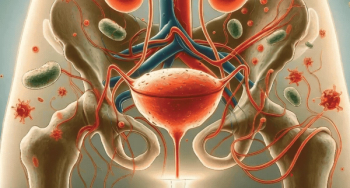
Recent urinary tract infection guideline updates from multiple international
medical societies highlight evolving recommendations, including a major shift
in classification, moving from anatomy- and risk factor–based definitions
toward distinguishing localized from systemic infections.

A study finding clesrovimab comparable to palivizumab in protecting at-risk infants in their first RSV season was extended to demonstrate clesrovimab effective and well-tolerated when administered in their second season.
The latest CDC numbers show a 6.2% increase of measles cases from week-to-week. Last week there was a 5.4% increase in cases showing a continuing steady increase dictated by ongoing outbreaks across the US.
Lori Handy, MD, provides guidance in these areas including presentation before rash onset, when patients should be considered for the inpatient setting, and what treatment looks like.
Advertisement
Advertisement
Trending on Contagion Live
1
Recent Guideline Updates in the Management of Urinary Tract Infections
2
Clinical Considerations for Measles: Presentation, Treatment, and Hospitalization
3
FAQ: Rising Rabies Exposure Calls PEP Decisions Back in Focus
4
Measles Update: October 2, 2026
5