According to 3 concurrent peer-reviewed studies published in JCI Insight and Clinical Infectious Diseases, immune dysregulation rather than antifungal resistance may be the primary driver of severe, disseminated coccidioidomycosis—and correcting it through targeted immunomodulation produced meaningful clinical improvement in patients who had failed or poorly tolerated standard antifungal therapy.1-3 The findings introduce an approach to disseminated Valley Fever distinct from all currently available treatments.
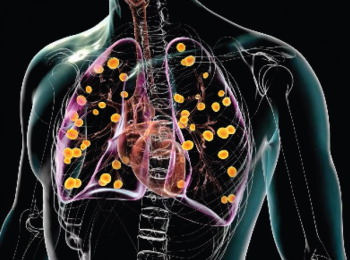
Coccidioidomycosis, caused by the soil-borne fungus Coccidioides immitis and C. posadasii, infects an estimated 150,000 people annually in the United States and is endemic to the southwestern US, Mexico, and Central and South America.4 While most infections are mild or self-limiting, roughly 5% of cases disseminate beyond the lungs, causing osteomyelitis, skin lesions, and meningitis. No new antifungal drug has been approved for coccidioidomycosis in the United States in nearly 40 years, and standard azole-based therapy suppresses the infection without curing it, requiring courses of therapy lasting years to decades.5
The 2 studies, led by researchers at Stanford University, found the immune response in disseminated coccidioidomycosis is not uniformly deficient but instead takes 1 of 2 distinct dysfunctional forms.1,2 In some patients, T cells become exhausted, a state of functional impairment driven by chronic antigen exposure and characterized by elevated expression of the PD-1 inhibitory receptor. In other patients, the immune response is skewed toward a Th2/allergic phenotype characterized by elevated type-2 cytokines failing to clear the fungal infection.
Frequently Asked Questions
What is coccidioidomycosis (Valley Fever) and who is at risk for disseminated disease?
Coccidioidomycosis is a fungal infection caused by Coccidioides species endemic to the southwestern US, Mexico, and Central and South America. Approximately 5% of cases disseminate beyond the lungs; immunocompromised patients, males, pregnant women, and those of Black or Filipino ancestry are at highest risk.
What did the new Stanford studies find about Valley Fever treatment?
Three concurrent studies found patients with disseminated coccidioidomycosis demonstrate distinct immune dysfunction patterns — either T cell exhaustion or Th2 skewing — both of which responded to targeted immunomodulation, producing dramatic clinical improvement in patients who had failed standard antifungal therapy.
How does immune modulation differ from antifungal therapy for Valley Fever?
Standard antifungal therapy targets the fungus directly and suppresses infection without curing it. Immunomodulation corrects the underlying immune failure allowing the infection to persist, addressing the host response rather than the pathogen.
Clinical response to immunomodulation and next steps in Valley Fever research
Treatment targeting these immune phenotypes produced remarkable clinical outcomes in patients with severe disseminated disease.1,3 One patient previously confined to a wheelchair regained the ability to walk. Another, who had been on continuous antifungal therapy for several years and became easily breathless, recovered to the point of being able to run.
“Clinical trials are warranted for interferon gamma in severe disease and dupilumab for disseminated disease when Type-2 immune dysregulation is present. Further research is needed to identify the specific patient populations that may benefit most from the addition of immunomodulatory medications,” the authors, including Manish Butte, MD, PhD, the E. Richard Stiehm Endowed Chair and professor in the Department of Pediatrics, and Division Chief of Immunology, Allergy, and Rheumatology at UCLA, wrote.1
The findings carry immediate clinical implications for ID physicians managing patients with refractory or disseminated coccidioidomycosis. Immune phenotyping could identify which patients are driven by T cell exhaustion versus Th2 skewing, potentially guiding treatment selection before antifungal failure. For immunocompromised patients—transplant recipients, patients with HIV, and those receiving biologic therapies—who represent the highest-risk population for dissemination, the ability to characterize immune failure and intervene directly may be particularly relevant.
Clinical trials to formally establish the safety and efficacy of immune modulation in disseminated coccidioidomycosis are in development, and researchers are seeking funding to support the work.1
References
Stephens AV, et al. Immunomodulation in the treatment of disseminated coccidioidomycosis. Clin Infect Dis. 2026. doi: 10.1093/cid/ciag036.
Whitehill GD, et al. Exhausted T cell phenotypes in disseminated coccidioidomycosis. JCI Insight. 2026. doi:10.1172/jci.insight.203270
Thauland TJ, et al. Th2 skewing in patients with disseminated coccidioidomycosis. JCI Insight. 2026. doi:10.1172/jci.insight.199941
Galgiani JN, et al. 2016 IDSA clinical practice guideline for the treatment of coccidioidomycosis. Clin Infect Dis. 2016;63(6):e112-e146. doi:10.1093/cid/ciw360
O’Shaughnessy E, et al. FDA public workshop summary — coccidioidomycosis (Valley Fever): considerations for development of antifungal drugs. Clin Infect Dis. 2022;74(11):2061-2066. doi:10.1093/cid/ciab904