
News|Videos|April 16, 2026
It's Time to Create New Antibiotic Classes: Addressing Antimicrobial Resistance Through AI
Author(s)Akhila Kosaraju, MD, John Parkinson
In the final episode of the short series, Akhila Kosaraju, MD, talks about changing the development paradigm and moving away from reengineering molecules of existing antibiotic classes and towards creating new ones.
Advertisement
This is a short series addressing how AI can help in antimicrobial discovery including how the field has moved from a predictive to a generative process, looking at one partnership between a pharmaceutical company and an AI biotech social venture, and how these partnerships may help in reducing antimicrobial resistance.
Phare Bio CEO and Co-founder Akhila Kosaraju, MD, says a major reason we have multidrug resistance today is because we have maintained the existing classes of antibiotics and not created new ones.
“Many of the drugs, I would argue virtually all of them, have come from the golden era of antibiotic discovery, which was from the 1940s to the 1960s. So those same, dozen or so classes, have also powered extraordinary resistance amongst these bacteria,” she said. “And without new classes, so truly novel mechanisms of action, we're just recapitulating that same resistance, and if anything, just accelerating and amplifying the problem.”
Kosaraju says by utilizing AI they can open up the development process by broadening the chemical compounds to become new potential antibiotics.
“We train our models to not identify identical chemical spaces…So the model is able to start exploring a much vaster potential area of drug discovery than we could ever conduct…It's not just an iterative improvement; it's really creating a possibility that did not exist before.”
Even in this small amount of time AI has been used to create new molecules, that process has changed. Whereas, AI have been using only a small fraction of potential compounds, with generative AI being utilized, Kosaraju says there is much more potential.
“I think now we can exponentiate the amount of coverage of that chemical space to train our models, which then leads to more novel compounds coming out of our platforms,” she said. “With predictive AI, we were really beholden to and limited by the screening libraries that ultimately our compounds were being identified from. And now, with generative AI, we really can take the exploration of our training data set and our models and fully realize the potential of how you can actually drive novelty in the compound structures that are produced.”
To learn more about generative AI or to find out more about AI and antibiotic development, check out the rest of our series.
Advertisement
Related to this article

UTI guidelines are moving away from complicated or uncomplicated infections to localized or systemic classification terminologies. Guidelines author Zachary Nelson, PharmD, MPH, BCIDP, provides further insights on the changes including applying antibiograms, potential costs, and whether clinicians will embrace these new classifications.

The first animal model of neonatal sepsis to evaluate protection by maternal vaccination evidences transfer of immunity against virulent, often antibiotic-resistant Klebseilla pneumoniae.
Stopping empiric antibiotics early nearly tripled antibiotic-free days in neutropenic fever, and 5-day oseltamivir prophylaxis matched 10 days in hospital exposures.

MBL producers rose from 20.4% to 48.6% of US carbapenem-resistant Enterobacterales from 2021 to 2025, while aztreonam-avibactam stayed active against 97.7% of them.

Karen B. Jacobson, MD, MPH, of Kaiser Permanente Northern California, presented data at IDWeek 2026 showing 58.2% of children younger than five years exposed to active hepatitis B in the home were exposed by someone other than their birth mother, a risk maternal screening alone would miss under the CDC’s revised birth dose recommendation.

In the phase 3b ENCORE trial, adding amikacin liposome inhalation suspension (ALIS) to azithromycin and ethambutol significantly improved culture conversion in newly diagnosed MAC lung disease, while treatment-emergent amikacin (2.2%) and macrolide (1.1%) resistance stayed rare. Kevin Winthrop, MD, provides insights around the study.
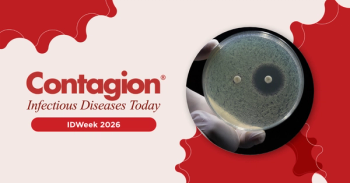
Investigational cefiderocol-xeruborbactam inhibited 98.5% of carbapenem-nonsusceptible Acinetobacter and nearly all Enterobacterales in global surveillance data.

Projected disease burden from declining childhood vaccine coverage shows increases in vaccine-preventable diseases. Benjamin Lopman, PhD, provides insights on how VaxImpactMap works and the potential long-term disease consequences of decreased immunization rates.
Advertisement
Advertisement
Trending on Contagion Live
1
Ebola Update: DRC Outbreak Reaches 9735 Cases, Second Largest on Record
2
Cefiderocol-Xeruborbactam Active Against Carbapenem-Resistant Bacteria
3
Pritelivir Cuts Hospital Days in Refractory HSV in Phase 3 PRIOH-1
4
Pfizer 25-Valent Pneumococcal Vaccine Boosts Serotype 3 Response in Infants
5