
News|Videos|April 14, 2026
Pharma and AI Partnering to Drive New Era in Antibiotic Development
Author(s)Akhila Kosaraju, MD, Contagion Editorial Team
In the second episode of this short series, Akhila Kosaraju, MD, talks about how Phare Bio and Basilea Pharmaceuticals are partnering to develop antimicrobials taking them from AI molecules to clinical trials.
Advertisement
This is a short series addressing how AI can help in antimicrobial discovery including how the field has moved from a predictive to a generative process, looking at one partnership between a pharmaceutical company and an AI biotech social venture, and how these partnerships may help in reducing antimicrobial resistance.
A new partnership between Phare Bio, an AI social venture, and Basilea Pharmaceuticals is highlighting how artificial intelligence is reshaping not only scientific discovery but also the way pharmaceutical collaborations operate. By aligning early-stage AI-driven discovery with late-stage clinical expertise, this collaboration aims to accelerate the development of antibiotics.
The partnership emerged from years of informal discussions, during which both organizations recognized a strong complementarity in their capabilities. At the core of the partnership is a shared effort to define a “target product profile” before any compounds are developed. This approach prioritizes both clinical need and commercial viability—2 factors critical to ensuring that new antibiotics reach patients. In this case, the partners are focusing on broad-spectrum antibiotics targeting Gram-negative bacteria, an area of significant unmet medical need.
Instead of developing antibiotics around existing compounds, Phare and Basilea are using AI models trained on specific drug characteristics, such as efficacy, delivery method, and half-life, to generate entirely new candidates tailored to real-world requirements.
“Because AI is getting closer to that idea of some bespoke indication targeting engine, we can now bring our partners to the forefront of the process…And using those drug-like parameters, we can now suggest to the model that we don't just want to have let's say a compound targeting MRSA…. as a hypothetical example, you can actually train the model on those specific parameters and get to that target product profile,” said Phare Bio CEO and Co-founder Akhila Kosaraju, MD.
Once AI-generated compounds meet predefined benchmarks, Phare Bio advances them through early validation. From there, Basilea takes over, applying its expertise to push promising candidates through development stages and into clinical trials.
This collaboration is in its infancy stage having made the announcement of their partnership just a few months ago. Long-term, Kosaraju says the partnership is like a relay race, where Phare will hand off the AI-generated compounds to Basilea who can take over much like a runner getting a baton from a teammate.
Not only are they taking a novel approach in how drug development is done but they are doing something uniquely on the business side as well.
“I think that this is an indication that AI is not just revolutionizing the technology, of course, in the science, but also revolutionizing the business of how we conduct partnerships, and codevelopment across the field,” Kosaraju said.
In the final episode of the series, Kosaraju will talk about how their partnership looks to address multidrug resistance.
Newsletter
Stay ahead of emerging infectious disease threats with expert insights and breaking research. Subscribe now to get updates delivered straight to your inbox.
SubscribeAdvertisement
Related to this article

UTI guidelines are moving away from complicated or uncomplicated infections to localized or systemic classification terminologies. Guidelines author Zachary Nelson, PharmD, MPH, BCIDP, provides further insights on the changes including applying antibiograms, potential costs, and whether clinicians will embrace these new classifications.
Jason Pogue, PharmD, BCPS, BCIDP, contextualizes preliminary data looking at this trial and other extended-spectrum beta-lactamase (ESBL) studies, which reopens the debate around carbapenem-sparing treatment options.
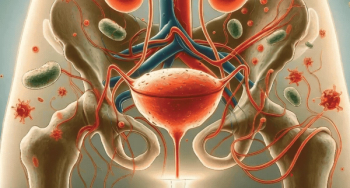
Recent urinary tract infection guideline updates from multiple international
medical societies highlight evolving recommendations, including a major shift
in classification, moving from anatomy- and risk factor–based definitions
toward distinguishing localized from systemic infections.
IDSA/ESCMID panel member Henry Chambers, MD, explains why the new S aureus bacteremia guidance replaces the complicated vs uncomplicated label with risk stratification, and how the statements are akin to the stages of cancer in guiding treatment decisions associated with this bacteremia.

IDSA and ESCMID released 7 consensus statements to assist in managing individuals with SAB. This review will focus on the adult patient population and additional information on pediatric population statements can be assessed in the guideline. Here is a closer look at Consensus Statement 2: Follow-up Blood Cultures.

With a significant increase in rabies exposures this year, Rodney Rohde, PhD, talks about seeking medical attention after animal interactions as well as clinical treatment when people have been bit or scratched.
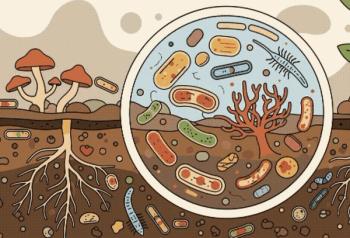
Widespread antimicrobial use disrupts vital microbial communities that regulate Earth’s biogeochemical cycles, driving antimicrobial resistance, worsening human and environmental health, and significantly contributing to climate change.

New data from the PETERPEN trial suggest that piperacillin-tazobactam may be noninferior to meropenem for early clinical outcomes in select patients with ESBL bloodstream infections, but carbapenems remain the standard of care until final mortality results are available and fully analyzed.
Advertisement
Advertisement