The FDA approved bepirovirsen (Hibsago; GSK) with nucleos(t)ide analogue therapy for chronic hepatitis B, based on B-Well 1 and 2 functional cure rates of 19% vs 0% with placebo.
This week, read about AI and antibiotic development, an innovative hepatitis C program to get postpartum mothers tested and treated sooner, on World Liver Day a nurse talks about her personal story and how she advocate for better education around this vital organ, and more.
A growing body of research highlights the effectiveness of initiating
“Standard referral only results in about 14% of women getting hepatitis C antivirals postpartum, so that's really low,” said Madeline McCrary, MD, assistant professor in the Division of Infectious Diseases, Washington University in St. Louis.“Nationwide, standard referral for Hep C treatment among Medicaid recipients, postpartum, is less than 6% so the strategy wasn't working.”
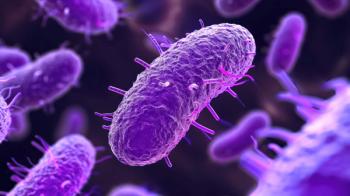
A study led by researchers at Children’s Hospital of Philadelphia (CHOP) and the University of Pennsylvania may reshape how clinicians understand and prevent Staphylococcus aureus infections in neonatal intensive care units (NICUs). Their findings were published in Nature Communications.
By using whole-genome sequencing and precision surveillance over a few years, investigators mapped how specific staph strains spread, persist, and cause disease in high-risk infants—offering a new roadmap for infection control.
According to the Centers for Disease Control and Prevention (CDC), more than 3,700 babies were born with congenital syphilis in 2022, which was more than 10 times the number in 2012.1
A major driver of the increase is a widespread misconception that the disease is no longer a threat, according to Lily Li, MD, PhD, MBA, medical safety officer and senior director, Medical, Scientific & Clinical Affairs at QuidelOrtho.
Sunday, April 19, is World Liver Day, which serves as a powerful reminder of the importance of one of the body’s most essential yet underappreciated organs—the liver. I am a mother and nurse. The day carries deep personal meaning rooted in the life and loss of my son, Dean. He was born on April 15, 1966, and his short life was marked by relentless suffering caused by a rare and incurable condition—the absence of bile ducts. From birth, he endured constant itching, fragile bones that fractured easily, blood clots in his lungs, severe bleeding episodes, and chronic diarrhea. Despite my medical background, answers were scarce, and treatment options were nonexistent.
This is a short series addressing how AI can help in antimicrobial discovery including how the field has moved from a predictive to a generative process, looking at one partnership between a pharmaceutical company and an AI biotech social venture, and how these partnerships may help in reducing antimicrobial resistance.
In its best ideation, AI has the potential to reshape antimicrobial discovery quickening the pace of molecule development. For example, the MIT lab of James Collins, PhD, took roughly 2,500 compounds against E coli, and utilized machine learning models to identify patterns in chemical structures that determined antibacterial effectiveness. Graph neural networks were then used to scan vast chemical libraries, uncovering overlooked compounds with potent activity.