
|Videos|May 12, 2023
Use of Fecal Microbiota Transplantation (FMT) Treatment in CDI
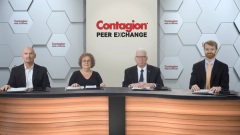
Candace Cotto, RN, and Andrew Skinner, MD, discuss the challenges of traditional fecal microbiota transplantation (FMT) in treatment of CDI.
Advertisement
Episodes in this series


Stuart Johnson, MD: Candace, what is the rationale behind FMT treatment and when is FMT recommended?
Candace Cotto, RN: The rationale behind FMT is to restore the patient's microbiome back to a healthy microbiome. And the recommendations are based on the deficiencies of the microbiome and what it was deficient in. And that is a new, healthy microbiome via FMT.
Stuart Johnson, MD: And when is it recommended?
Candace Cotto, RN: At this point? At the second recurrence.
Stuart Johnson, MD: Those would be the ACG [American College of Gastroenterology] guidelines.
Candace Cotto, RN: ACG guidelines.
Stuart Johnson, MD: Right. And the IDSA [Infectious Diseases Society of America] has been a bit more conservative mentioning waiting until the third recurrence. And this is based on the fact that these guidelines were given when there was no FDA-approved treatment. So, what are some challenges with the traditional FMT approaches?
Andrew Skinner, MD: With the traditional FMT approaches, one of the challenges that we're up against now is that it's, they're not have been evaluated by the FDA. So the more traditional FMT have not been FDA approved. One of the other approaches that we have is that there's also a bit of a, the manufacturing processes not that well documented in terms of the screening of some of these patients. And are some of these even being done within a practitioner's own clinic? And then the other portion that we worry about is also the transmission of certain pathogens. And so that's where the patient's safety comes into play as well. There have been reports of antibiotic-resistant pathogens being transmitted into recipients of the traditional FMT.
Stuart Johnson, MD: Right. So, although screening for pathogens is critical, there are things we don't, we know that would be hepatitis B, etc. There are things we know we don't know, and that might be hepatitis in children. And then there are things we don't know. And again, it points out that we can screen for things we know, but there may be things out there we don't know. Just a word of caution about a transfer.
Transcript edited for clarity
Advertisement
Related to this article

Shionogi data presented at IDWeek 2026 demonstrated a 76.7% clinical response with cefiderocol in carbapenem-resistant respiratory infections and high in vitro activity against resistant P aeruginosa VAP isolates. Christine Slover, PharmD, vice president, Infectious Diseases US Medical Affairs, Shionogi, offers insights on the data as well as clinical considerations for providers when weighing the antibiotic for patients.
In an ECOSPOR III analysis, all-cause hospitalization by week 4 fell to 3.4% with fecal microbiota spores vs 16.1% with placebo in recurrent C difficile infection.

Karen B. Jacobson, MD, MPH, of Kaiser Permanente Northern California, presented data at IDWeek 2026 showing 58.2% of children younger than five years exposed to active hepatitis B in the home were exposed by someone other than their birth mother, a risk maternal screening alone would miss under the CDC’s revised birth dose recommendation.

In the phase 3b ENCORE trial, adding amikacin liposome inhalation suspension (ALIS) to azithromycin and ethambutol significantly improved culture conversion in newly diagnosed MAC lung disease, while treatment-emergent amikacin (2.2%) and macrolide (1.1%) resistance stayed rare. Kevin Winthrop, MD, provides insights around the study.

In the phase 2 RePreve trial, Lumen Bioscience’s investigational oral biologic LMN-201 plus standard antibiotics achieved global cure in 83.3% of patients with C difficile infection vs 36.4% with placebo, and cut recurrence sixfold (9.1% vs 55.6%) with no drug-related serious adverse events.

Projected disease burden from declining childhood vaccine coverage shows increases in vaccine-preventable diseases. Benjamin Lopman, PhD, provides insights on how VaxImpactMap works and the potential long-term disease consequences of decreased immunization rates.
Advertisement
Advertisement
Trending on Contagion Live
1
A Closer Look at IDSA/ESCMID 2026 Consensus Statements 6 and 7 on Staphylococcus aureus Bacteremia
2
Cefiderocol Continues to Show Activity Against Resistant Gram-Negative Infections
3
Early Dual Therapy Shortens Staphylococcus aureus Bacteremia in SABEDTIO Trial
4
Measles PCR Testing Climbs as Positivity Rises in National Lab Data
5