


HCV / Hepatitis
Latest News
Vir Grants Norgine Commercial Rights to Hepatitis Delta Therapy in Europe, Australia, and New Zealand
By Sophia Abene

CDC Awards Grant to Study Neonatal Hepatitis B Vaccination Outcomes in Guinea-Bissau
By Sophia Abene
Advertisement
Latest Videos



















































































































































Advertisement
More News
Lacking any safety data showing potential serious adverse effects, the committee decided to move forward with the recommendation “that the initial dose is administered no earlier than 2 months of age.”
Due to repetitive and confusing language, the committee decided to amend the votes for clarity and will vote on 3 new recommendations on Friday.
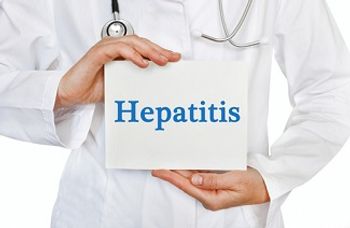
A new analysis shows thousands of children could contract hepatitis B, leading to further complications and deaths, if the vaccine schedule recommendations are changed to later in a child's life.

New modeling and clinical data presented by Atea Pharmaceuticals suggest that its fixed-dose combination of bemnifosbuvir and ruzasvir could offer a potent, short-duration, best-in-class treatment option for hepatitis.

A mother recounts her newborn son's fatal battle with cirrhosis reminding people of the importance of health and education about this vital organ.

Primary completion is expected in Q4 2026 with topline results in Q1 2027, while ECLIPSE 2 and 3 continue enrolling to support potential US and EU submissions.

Immunocore’s first-in-human study of its bispecific, IMC-I109V, demonstrated early antiviral activity and a favorable safety profile, supporting continued development of the TCR bispecific candidate as a potential functional cure for chronic hepatitis B.
In Vir Biotechnology’s phase 2 Solstice study, 66% of participants with chronic hepatitis delta (CHD) receiving a monthly dose of combination tobevibart and elebsiran achieved undetectable hepatitis delta virus (HDV) RNA at Week 48.

The XpertHCV test from Cepheid enables rapid, point-of-care detection of hepatitis C infection in under an hour—helping to expand access to care and reduces follow-up loss.
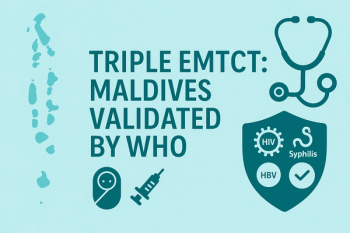
Maldives Validated by WHO as First Country to Achieve Triple EMTCT of HIV, Syphilis, and Hepatitis B
Sustained HIV/syphilis elimination of mother-to-child transmission (EMTCT) since 2019 and new hepatitis B validation reflect high antenatal screening, >95% HBV birth-dose coverage, and integrated maternal–child health services.
This week, learn about the Center for Discovery and Innovation's research around vaccines and the next generation of rifamycins, as well as results from a Cefiderocol study looking at healthcare-associated Gram-negative bloodstream infections and more.
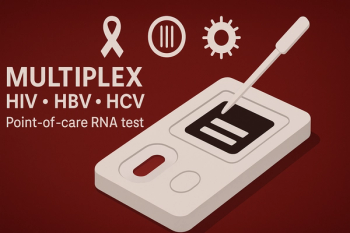
NIH funds an effort to adapt an electrochemical biosensor for same-visit detection and viral-load quantification at the point of care.
A UK hepatology review found that one-third of adults with chronic hepatitis B were lost to specialist follow-up—highlighting major gaps in patient retention that threaten progress toward WHO’s 2030 viral hepatitis elimination goals.
A 4-week course of glecaprevir/pibrentasvir achieved sustained virologic response in 84% of patients with early hepatitis C infection in the PURGE-C trial, suggesting potential for shorter, more accessible treatment regimens pending further validation.
This week, learn about the Center for Discovery and Innovation's research around antivirals, the hepatitis C bill in Congress, how AI is influencing antimicrobial development, and more.

Through the bipartisan Cure Hepatitis C Act of 2025, legislation seeks to provide nationwide hepatitis C treatment and strengthen public health infrastructure by expanding testing, treatment, and prevention through a subscription-based model.
Your liver silently powers and protects your body every day, but untreated hepatitis infections, excessive alcohol, and poor diet can destroy its vital cells, leading to fatigue, cirrhosis, and liver cancer if not prevented through awareness and care.
A June–September roundup spanning hepatitis research and surveillance data, FDA and ACIP policy moves, diet and diagnostics insights, and pipeline updates from screening innovations to HBV/HDV/HCV trials and approvals.
This week, review of ACIP’s latest decisions, analysis links food insecurity with higher long COVID risk, and advocacy for immune-informed antibiotic development with updated susceptibility testing.

Georges C.Benjamin, MD, executive director of the American Public Health Association, details practical implications for clinical teams.

Infectious disease pediatrician Sharon Nachman, MD, offers insights on what is already being done in clinical practice with regards to vaccines, the CDC committee's votes on the MMRV and hepatitis b vaccines, and understanding how they will affect these immunizations going forward.
The non-vote leaves the current immunization recommendation in place, but led to further debate amongst the CDC's ACIP panelists on the hepatitis B vaccine as well as questioning the current process of the delivery of data and whether they would be utilizing working groups and grading studies.
The committee voted to change the MMRV vaccine recommendation, left panelists uncertain around a second MMRV immunization vote, and delayed the hepatitis B vaccine vote until Friday.

Vincent Lo Re, MD, MSCE, FISPE, reviews HR-pQCT findings, IL-18 and TNF-α declines, and guidance for clinicians.

At the ICE-HBV Cure Symposium, EBT-107 showed reduced intrahepatic HBV DNA and no increase in chromosomal translocations, supporting a path toward first-in-human testing.
Advertisement
Advertisement
Trending on Contagion Live
1
Measles Update: September 18, 2026
2
CDC Responds to Surge in Rabies Exposures
3
This Week's Top 5 Infectious Disease News Stories: September 12-September 18, 2026
4
New Diagnositics for Legionella Pneumonia May Streamline Care Continuum
5