The federal agency is investigating four active outbreaks linked to food and animal contact.
Here is a look at infectious disease-related US Food and Drug Administration (FDA) news from the week of December 15, 2019.
Here is a look at infectious disease-related US Food and Drug Administration (FDA) news from the week of December 15, 2019.
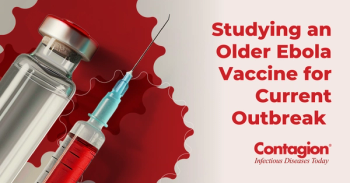
Ebola Vaccine Approved by FDA
The FDA has
Ervebo is administered as a single-dose injection and is a live, attenuated vaccine.
The vaccine was used as an investigational vaccine in the Democratic Republic of the Congo where the second largest Ebola outbreak is ongoing. The vaccine was authorized by the World Health Organization under an expanded access program to help mitigate the outbreak.
Read the full article
FDA Clears Investigational New Drug Application for DARE-BV1 for Bacterial Vaginosis to Commence Phase 3 Clinical Study
Daré Bioscience announced that the FDA has cleared its investigational new drug application for DARE-BV1, a novel thermosetting bioadhesive hydrogel containing 2% clindamycin phosphate. DARE-BV1 is being developed for vaginal administration for the treatment of bacterial vaginosis, which affects more than 20 million women in the US.
The company is now cleared to commence the planned Phase 3 clinical study of DARE-BV1 in approximately 220 women to support a new drug application.
Read the press release