






Conference Coverage
Latest Content







Advertisement
Shorts
0:57
Antibiogram Use at the Bedside
6 days ago
by
Zachary Nelson, PharmD, MPH, BCIDP(+1 more)
1:06
Utilizing the New UTI Classifications
9 days ago
by
Zachary Nelson, PharmD, MPH, BCIDP(+1 more)

1:08
Why Piperacillin-Tazobactam for ESBL Still Needs Dose Optimization Data
13 days ago
by
Jason M. Pogue, PharmD, BCPS, BCIDP(+1 more)
2:06
Carbapenem-First Therapy For ESBL-Producing Organisms?
16 days ago
by
Jason M. Pogue, PharmD, BCPS, BCIDP(+1 more)
0:47
When Herd Immunity Fails: How Falling Vaccination Rates Endanger Vulnerable Children
20 days ago
by
Sharon Nachman, MD(+1 more)
0:55
Early Aggressive Supportive Care Is Key to Surviving Ebola Infection
23 days ago
by
Gavin H. Harris, MD(+1 more)
0:44
Who Keeps Food Safe?
a month ago
by
Lynette Johnston, PhD(+1 more)
1:03
The Challenge of Capturing Complete Foodborne Numbers
a month ago
by
Lynette Johnston, PhD(+1 more)

1:28
Can Monoclonal Antibodies Change Sudan Ebolavirus Treatment?
a month ago
by
Gavin H. Harris, MD(+1 more)

1:01
Why Are Vaccine Rates Falling in the US?
a month ago
by
Robert H. Hopkins Jr. MD(+1 more)
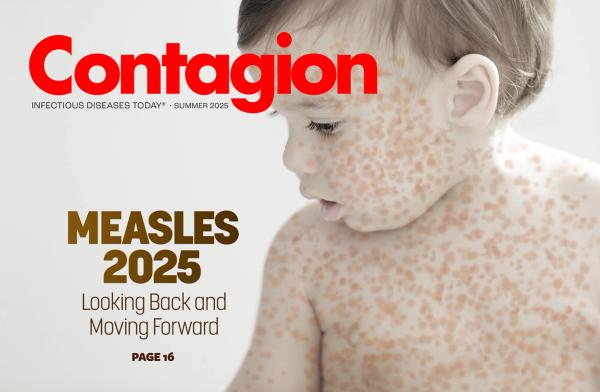
Contagion: Summer 2025 Issue
View our interactive Summer 2025 issue, featuring articles on biosurveillance, aging in HIV, the NARROWS Framework for stewardship, and much more!
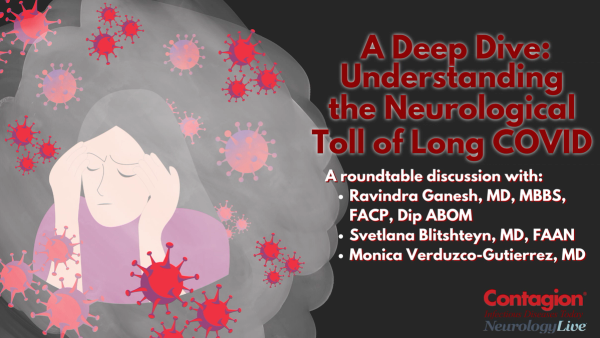
A Deep Dive: Understanding the Neurological Toll of Long COVID
Ravindra Ganesh, MD, MBBS, FACP, Dip ABOM, Svetlana Blitshteyn, MD, FAAN, and Monica Verduzco-Gutierrez, MD, discuss Long COVID's prevalence—noting that 1 in 5 Americans and 1 in 10 patients post-COVID may be affected.
Contribute to Contagion's Digital Book!
Contagion® is always looking for new contributors to the various sections of our book. Click to learn more about submitting.

Beyond the Virus: Long COVID’s Neurological Toll
There is increasing concern of Long COVID’s impact on the brain of patients previously infected with the virus. Featuring commentary from Jennifer Frontera, MD; Leigh Elkins Charvet, PhD; Neil Busis, MD; Alba Azola, MD; and Kristine Erlandson, MD.
COVID-19 Therapeutic Management and Prevention
Tina Tan, MD; Scott Roberts, MD; James Wilson, DO, FACP, FAWM, CTropMed; and Michael Curulewski, PharmD, BCPS, BCIDP, BCGP, discuss FDA-approved COVID-19 therapies, off-label treatments, and preventive modalities.







Videos



Contagion Digital Edition
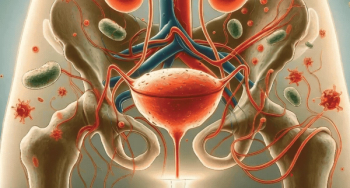
Recent urinary tract infection guideline updates from multiple international
medical societies highlight evolving recommendations, including a major shift
in classification, moving from anatomy- and risk factor–based definitions
toward distinguishing localized from systemic infections.

Widespread antimicrobial use disrupts vital microbial communities that regulate Earth’s biogeochemical cycles, driving antimicrobial resistance, worsening human and environmental health, and significantly contributing to climate change.

New data from the PETERPEN trial suggest that piperacillin-tazobactam may be noninferior to meropenem for early clinical outcomes in select patients with ESBL bloodstream infections, but carbapenems remain the standard of care until final mortality results are available and fully analyzed.

In mid-May, as the world was still grappling with an unexpected hantavirus outbreak aboard a tourism vessel, news broke of an Ebola outbreak in the Ituri Province of the Democratic Republic of the Congo spanning at least 3 health zones, including Bunia, Rwampara, and Mongbwalu.

Reported cases of Legionnaires’ disease have been on the rise for the past decade, and identifying Legionella bacteria requires specialized testing in the microbiology lab. Here is a clinical overview of Legionella bacteria, including required testing, treatment, and reporting to public health officials.

A retrospective multihospital study found that severe adverse events occurred at similarly low rates with ceftriaxone and other IV cephalosporins suggesting there is no evidence to support avoiding ceftriaxone despite recent health department safety alerts.

A retrospective study of 225 patients across Cook County Department of Health clinics found that the novel 1-month 1HP regimen (isoniazid plus rifapentine) for latent TB infection had a completion rate comparable to standard longer regimens and was well tolerated, suggesting it may be a viable shorter alternative.

Here is a review of glucagon-like peptide-1 receptor agonist use in people with HIV.

Editor in chief Jason Gallagher, PharmD, FCCP, FIDP, FIDSA, BCPS, discusses the proposed OMB rule restricting federal grants for international research collaboration, and how it threatens infectious disease medicine's inherently borderless surveillance networks, publication access, and knowledge-sharing systems.

Daptomycin-resistant Enterococcus faecium bacteremia is an emerging, high-mortality challenge in transplant and other high-risk patients, requiring early recognition, aggressive source control, and reliance on limited alternatives—most notably linezolid—with combination or salvage therapies considered when options are constrained.






















































































































































All News
Advertisement
Advertisement

The guidelines issued by the Department of Health and Human Services (HHS) have been updated with recent, evidence-based consensus of The Panel for the Use of Antiretroviral Agents in Adults and Adolescents.
As the Bundibugyo virus outbreak in the Democratic Republic of the Congo surpasses 9300 confirmed cases and 4400 deaths, this FAQ explains how the virus spreads, how it presents, why it is hard to diagnose and treat, which vaccines and therapies are being tested, and why CDC considers the risk to the United States low.

As of October 15, CDC reports 9235 confirmed cases and 4444 deaths in the Bundibugyo virus Ebola outbreak in the DRC, now the second-largest on record.
The latest CDC numbers show an 8.1% increase in measles cases from week-to-week, bringing the 2026 US total to 4410 confirmed cases. A CDC disease detective is going to Pennsylvania to aid in the state's massive outbreak, and the agency reports on a rare measles complication that is uniformly fatal.

Serial bloodstream isolates from two critically ill London patients showed heteroresistance, CRZ1 escape mutations, and drug-induced polyploidy despite wild-type FKS1 and susceptible MICs.

Projected disease burden from declining childhood vaccine coverage shows increases in vaccine-preventable diseases. Benjamin Lopman, PhD, provides insights on how VaxImpactMap works and the potential long-term disease consequences of decreased immunization rates.

Approximately 12% of all new cases of cancer worldwide in 2024 were attributable to an infection, with most of the infections preventable or treatable before cancer develops.
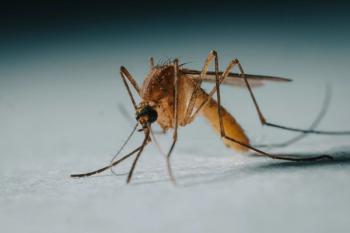
After 2 adults died of West Nile virus in central North Carolina this month, this FAQ explains how the mosquito-borne virus spreads, who faces the greatest risk of severe neuroinvasive disease, and how clinicians can diagnose, manage, and help prevent infection when no vaccine or antiviral treatment exists.

North Carolina health officials confirmed two West Nile virus deaths among adults in the central part of the state, where CDC data show 11 human cases this season.
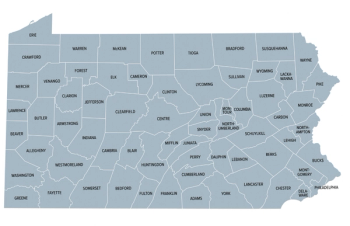
A 39-year-old unvaccinated Franklin County woman has died after a recent measles diagnosis. Nationally, numbers continue to increase and the US has passed 4,000 cases.
Advertisement

The National Foundation for Infectious Diseases (NFID) recently held its respiratory season kick-off, which included the release of its annual respiratory disease survey. This year, the survey revealed the gap between vaccine support and uptake. Robert Hopkins Jr, MD, medical director of NFID delves deeper into the findings of the survey and the vaccine uptake challenges associated with certain immunizations.

Detection of the virulent neurotropic fungus Cladophialophora bantiana in clinical samples, primarily CNS tissue, increased four-fold in the period from 2023 to 2025.
CDC reports 8,750 confirmed Bundibugyo virus cases and 4,208 deaths, making the DRC outbreak the second-largest Ebola outbreak on record.

Pritelivir (Hovilpri) healed all lesions by day 28 in 63% of immunocompromised adults with refractory HSV versus 34% with investigator's choice in the phase 3 PRIOH-1 trial.

CDC is continuing its investigation into 4 multistate Salmonella and E coli outbreaks, led by a 76-case alfalfa sprout cluster across 16 states and a recalled raw milk cheese.
Advertisement

Advertisement
Trending on Contagion Live
1
FDA Approves Bepirovirsen, First Antisense Therapy for Chronic Hepatitis B
2
LMN-201 Reduces C difficile Recurrence
3
HHS Updates Guidelines for Antiretroviral Treatment of HIV
4
CHMP Backs Extended Use of AstraZeneca H5N1 Pandemic Flu Vaccine
5