
The World Health Organization (WHO) reports on the vaccine uptake in that region, and the Global Polio Eradication Initiative reports that some countries recording new cases.
John Parkinson is the assistant managing editor for Contagion. Prior to joining MJH Life Sciences in 2020, he has covered a variety of fields and markets including diabetes, oncology, ophthalmology, IT, travel, and local news. You can email him at jparkinson@mjhlifesciences.com.
The World Health Organization (WHO) reports on the vaccine uptake in that region, and the Global Polio Eradication Initiative reports that some countries recording new cases.

The company announced its monoclonal antibody, pemivibart (Pemgarda), was denied the emergency use authorization (EUA) for treatment of mild-to-moderate COVID-19 for immunocompromised persons.

Chinese researchers say this newly discovered virus can be transmitted to humans much the way COVID-19 did.
Two cats became severely ill, and both owners declined to be tested.

A new study published in JAMA Network Open points out that immunization also occurred in individuals who did not receive routine prenatal or infant vaccines.
In a novel, natural experiment associated with age and the antiviral, investigators were able to see the effects of the therapy in a group of adults considered to be more at risk for hospitalization and death.

InflaRx CEO Niels Riedemann, MD, offers insights on his company’s monoclonal antibody, which demonstrated a nearly 24% reduction in 28 day all-cause mortality.

The company’s investigational gel, RECCE 327, met primary and secondary endpoints, and it plans to progress to a phase 3 trial.
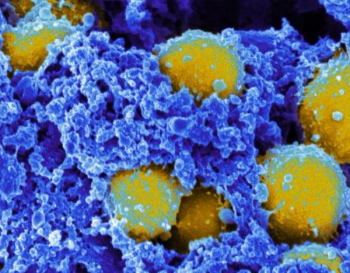
The trial is being conducted by LimmaTech Biologics, and the first participants have been vaccinated.
The Prescription Drug User Fee Act (PDUFA) date is set for June 19. And if it is approved, it would be the first and only twice-yearly HIV pre-exposure prophylaxis (PrEP).

A state official says the woman is hospitalized in another state, and had preexisting health conditions that can make people more vulnerable to illness.
The company's trivalent vaccine (mRNA-1403) was being studied in a phase 3 trial.

In a statement, the official, Ralph Abraham, MD, along with the state’s deputy surgeon general, wrote that because of “COVID missteps” they will no longer encourage vaccination to people.

As a result of an independent committee’s determination, the study has been discontinued.

A decreasing number of researchers and open positions for infectious disease clinicians and limited residency matches are underlying issues that should be addressed to meet the needs around antimicrobial development and clinical care. Amesh Adalja, MD, FIDSA, discusses some of the challenges behind it.
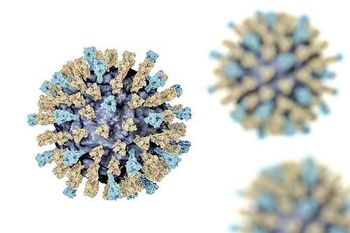
Twenty-four cases have been identified within the last two weeks, and 22 of those cases are in children. Nine of the cases have required hospitalization.
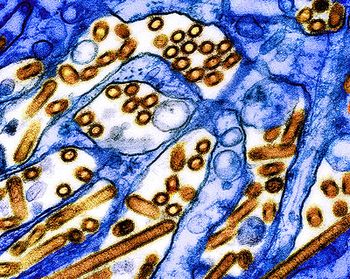
The affected person had a mild case and is recovering.

The Centers for Disease Control and Prevention (CDC) is preparing for staff cuts and the Trump Administration may be withholding public health information in one of the agency's publications, which can impact disclosing health information being seen by providers and other stakeholders.
There are concerns around norovirus risks associated with a certain harvest from Louisiana.
The association’s Executive Director Georges Benjamin, MD, offers some commentary as to why they have concerns around him as Health and Human Services Secretary.
In a randomized control study, the antiviral demonstrated reduced risk and could potentially influence treatment management for patients with a moderate or high viral load.

SARS-CoV-2 infection was associated with rapid growth of plaque in the coronary arteries and an increased risk of cardiovascular events compared to noninfected patients.

The agency pointed out that pathogens such as Klebsiella pneumoniae and Escherichia coli (E coli) are problematic for healthcare systems and the general public across Europe.

This is the second in a series looking at the intersection of government and public health. In this segment, Contagion Editor-in-Chief Jason Gallagher, FCCP, FIDP, FIDSA, BCPS, discusses the WHO pullout, and the pauses on federal communication and research grants.
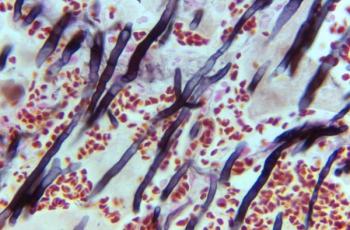
Investigators developed a novel prognostic model around this subset of patients treated for this fungal infection.

The outbreak is currently concentrated in 2 counties in the state, Wyandotte and Johnson.

Wendy Dann has MS and describes her experience with a copay assistance program that provides insurers with additional revenue, but does not go towards her deductible.

In a small trial, the Hecolin hepatitis E vaccine demonstrated further utility outside of previous study parameters.

An investigational inhibitor, V-161, has been shown to reduce bacterial growth and colonization in an enzyme that is key to enterococcus proliferation.
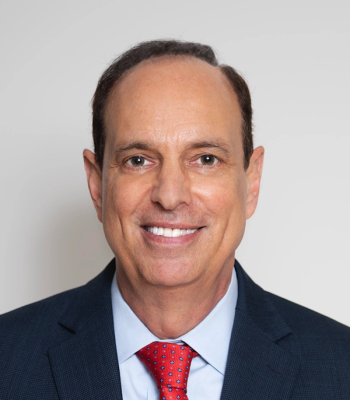
As a new administration is taking hold, Carl Schmid, executive director of the HIV+Hepatitis Policy Institute, discusses the last administration’s approach to the 2026 Notice of Benefit and Payment Parameters rule and its effects on patient cost-sharing.