
Jill Morgan, RN, BSN, reviews this significant part of clinical care and how personal protective equipment (PPE) is essential to protecting healthcare workers.
John Parkinson is the assistant managing editor for Contagion. Prior to joining MJH Life Sciences in 2020, he has covered a variety of fields and markets including diabetes, oncology, ophthalmology, IT, travel, and local news. You can email him at jparkinson@mjhlifesciences.com.
Jill Morgan, RN, BSN, reviews this significant part of clinical care and how personal protective equipment (PPE) is essential to protecting healthcare workers.

Emory's Gavin Harris, MD, discusses these elements, and how despite the fact they rarely occur, the need to do continuous training is essential for readiness.
Gavin Harris, MD, discusses his experience working in outbreak environments where there is high-consequence infectious disease (HCID) and how it is important to establish buy-in from the local populations and some of the important elements of what you need to leave behind when an outbreak is declared over.
Emory's Gavin Harris, MD, talks about taking care of patients with high-consequence infectious diseases, and considerations for not only their care, but their families. He also discusses working with other healthcare facilities around COVID-19 care and educating them through Emory's ECHO program on new and existing threats.

Jonathan Parr, MD, MPH, discusses his work in locating potential targets to develop a syphilis vaccine and the challenges associated with genomic diversity of subpopulations of the main pathogen, Treponema pallidum.
This new recommendation relates to infants born to women who test negative for hepatitis B. This is a departure from the federal agency’s previous recommendation and comes on the heels of the ACIP’s recent meeting.
Andrew Handel, MD, talks about transmission, differential diagnosis, treatment, and protection against it.

Margaret Aldrich, MD, provides insight around this concept, addressing stewardship within this patient population, and how their institution’s collaborative work environment helps all of the department’s clinicians.

The antibiotic's approval was based from phase 3 results demonstrating noninferiority to a combination therapy.

Infectious disease pediatrician Sharon Nachman, MD, talks about how the new recommendations will defer immunization, leading to a whole host of issues and negative impacts on long-term public health.

GSK’s David Payne, PhD, provides more information are the data from the EAGLE-1 trial.

The federal nod was given based from the phase 3 data of the EAGLE-1 trial, which showed noninferiority to combination therapy. This approval provides a new oral option.
NYU Langone’s Angelica Cifuentes Kottkamp, MD, continues our Media Day discussion around these illnesses and how in New York City, clinicians need to be prepared to decipher in differential diagnosis for these potential diseases.

In episode 2 of our Media Day series with NYU Langone, Angelica Cifuentes Kottkamp, MD, discusses its vaccine center and their work around COVID-19 vaccines, as well as the importance of achieving diversity in clinical trials.

Robert Hopkins Jr, MD, medical director of the National Foundation for Infectious Diseases, discusses the changes in the new vaccine recommendations and what potential serious consequences may be seen as a result.

Angelica Cifuentes Kottkamp, MD, discusses how its location, breadth of experience, and opportunities afford clinicians the ability to see and treat a wide berth of diseases and infections.
Lacking any safety data showing potential serious adverse effects, the committee decided to move forward with the recommendation “that the initial dose is administered no earlier than 2 months of age.”
Due to repetitive and confusing language, the committee decided to amend the votes for clarity and will vote on 3 new recommendations on Friday.
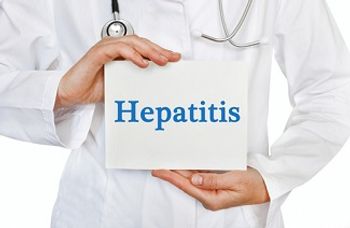
A new analysis shows thousands of children could contract hepatitis B, leading to further complications and deaths, if the vaccine schedule recommendations are changed to later in a child's life.

The New Jersey company recently announced the partnership that includes federal funding to create new treatments from a novel class of fungerps.

Shionogi has been identifying in vitro activity using its antibiotic, cefiderocol, against Gram-negative clinical isolates such as carbapenem-resistant Enterobacterales (CRE). Christine Slover, PharmD, offers some insights on the company’s analysis.

This is the first human ever known to be infected with the H5N5 strain. The infected patient was from Washington state, and was undergoing treatment for H5N5 (avian influenza) when the individual died last week.
Timothy Jenkins, MD, talks about how these important tests are being overly used for respiratory and gastrointestinal presentations and strategies his institution, Denver Health, is employing to reduce testing to save costs and still continuing to achieve optimal treatment outcomes.

Kaylee Caniff, PharmD, BCIDP, provides insights on a study looking at how urban and rural healthcare settings differ in terms of prescribing.

This form of prophylaxis showed 79% overall effectiveness across 3 European countries.
Nathan Shively, MD, talks about the increase of this antibiotic at his institution over the last several years for a variety of infections, particularly osteomyelitis. He also provides insights about dalbavancin's profile including its efficacy and adverse effects.

During National C difficile Awareness Month, the Peggy Lillis Foundation is working toward greater awareness about prescribing practices as well as cleaning methods that can prevent infections.

Rachel Britt, PharmD, BCIDP, provides insights on an evolving understanding of the long-time antibiotic’s limitations for these infections and provides guidance on other agents and the role of diagnostics in finding the best agents for patients.
Despite a 2018 American Academy of Pediatrics clinical update that recommends use of postexposure prophylaxis for prevention of the tick-borne disease in children younger than 8 years, Wesley Kufel, PharmD, BCPS, BCIDP, FCCP, FIDSA, points out many clinicians are unaware of this. He also discusses its efficacy at preventing the disease in this patient population.

The Centers for Disease Control and Prevention provided more information on a multistate outbreak and genomic testing.