
Paul Offit, MD, voices concerns over the CDC’s surveillance capabilities, the federal agency’s lack of movement to address vaccine needs during outbreaks, and diminishing herd immunity, making the vulnerable at risk for contracting disease.
John Parkinson is the assistant managing editor for Contagion. Prior to joining MJH Life Sciences in 2020, he has covered a variety of fields and markets including diabetes, oncology, ophthalmology, IT, travel, and local news. You can email him at [email protected].
Paul Offit, MD, voices concerns over the CDC’s surveillance capabilities, the federal agency’s lack of movement to address vaccine needs during outbreaks, and diminishing herd immunity, making the vulnerable at risk for contracting disease.
As the spending bill makes its way through Congress, the HIV+Hepatitis Policy Institute's Carl Schmid provides some insights on the latest wranglings on the HIV bill and the domestic programs.
In the second installment of our 2-part interview, infectious disease pediatrician Sharon Nachman, MD, discusses this very rare adverse effect that can occur after immunization administration.
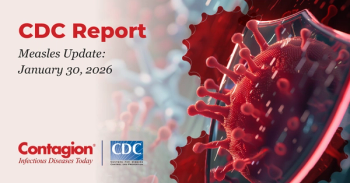
The Centers for Disease Control and Prevention (CDC) provided its latest figures today on the confirmed number of cases in the US.
Infectious disease pediatrician Sharon Nachman, MD, discusses the vaccine data the federal agency disclosed in the recent letter they sent to the manufacturers.

In the second installment of a 2-part interview, Jacinda Abdul-Mutakabbir, PharmD, MPH, offers some novel findings around UTI treatment failure associated with levels of education and insurance payers.
The workgroup is examining the vaccine’s schedule including the age it is administered, dosage, and the safety and efficacy of the vaccines.
Jacinda Abdul-Mutakabbir, PharmD, MPH, discusses her research in this area and how to potentially mitigate these treatment disparities.

Kirk Milhoan, MD, PhD, said vaccine choice is the most important element to the public even with the possibility of people contracting this disease or others when given the right to opt out of vaccination.

Emory’s Jill Morgan, RN, BSN, discusses what they do after removal of personal protective equipment (PPE) and if a provider has experienced a potential exposure to a high-consequence infectious disease.

Emory’s Jill Morgan, RN, BSN, provides an overview of putting on and taking off personal protective equipment (PPE) when caring for these patients.
Emory’s Katherine Normile, ASCP-MLS, discusses their protocols for safely donning and doffing their equipment when caring for patients with high-consequence infectious disease (HCID) as well as the process for receiving specimens in these care scenarios.
Infectious disease pediatrician Sharon Nachman, MD, offers insights on the incidence trends among teens, and what severe disease complications look like for young children.
Sharon Carrasco DNP, APRN, ACNS-BC, ANP-C, CEN, FAEN, FAAN, FNAP, discusses her approach to training for these care scenarios.

Former FDA Chief Scientist Jesse L. Goodman, MD, MPH, provides insights on the potential consequences of these new recommendations.
Sharon Carrasco DNP, APRN, ACNS-BC, ANP-C, CEN, FAEN, FAAN, FNAP, talks about safely responding to deadly pathogens such as Ebola and Lassa fever, and where the US is in terms of thinking about preparedness on a national level.
Jill Morgan, RN, BSN, talks about steps being taken to ensure everyone’s safety is front of mind.
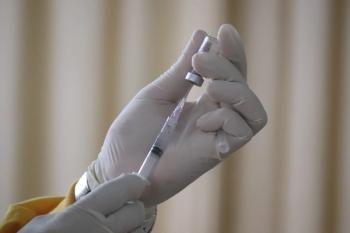
The recent CDC ACIP meetings and subsequent actions show a path for which the current Health and Human Services department wants to roll back access to vaccines for this virus and other vaccines.
Jill Morgan, RN, BSN, reviews this significant part of clinical care and how personal protective equipment (PPE) is essential to protecting healthcare workers.
Emory's Gavin Harris, MD, discusses these elements, and how despite the fact they rarely occur, the need to do continuous training is essential for readiness.
Gavin Harris, MD, discusses his experience working in outbreak environments where there is high-consequence infectious disease (HCID) and how it is important to establish buy-in from the local populations and some of the important elements of what you need to leave behind when an outbreak is declared over.
Emory's Gavin Harris, MD, talks about taking care of patients with high-consequence infectious diseases, and considerations for not only their care, but their families. He also discusses working with other healthcare facilities around COVID-19 care and educating them through Emory's ECHO program on new and existing threats.

Jonathan Parr, MD, MPH, discusses his work in locating potential targets to develop a syphilis vaccine and the challenges associated with genomic diversity of subpopulations of the main pathogen, Treponema pallidum.
This new recommendation relates to infants born to women who test negative for hepatitis B. This is a departure from the federal agency’s previous recommendation and comes on the heels of the ACIP’s recent meeting.
Andrew Handel, MD, talks about transmission, differential diagnosis, treatment, and protection against it.
Margaret Aldrich, MD, provides insight around this concept, addressing stewardship within this patient population, and how their institution’s collaborative work environment helps all of the department’s clinicians.

The antibiotic's approval was based from phase 3 results demonstrating noninferiority to a combination therapy.
Infectious disease pediatrician Sharon Nachman, MD, talks about how the new recommendations will defer immunization, leading to a whole host of issues and negative impacts on long-term public health.

GSK’s David Payne, PhD, provides more information are the data from the EAGLE-1 trial.
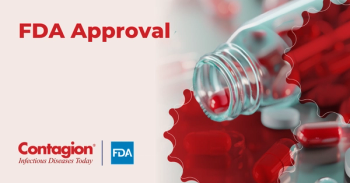
The federal nod was given based from the phase 3 data of the EAGLE-1 trial, which showed noninferiority to combination therapy. This approval provides a new oral option.