

HIV / AIDS
Latest News
Advertisement
Latest Videos



CME Content





















































































































Advertisement
More News

“There are structural drivers that are impeding prevention and treatment among people who inject drugs,” Strathdee said in an interview with Contagion®.

For African men living with HIV who are not virally suppressed, community-based antiretroviral therapy (ART) significantly increased viral suppression compared with clinic-based ART.

New Week 96 data from the FLAIR study indicate that once-monthly injections of cabotegravir and rilpivirine remains non-inferior and safe when compared with the daily, oral 3-drug regimen of ABC/DTG/3TC.

A team of investigators hypothesized that prevalent syphilis infection in women with and without HIV may be a way to identify individuals who are at an elevated risk of a stillbirth over time.
Despite the high level of knowledge surrounding immediate initiation of ART, the practice is not yet the standard of care across clinics in NYC.
An international team of investigators shares 48-week results from ATLAS-2M, which tested out every other month dosing of the intramuscular injection compared with monthly dosing.

Investigators conducted 2 studies on intravenously administered GS-9722, 1 in HIV-negative participants and 1 in virally suppressed people with HIV.

A generic pre-exposure prophylaxis (PrEP) option would greatly expand coverage among vulnerable populations and may well be the most cost-effective and safe option.
Getting rid of the latent reservoir of HIV is a key part of the quest to cure HIV, but the latest study examining the kick and kill method plus ART showed no effect compared with ART alone.
Colleen Kelley, MD, MPH, describes barriers to the implementation of HIV pre-exposure prophylaxis.

A recent report discusses the expansion of pre-exposure prophylaxis into the 35 PEPFAR supported early program adopters from October 2016 to September 2018.
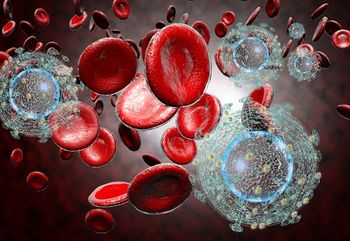
New research pinpoints some of the factors involved in HIV reemergence after cessation of antiretroviral therapy, as well as possible ways to stop the process.

Clinicians accustomed to HIPAA guidelines may not be aware of changes in confidentiality when they make contact with school health care services.
Jason Tokumoto, MD, reflects on the ways people respond to HIV diagnosis.

Concerns over the possibility of increased neural-tube defects and weight gain on dolutegravir are outweighed by the much lower rates of HIV transmission from mother to baby than are seen with efavirenz.
The NIH has begun the first clinical trial evaluating the safety of a monthly dapivirine ring used to prevent HIV among pregnant women in eastern and southern Africa.

Clinicians must identify when additional pounds cross the line of diminishing return.

People living with HIV who don’t receive early intervention and primary care end up with a disproportionate share of health care costs, according to a new study that examined barriers to care and costs at a Dublin hospital.
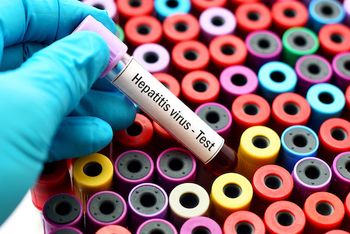
PWID are unlikely to receive testing for HIV and hepatitis C, according to a new study that found that 8.5% were tested for HIV and 7.7% were tested for HCV within 1 year of a clinical encounter consistent with injection drug use.
Jason Tokumoto, MD, explains the need to look beyond nonadherence and understand a patient with HIV as a complex person.
The rising price of antiretroviral therapy for people living with HIV in the United States is a barrier to adherence. It also blunts efforts to achieve higher rates of viral suppression.
Jason Tokumoto, MD, discusses the evolution of HIV treatment.

Less than 1 in 4 teenage boys considered at-risk ever received an HIV test in a recent study.

February 7th is commemorated each year to highlight the impact that HIV and AIDS has on the black or African American population in the United States.

HIV-2 infections remain rare in the United States, but the CDC continues to recommend an HIV-1/HIV-2 differentiation test as a second step in testing.
Advertisement
Advertisement
Trending on Contagion Live
1
Measles Update: February 6, 2026
2
Pritelivir Improves Outcomes in Immunocompromised Patients With Refractory Herpes Simplex Virus
3
HIV in the Black Community: Shifting from Stigma and Health Inequalities to Communication and Care Initiatives
4
Antibiotics Deconstructed: IV Fosfomycin
5