

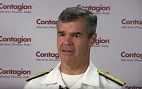






















































































































Stephen Redd, MD (RADM, USPHS), Director of the Office of Public Health Preparedness and Response at the Centers for Disease Control and Prevention (CDC) shares which infectious disease he feels needs greater attention.
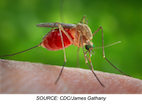
As a second case of non–travel-related Zika infection comes to light in Florida, researchers from Brazil discover another mosquito that they believe may be spreading the virus.
Stephen Redd, MD (RADM, USPHS), Director of the Office of Public Health Preparedness and Response at the Centers for Disease Control and Prevention (CDC) shares which infectious disease he feels needs greater attention.

Stephen Redd, MD (RADM, USPHS), Director of the Office of Public Health Preparedness and Response at the Centers for Disease Control and Prevention (CDC) shares how the CDC is working to protect Americans from travel-associated Zika infections and touches on preparations for the Olympics.

Stephen Redd, MD (RADM, USPHS), Director of the Office of Public Health Preparedness and Response at the Centers for Disease Control and Prevention (CDC) explains how the CDC responds to outbreaks.

Stephen Redd, MD (RADM, USPHS), Director of the Office of Public Health Preparedness and Response, at the Centers for Disease Control and Prevention explains what they learned from handling the response to the Ebola outbreak in 2014-2015.

Stephen Redd, MD (RADM, USPHS), Director of the Office of Public Health Preparedness and Response at the Centers for Disease Control and Prevention (CDC) explains how the CDC is partnering with global organizations to proactively act on the Zika virus.

Stephen Redd, MD (RADM, USPHS), Director of the Office of Public Health Preparedness and Response at the Centers for Disease Control and Prevention (CDC) explains how the CDC is working to protect Americans from the Zika virus.

Stephen Redd, MD (RADM, USPHS), Director of the Office of Public Health Preparedness and Response at the Centers for Disease Control and Prevention (CDC) explains what the CDC learned from responding to the Ebola outbreak and how this has impacted the response to the Zika virus.
The Centers for Disease Control and Prevention (CDC) is currently working with local health officials to investigate what seems to be the first case of locally-acquired Zika in the United States.

Which came first: high Zika viral load or a diminished immune system? This is a question that epidemiologists and medical experts from the Centers for Disease Control and Prevention are pondering in regards to the recent case of Zika identified in Salt Lake City, Utah that may have resulted in the individual's death.
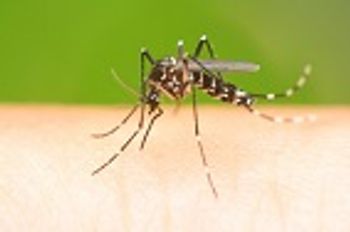
That may be the “$64,000 Question” facing clinicians in South America and the Caribbean, where 3 viruses linked with the Aedes aegypti mosquito have caused concurrent epidemics, resulting in confusion as efforts are made to diagnose and treat them.

With more humans encroaching the forest habitats, there are more opportunities for the acquisition of pathogens from their natural hosts.

Abdulla Al-Khan, MD, director of the Division of Maternal-Fetal Medicine and Surgery at Hackensack University Medical Center, discusses how long after exposure to Zika that a woman should wait before undergoing IVF therapy.
On the heels of new data suggesting the Zika epidemic will last for another 3 years, a new case reveals there may be a new mode of zika transmission.
Congress failed to reach a decision on Zika funding today as a new study reveals that the epidemic is expected to last well into 2019.

With the 2016 Rio Olympic Games less than one month away, the Centers for Disease Control and Prevention (CDC) released a statement summarizing their assessment of the risk of Zika importation by those returning from the summer Games.

Abdulla Al-Khan, MD, director of the Division of Maternal-Fetal Medicine and Surgery at Hackensack University Medical Center, describes his learnings from delivering a baby with Zika-related microcephaly.

Pedro Fernando da Costa Vasconcelos, MD, PhD, director of WHO Collaborating Center for Arbovirus and Research, Evandro Chagas Institute, explains how the Zika virus affects fetuses of infected pregnant women.

A molecule in green tea, known as epigallocatechin (EGCG), blocks the entry of a Brazilian strain of Zika virus into host cells, and may hold potential benefit for prevention of Zika virus infections, a new study has found.

As Congress debates action to combat the virus, a patient in Salt Lake County, Utah has lost the fight against Zika.

According to a recent study, screening for microcephaly can no longer adequately determine whether or not a baby has suffered abnormalities due to a congenital Zika infection.

Abdulla Al-Khan, MD, director of the Division of Maternal-Fetal Medicine and Surgery at Hackensack University Medical Center, discusses the prognosis for babies born with Zika-linked microcephaly.

Abdulla Al-Khan, MD, director of the Division of Maternal-Fetal Medicine and Surgery at Hackensack University Medical Center, discusses the medical condition of the tri-state area's first Zika-linked microcephaly baby.
Because protection against this mysterious virus is essential, as is a need to understand it, researchers have been using the resources that are available to learn more about Zika and how to prevent infection.

Abdulla Al-Khan, MD, director of the Division of Maternal-Fetal Medicine and Surgery at Hackensack University Medical Center, discusses the diagnosis and delivery of the tri-state area’s first Zika-infected microcephaly baby.
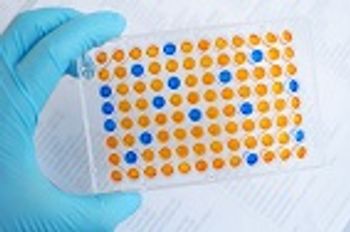
Exactly how to screen for and, thus, diagnose Zika virus remains a bit of a moving target for clinicians as the risk for localized transmission of the mosquito-borne disease rises for some parts of the United States with the arrival of summer.