


























































































































On Friday, August 26, 2016, the FDA amended its blood collection guidance, stating that all blood donations in US states and territories be tested for Zika virus infection, to ensure the safety of the nation’s blood supply.
On Friday, August 26, 2016, the FDA amended its blood collection guidance, stating that all blood donations in US states and territories be tested for Zika virus infection, to ensure the safety of the nation’s blood supply.

On Monday, the US Food and Drug Administration skirted normal approval channels and issued Emergency Authorization for a Zika diagnostic test from the Swiss drug maker Roche.
News has emerged of a case in Maryland involving the identification of Zika infection in a woman who had sexual contact with a man who did not know he was sick because he was asymptomatic.

A multidisciplinary team at Yale University School of Medicine have created a mouse model for vaginal Zika virus infection.
With 43 “local” cases of Zika virus infection now reported in Florida, and as far north as St. Petersburg, health officials in other Gulf states are ramping up responses in the event of potential outbreaks—even as there remains some disagreement as to the true nature of the threat of local transmission in the United States.

Micaela Martinez, PhD, postdoctoral fellow in the Department of Ecology and Evolutionary Biology at Princeton University, explains how collecting mosquito data for Zika and making it readily available to the public health community can help ecologists get a handle on the transmission of vector-borne diseases.

Public health experts are predicting that there will likely be localized cases of the virus in flood-ravaged Louisiana as well as in Texas before the end of the summer.

Micaela Martinez, PhD, postdoctoral fellow in the Department of Ecology and Evolutionary Biology at Princeton University, explains the effects of timing conception to avoid congenital Zika infection.

Micaela Martinez, PhD, postdoctoral fellow in the Department of Ecology and Evolutionary Biology at Princeton University, explains the statistical software that she uses in her studies to generate a calendar that shows the optimal time to get pregnant.

Micaela Martinez, PhD, postdoctoral fellow in the Department of Ecology and Evolutionary Biology at Princeton University, discusses the seasonality of the Zika virus and how pregnant women can avoid getting the virus during pregnancy.
Reports of active transmission in a second area of Florida have been confirmed.

In the first research of its kind, an interdisciplinary group of scientists analyzed three Zika strains in second trimester fetal neural stem cells (fNSC) to identify which viral proteins cause congenital microcephaly. Since Zika causes significant neurological impairment, early diagnosis is imperative.
The El Paso resident is said to have contracted the infection while visiting Miami, Florida, where active Zika transmission has been confirmed
The US Department of Health and Human Services has declared a public health emergency in Puerto Rico, in response to tens of thousands of Zika diagnoses.
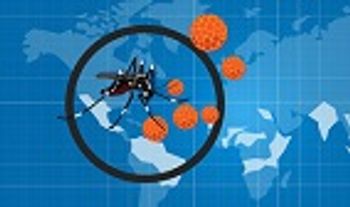
As the number of locally-acquired Zika cases rises in Florida, mathematicians are researching a new approach to control vector populations.
According to an update on the environmental review, the FDA considered thousands of comments from the public prior to publishing its final environmental assessment.
WRAIR announced that their Zika purified inactivated virus vaccine succesfully prevented infection in nonhuman primates.
The approach used in the development of this vaccine was previously implemented by NIAID in a West Nile virus vaccine, which was found to be safe and effective in Phase I trials.
The rapid spread of Zika throughout Puerto Rico coupled with the introduction of active transmission in Florida has prompted the Centers for Disease Control and Prevention (CDC) to award millions in Zika funding to US states and territories.

The US Food and Drug Administration approved the VERSANT Zika RNA 1.0 Assay (kPCR) Kit for Emergency Use Authorization, as the number of locally transmitted Zika cases rose to 14.
The four previously reported non–travel-related cases of Zika infection have now been confirmed to be locally acquired in Miami-Dade county, Florida.

An international team of researchers has identified a potential role for certain monoclonal antibodies in developing a treatment for Zika virus.
After failed requests for funding and warnings of the inevitable, the Florida Department of Health is investigating what could be the first cases of active Zika Transmission in the United States.

Researchers in Guadeloupe, the French territory in the southern Caribbean Sea, have reported, for the first time, the presence of Zika infection in the genital tract of a woman with the virus.

Researchers from the University of California-San Francisco (UCSF) have provided a roadmap for how the Zika virus travels from the blood of an infected pregnant woman to her fetus, providing new clues to the process by which the disease leads to birth defects.