



































































































































When a health emergency erupts somewhere in the world, the Centers for Disease Control and Prevention (CDC) quickly sends its new Global Rapid Response Team (Global RRT).
When a health emergency erupts somewhere in the world, the Centers for Disease Control and Prevention (CDC) quickly sends its new Global Rapid Response Team (Global RRT).

Abdulla Al-Khan, MD, director of the Division of Maternal-Fetal Medicine and Surgery at Hackensack University Medical Center, describes the diagnosis of the tri-state area's first case of Zika-linked microcephaly in a newborn child.

On Thursday, June 23, 2016, House Republicans approved a bill which included a $1.1 billion fund to combat Zika. But, there’s one big drawback, according to Democrats.

On June 17, the CDC announced that 1% of all blood donations analyzed in the American territory had tested positive for Zika, and that this could be an indication that the outbreak is poised to reach dangerous proportions.
In an effort to contain the Zika virus, the Centers for Disease Control and Prevention (CDC) is holding a series of teleconferences regarding concerns that were raised during the Zap Zika conference held in early April. The fifth conference in the series discusses Zika epidemiology.

Recent studies on Zika have lead researchers to discover how the virus causes neurological complications, as well as ways in which the body can fight off the infection.
In an open letter copied to the International Olympic Committee, 150 health experts from around the world urged the WHO Director-General, Margaret Chan, MD, MPH, to either postpone or move both the Olympic and Paralympic Games, for the sake of public health.

Efforts to bring to market a vaccine for the fight against Zika virus, at least via the private sector, have been stalled over concerns regarding the “marketability” of these products, according to multiple reports in the business press.

In an attempt to provide the best possible care for her unborn child, a Honduras woman with suspected Zika infection traveled to the United States where she then gave birth to a baby with microcephaly at Hackensack University Medical Center.

On May 31, 2016, the Centers for Disease Control and Prevention (CDC) updated its interim guidance on screening for, and diagnosis of, Zika virus.
Makers of specially modified mosquitoes designed to combat the Zika virus have approached regulatory bodies in multiple countries seeking approval to use their products in the fight against the mosquito-borne virus.

Christina G. Tan, MD, MPH, FACP, New Jersey State Epidemiologist/Assistant Commissioner, provides background on New Jersey Department of Health’s Zika prevention program, ZAP Zika.
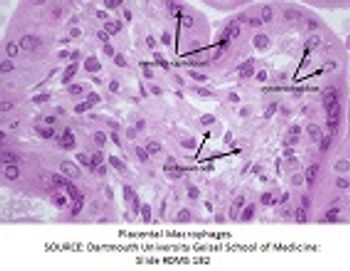
Zika virus is transmitted from mother to fetus through placental macrophages, according to a new study.
The Zika virus has left many scientists and doctors “astonished,” according to Margaret Chan, MD, MPH, director-general of WHO.

Christina G. Tan, MD, MPH, FACP, New Jersey State Epidemiologist/Assistant Commissioner, examines the probability of a Zika outbreak in New Jersey.

As of today, the CDC has changed the reporting criteria for Zika infection in pregnant women, to include those who are asymptomatic but test positive for a flavivirus.

Researchers at the University of Texas Medical Branch (UTMB) at Galveston have successfully cloned the Zika virus strain.

“An outbreak anywhere is a risk everywhere,” according to the Centers for Disease Control and Prevention (CDC). Officers of the CDC’s Epidemic Intelligence Service (EIS) are studying several emerging infections – those that have recently increased or show signs of increasing soon – and five researchers presented their results May 4 in the Emerging Infections session of the 65th Annual Epidemic Intelligence Service (EIS) Conference in Atlanta, Georgia.

Christina G. Tan, MD, MPH, FACP, New Jersey State Epidemiologist/Assistant Commissioner, explains how health care practitioners can aid in the prevention of Zika virus infections.

Christina G. Tan, MD, MPH, FACP, New Jersey State Epidemiologist/Assistant Commissioner, discusses Zika vector prevalence and infection prevention in New Jersey

The Senate has voted to grant $1.2 billion in funding to fight the impending local transmission of the Zika virus in the United States.

Researchers from the National Infection Service at Public Health England (PHE) in the UK may have identified the perfect platform for trials of future vaccines and antivirals for the management of Zika.

Seven monkeys in Ceará, Brazil have tested positive for the Zika virus.
Health officials in Puerto Rico have reported the first Zika-related case of microcephaly. The announcement comes on the heels of news of the first Zika-related death in the country just last week.
It would seem that the Centers for Disease Control and Prevention (CDC) is not waiting for Congress to decide on Zika funding.