


ZIKA
Latest News
Advertisement
Latest Videos









































































































































Advertisement
More News

Prenatal care for pregnant women with antenatal Zika-related microcephaly needs to be modified to include conversations that include pregnancy options as well as neonatal specialty consultations that will address infant special care needs, economic burden, and other factors.

Carmen D. Zorrilla, MD, professor of obstetrics and gynecology, University of Puerto Rico, School of Medicine, shared her research which aimed to evaluate the growth patterns of fetuses whose mothers acquired Zika virus during pregnancy “and showed no prenatally detectable structural anomalies or maternal conditions that could affect fetal growth.”
The need for continued surveillance to provide estimates on the rate at which the virus has impacted the incidence of birth defects has prompted the Centers for Disease Control and Prevention (CDC) to award funding to five jurisdictions.

Pedro Fernando de Costa Vasconcelos, MD, PhD, director of the WHO Collaborating Center for Arbovirus and Research, Evandro Chagas Institute, took a closer look at the Zika virus in Brazil during his presentation at The First International Zika Conference.
A new diagnostics tool to detect Zika was developed to bring easy-to-use technology to remote locations where Zika diagnostics is not readily available.

At The First International Zika Conference, Lenore Pereira, PhD, discussed her research regarding the question of how Zika virus is able to spread from maternal blood to the placenta to reach the fetus.
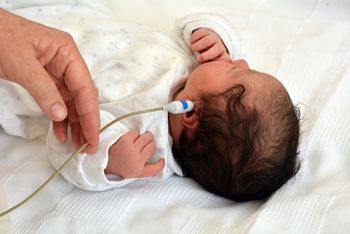
At the First International Zika Conference, Viviane S. Boaventura, MD, PhD, researcher, Fiocruz-Bahia, Gonçalo Moniz Institute, Brazil, presented her research that depicting an association between Congenital Zika Syndrome and hearing loss.

At the First International Zika Conference, Dr. Bogoch, professor of Emergency Medicine at Boston University School of Medicine, chairman at Replikins LLC, Foundation for Research on the Nervous System, explained how Replikins can give advanced warning of outbreaks and their cessation.

Lenore Pereira, PhD, professor of Cell and Tissue Biology at University of California, San Francisco, discusses how Zika crosses the placenta.

Annelies Wilder-Smith, MD, PhD, professor at Lee Kong Chian School of Medicine in Singapore, discusses why the Zika virus outbreak in Singapore did not reach such large proportions as those that occurred in the Americas.

At the First International Conference on Zika Virus, Alice Panchaud, PharmD, PhD, clinical pharmacist and pharmacoepidemiologist, CHUV, Lausanne University Hospital, Switzerland, discussed how an international registry can help estimate the risk of Zika virus associated with birth defects and abnormal pregnancy outcomes.
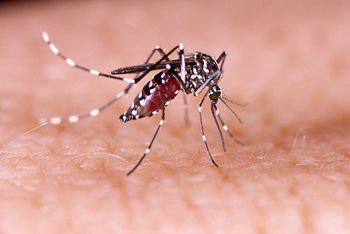
On Friday, February 24, 2017, at the First International Conference on Zika Virus, Matthew Aliota, PhD, discussed the Eliminate Dengue Program.

Viviane Boaventura, MD, PhD, researcher, Fiocruz-Bahia, Gonçalo Moniz Institute, Brazil, discusses her research regarding impaired hearing function due to congenital Zika syndrome.

Alice Panchaud, PharmD, PhD, clinical pharmacist and pharmacoepidemiologist, CHUV, Lausanne University Hospital, Switzerland, explains how data sharing may be used to answer important questions regarding congenital Zika syndrome.

Both Zika-infected and uninfected pregnant women showed levels of high stress in a recent study conducted in Puerto Rico.

Matthew Aliota, PhD, research scientist, University of Wisconsin, Pathobiological Sciences, explains why the mechanism behind how Wolbachia blocks Dengue virus transmission is not yet fully understood.
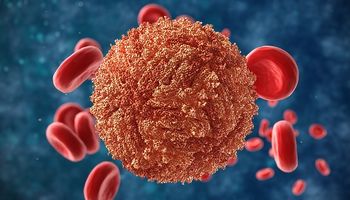
At the First International Conference on Zika Virus, Marta G. Cavalcanti, MD, PhD, discussed her team’s recent research regarding viral RNA shedding in symptomatic and asymptomatic Zika patients who are either mono-infected with Zika or Chikungunya, or co-infected with both.
At the First International Zika Conference, keynote speaker Annelies Wilder-Smith, MD, PhD, DTM&H, MIH, FAMS, FACTM, discussed how Zika has evolved on a global scale.

Marta G. Cavalcanti, MD, PhD, physician at Infectious Diseases Clinic, Hospital Universitario Clementino Fraga Filho, UFRJ, Brazil, discusses how the period of RNA shedding correlates with the severity of complications associated with mono- or coinfection in Zika patients.

In the first study to examine multiple body fluids for the presence of Zika virus in an ongoing fashion, researchers discover Zika virus remains in bodily fluids longer than other flaviviruses.
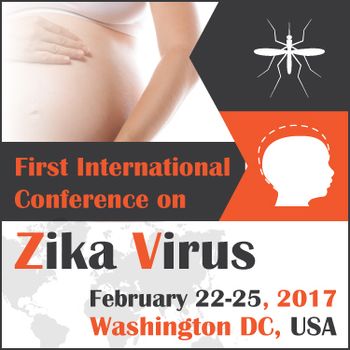
Contagion® will be attending the conference, so keep a look out for session coverage, as well as interviews with some of the key presenters.
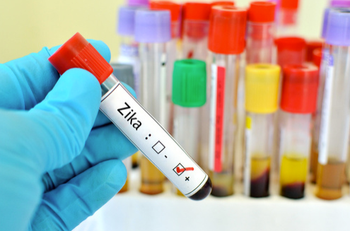
Results from Zika virus testing conducted by the District of Columbia Department of Forensic Sciences Public Health Laboratory between July 14, 2016 and December 14, 2016 raised red flags when all results came back negative.
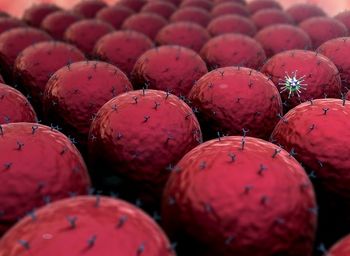
Researchers have found that the Zika virus uses receptor tyrosine kinase AXL to slip past major barrier cell types in the placenta.
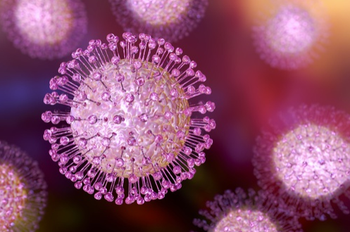
Researchers from Emory Vaccine Center study human dendritic cells infected with contemporary and historical strains of the Zika virus.
Contagion® is celebrating it’s one-year anniversary today, February 7, 2017. As we hit this milestone, we wanted to look back and remember the three articles that launched Contagion® on this day in 2016.
Advertisement
Advertisement
Trending on Contagion Live
1
New IDSA/ESCMID S aureus Bacteremia Consensus Statements: a Risk Stratification Framework
2
On World Rabies Day, When to Seek Treatment, Clinical Considerations for Post Exposure Prophylaxis
3
Further Insights, Treatment Considerations Around the PETERPEN Study
4
VYD2311 Shows Superior Tolerability to mRNA COVID-19 Vaccine in Phase 3 Study
5