
News|Videos|June 11, 2024
Are There Specific Subpopulations Who Benefit More From RSV Vaccines?
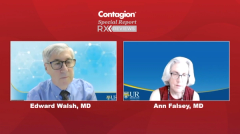
Author(s)Ann Falsey, MD, Edward Walsh, MD
Our experts discuss the potential subgroups who might benefit from the vaccines and their safety profiles.
Advertisement
At the end of May,
As there are now 3 FDA-approved RSV vaccines, Contagion has developed a new short series titled, Special Report: Clinical Insights on Moderna's RSV Vaccine. We have asked RSV vaccine investigators to provide more insights about these immunizations. Ann Falsey, MD, professor of Medicine at the University Of Rochester School Of Medicine, and her colleague, Edward Walsh, MD, professor of Medicine at the University Of Rochester School Of Medicine lead a peer-to-peer discussion on the impact these vaccines may have in preventing this respiratory illness.
In the third episode, Falsey and Walsh discuss the potential subgroup populations who might benefit from RSV vaccines and the safety profile of the immunizations.
Advertisement
Related to this article
Deborah Fuller, PhD, provides commentary around the data, and advantages of the technology.
Cefiderocol MICs fell against Pseudomonas aeruginosa and Klebsiella pneumoniae, and the drug showed marked synergy with LL-37 against resistant Acinetobacter baumannii. Jacinda Abdul-Mutakabbir, PharmD, MPH, AAHIVP, discusses her team's findings around this therapy and these pathogens.
Shionogi data presented at IDWeek 2026 demonstrated a 76.7% clinical response with cefiderocol in carbapenem-resistant respiratory infections and high in vitro activity against resistant P aeruginosa VAP isolates. Christine Slover, PharmD, vice president, Infectious Diseases US Medical Affairs, Shionogi, offers insights on the data as well as clinical considerations for providers when weighing the antibiotic for patients.

Alejandra Gurtman, MD, discussed the phase 2 data at IDWeek 2026 which showed the investigational 25-valent pneumococcal conjugate vaccine 25vPnC produced serotype 3 antibody levels about 15-fold higher than Prevnar 20 after the booster dose, targeting a serotype still behind 10.6% of invasive pneumococcal disease in US children younger than five years.
Monthly elebsiran plus tobevibart achieved undetectable HDV RNA with ALT normalization in 44% of patients at week 48 in the pivotal phase 3 ECLIPSE 1 trial.
CDC reports 10,772 confirmed Ebola cases and 5234 deaths, making this the second-largest outbreak on record. Kenya and Nigeria have reported cases.

IDSA and ESCMID released 7 consensus statements to assist in managing individuals with SAB. This review will focus on the adult patient population and additional information on pediatric population statements can be assessed in the guideline. Here is a closer look at Consensus Statement 2: Follow-up Blood Cultures.
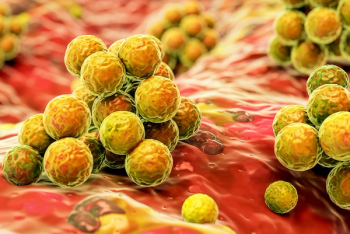
IDSA and ESCMID released 7 consensus statements to assist in managing individuals with Staphylococcus aureus Bacteremia (SAB). This review will focus on the adult patient population and additional information on pediatric population statements can be assessed in the guideline.
Advertisement
Advertisement