

Sexually Transmitted Diseases
Latest News
Advertisement
Latest Videos
CME Content












































































































Advertisement
More News

There is a vast unmet need for non-pharmacological treatment strategies to protect and improve cognitive function in the approximately 50% of adults living with HIV who experience HIV-associated neurocognitive disorder.
The number of STI screenings increased exponentially from 369 rectal and pharyngeal swabs performed in 2015 prior to policy implementation to 865 swabs in 2016, 1474 swabs in 2017, and 1889 swabs in 2018.

Sexually-transmitted Campylobacter clusters were genetically similar in the Seattle and Montreal regions. Campylobacter can be associated with “a bad week or 2” and even Guillain-Barre syndrome.

The Cooper Early Intervention Program Expanded Care Clinic observed that the gap in retention in care among patients with HIV was reduced from 15% to 10% over a span of 3 months.
A team of investigators from Indiana University set out to examine levels of PrEP awareness among black men in a rural midwestern city to identify barriers and facilitators to PrEP uptake and access.

Among participants in the study arm, the app resulted in significant changes, particularly in fatigue intensity and overall fatigue-related functioning

Investigators at Northeastern conducted a trial that evaluated if a video series designed for the viewer to identify with characters and “transport” themselves into the storyline lead to an increase in HIV testing.

An online survey found that people living with HIV who had lower incomes are at a higher risk for household material hardships and poorer health outcomes.

Nurses stationed in public sexual health services and specialist HIV general physician practice study sites were integral in facilitating rapid PrEP uptake.
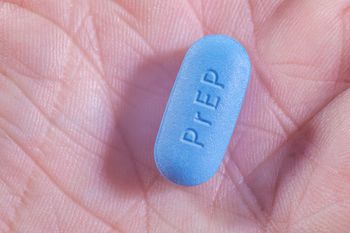
A new review in The Lancet HIV discusses the next generation of HIV prevention, called PrEP 2.0.

The FDA has authorized marketing of the Sentosa SQ HIV Genotyping Assay, which detects HIV-1 mutations in patients undergoing or about to initiate antiviral treatment.
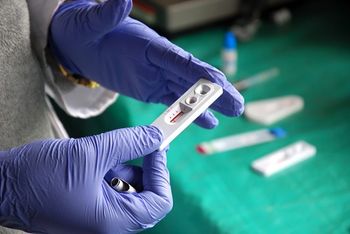
Blood sample testing in African countries using rapid tests is a mixed message. Accuracy in HIV improved, but accuracy in hepatitis B and C testing did not.
A new commentary from NIAID experts suggests that we already possess many of the tools necessary to end the HIV epidemic, but that improving implementation is essential.

When a recent study unexpectedly found that pregnant women taking the isoniazid had a higher rate of poor pregnancy outcomes, a team from Johns Hopkins University set out to clarify the findings.

Study authors examined which countries offer PrEP reimbursement, what barriers exist to implementation, and calculated the overall “PrEP gap” for the EU.
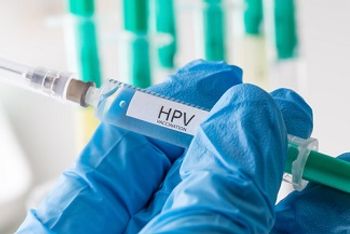
A study of female adolescents at a health clinic in New York City has found the presence of HPV in the oral cavity is not uncommon, but the results also offer support for vaccination.

Gepotidacin, a potential first-in-class antibiotic, will be evaluated for the treatment of uUTIs and urogenital gonorrhea in the EAGLE studies.

Both organizations will invest $100 million to develop and advance candidate gene-based cures for HIV and sickle cell disease to clinical trials within 10 years.
Universal screening identifies cases in those who do not consider themselves at risk and helps re-link previously known patients who have fallen out of treatment back to care.
Gregory Felzien, MD, discusses the surprising benefits HIV clinics encounter when they enhance community engagement.

A medication that secretes growth hormone is shown to reduce liver fat in an HIV-positive population, and investigators would like to see it used more widely.
Max Brito, MD, MPH, discusses his presentation from IDWeek 2019 which compared HIV treatment in a community-based model versus a hospital-based model in Chicago.
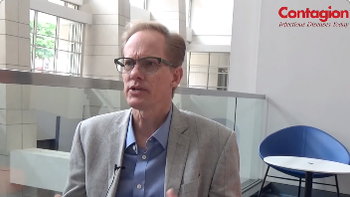
Gregory Felzien, MD, AAHIVS, discusses prevention beyond PrEP and creating a safe environment for patients with HIV.

Given a general rise in STD cases, clinicians treating ESRD may have to pay special attention to possible coinfections.

Pooled analysis linked baseline demographics, including lower CD4 count, higher HIV-1 RNA, no history of injection drug use, female sex, and black race, to weight gain following ART initiation.
Advertisement
Advertisement