























































































































































With multiple states reporting their first cases of West Nile virus, health officials are noting an early start to the virus’s seasonal activity and reminding the public to partake in mosquito control efforts.
With multiple states reporting their first cases of West Nile virus, health officials are noting an early start to the virus’s seasonal activity and reminding the public to partake in mosquito control efforts.
Due to a significant drop in new Zika cases, the Ministry of Health has declared the national emergency status over.
At the 2017 Annual EIS Conference, researchers presented findings from a prospective case-control study on acute Zika infection at 9 hospitals in Puerto Rico, as well as on a patient who was paralyzed due to Guillain-Barre Syndrome, unrelated to Zika infection.

Experts explore how to develop and deliver effective prevention and treatment methods.

In case you missed them, here are last month's Top 5 news articles from Contagion®.

In case you missed them, here are our top 5 articles for the week of April 30, 2017.

The CDC just released updated testing recommendations for asymptomatic pregnant women with possible exposure to the Zika virus.

Epidemic Intelligence Service officers from the Centers for Diseases Control and Prevention recently released research revealing that cases of Q Fever may be underreported in the United States.
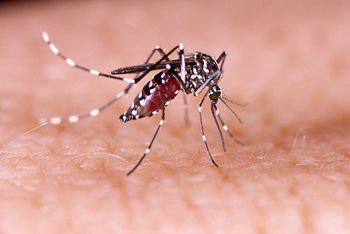
Researchers may have discovered a way to prevent Zika, Dengue and Chikungunya viruses from replicating in human cells.

Jean-Paul Gonzalez, MD, PhD, Deputy Director, Center of Excellence for Emerging and Zoonotic Animal Diseases (CEEZAD), Kansas State University, Adjunct Professor, Kansas State University, discusses the parallels between past Ebola outbreaks, and how they can help us manage the current Zika pandemic.

The NIH has developed a platform called SHERLOCK, capable of quickly detecting small amounts of nucleic acid sequences—and it’s cheap.

In case you missed them, here are our top 5 articles for the week of April 23, 2017.

Manufacturing issues have led to a shortage of the only yellow fever vaccine licensed in the United States; now, that shortage is expected to lead to a complete depletion of available vaccine by mid-2017.

Two studies published in the Centers for Disease Control and Prevention's Emerging Infectious Diseases journal have outlined just how local and travel-related Zika cases differ, as well as which testing method is most sensitive to Zika virus RNA.

The New England Journal of Medicine recently published two pieces on yellow fever. The first reports on the situation in the Americas, while the second recounts the case of a man from Angola who was found to be coinfected with yellow fever and Japanese encephalitis virus, although he reported no history of travel.
On World Malaria Day, the world focuses on how to eliminate malaria once and for all.
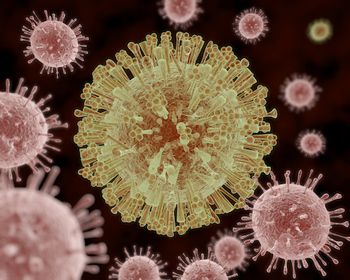
Adriano de Bernardi Schneider, MS, PhD Candidate, Contagion® Editorial Advisory Board Member, provides a brief snapshot into some of his work on mapping the evolution of the Zika virus.

In case you missed them, here are our top 5 articles for the week of April 16, 2017.
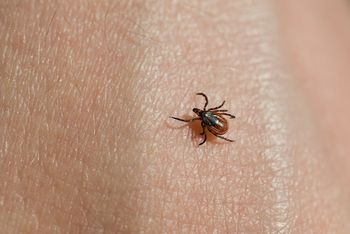
A new report from Centers for Disease Control and Prevention reveals information on a 5-month-old male infant who was diagnosed with the emerging tick-borne virus in Connecticut in 2016.
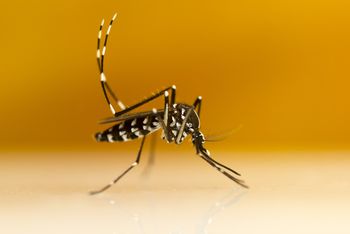
Researchers report that Zika virus RNA was isolated in a number of Aedes albopictus mosquitoes in Bahia, Brazil.

Researchers from The University of Texas Medical Branch at Galveston (UTMB) and Instituto Evandro Chagas (IEC) have published their findings on the live-attenuated vaccine candidate in the journal Nature Medicine.

David A. Schwartz, MD, MS Hyg, FCAP, clinical professor of pathology at Medical College of Georgia, Augusta University, explains his research, which focuses on mechanisms of transmission of the Zika virus from mother to child.

Hawaii is experiencing a cluster of rat lungworm disease cases on the Big Island as well as on the island of Maui; a few suspected cases are still undergoing investigation.
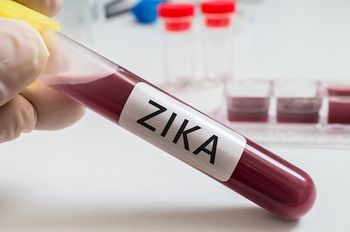
The Texas Department of State Health and Human Services has changed its testing recommendations for residents in six counties.

In case you missed them, here are our top 5 articles for the week of April 2, 2017.