



Zoonotic & Vector-Borne Diseases
Latest News
Advertisement
Video Series









Latest Videos




Shorts
1:20
US Public Health Infrastructure in Fighting Outbreaks
4 months ago
by
Jason Goldman, MD, MACP(+1 more)

0:28
Failing to Prepare for Infectious Disease Outbreaks
4 months ago
by
Jason Goldman, MD, MACP(+1 more)
0:27
Why Bundibugyo ebolavirus likely spread undetected
5 months ago
by
Gavin H. Harris, MD(+1 more)
1:03
Bundibugyo Ebolavirus: Why Supportive Care is Everything
5 months ago
by
Gavin H. Harris, MD(+1 more)
1:07
Contagiousness of Ebola vs Hantavirus
5 months ago
by
David Wohl, MD(+1 more)
0:48
This Rare Strain of Ebola in the Current Outbreak
5 months ago
by
David Wohl, MD(+1 more)
0:54
What is the Nebraska Hantavirus Quarantine Unit Like?
5 months ago
by
Mark Rupp, MD(+1 more)
0:49
Safely Removing Ticks From the Skin
5 months ago
by
Andrew Handel, MD, FAAP(+1 more)
0:52
Procedures After Doffing PPE in High-Consequence Pathogen Environment
9 months ago
by
Jill Morgan, RN, BSN(+1 more)
1:04
Monitoring Healthcare Workers After High-Consequence Pathogen Exposure
9 months ago
by
Jill Morgan, RN, BSN(+1 more)
Podcasts






















































































































































Advertisement
More News

In mid-May, as the world was still grappling with an unexpected hantavirus outbreak aboard a tourism vessel, news broke of an Ebola outbreak in the Ituri Province of the Democratic Republic of the Congo spanning at least 3 health zones, including Bunia, Rwampara, and Mongbwalu.
A "Clinician Outreach" from the Centers for Disease Control and Prevention (CDC) in April anticipated an increase in rabies exposures, and the striking surge in case reports this summer prompted a recent health advisory alert from the federal agency.

A phylodynamic analysis combining Arizona wild bird surveillance with national sequence data found the H5N1 D1.1 genotype spread in a stepwise pattern among adjacent US flyways during fall 2024, with limited direct exchange between the Pacific and Atlantic flyways.

A study of 87 free-roaming New York City cats found 57.5% harbored at least 1 zoonotic endoparasite, with young male cats identified as Toxocara super-shedders depositing disproportionately high concentrations of roundworm eggs into urban soil.
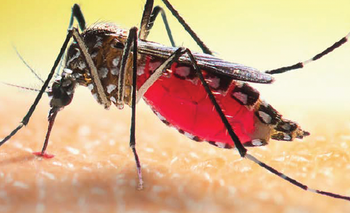
A study found that the investigational antiviral mosnodenvir reduced dengue virus infection RNA levels and symptoms in a controlled setting, supporting its potential as a prophylactic option.
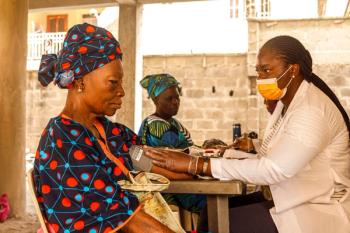
The stark contrast between the rapid global response to the Andes virus exposure on a cruise ship and the slower, under-resourced response to the Bundibugyo Ebola outbreak in Central Africa highlights how global health inequities—and the disproportionate burden placed on women caregivers—shape infectious disease outcomes as much as the pathogens themselves.
A peer-reviewed study found FDA-cleared single-step immunoblot (IB) tests from IGeneX detected antibodies in 58.3% of early-stage Lyme disease cases, compared with just 30.0% for standard two-tier testing (STTT).
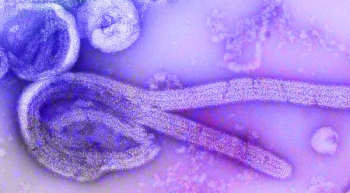
Island Pharmaceuticals has secured all regulatory and ethics approvals to deploy its investigational antiviral Galidesivir under the WHO's MEURI framework during the ongoing Bundibugyo Ebola outbreak in Uganda, creating an opportunity to generate prospective human efficacy and safety data while addressing an urgent unmet medical need.
A look back at Q2 2026's most significant infectious disease developments, including landmark FDA approvals, a historic hantavirus outbreak, and an update on a mRNA influenza vaccine.
An investigational dual vaccine against Lassa fever and rabies demonstrates promise against priority target plaguing West Africa.
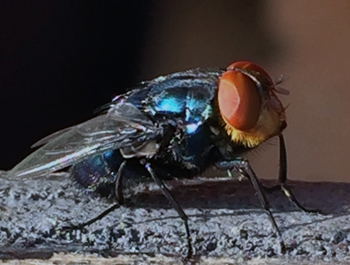
After nearly 60 years of successful eradication in the United States, the New World screwworm (Cochliomyia hominivorax) has reemerged in North America, prompting renewed surveillance and containment efforts due to its ability to infest and destroy living tissue in animals and humans.

An increase in Plasmodium vivax malaria in New York City follows trends in migration from regions where it is endemic.

The ongoing Ebola outbreak in Africa has seen the number of cases and deaths rise, and reporting shows some Americans have been exposed to the virus and will likely need quarantining.

Federal agencies have airlifted 17 American citizens from the MV Hondius to Nebraska for evaluation and care following exposure to the Andes variant of hantavirus. One passenger currently has mild symptoms and another passenger tested mildly PCR positive for the Andes virus.
A study assessing the local transmission found it caused 14 confirmed cases in 2024 and exposed diagnostic delays in patients without travel history.

A large cluster-randomized trial in Singapore found that releasing sterile male Wolbachia-infected mosquitoes greatly reduced dengue infections by suppressing local mosquito populations.

A small airline company with a cowboy mentality stepped up to become the first aviation company to fly American patients back to the US to receive treatment.

A phase 3 trial of an investigational Lyme disease vaccine from Pfizer Inc. and Valneva SE demonstrated more than 70% efficacy, signaling potential progress toward the first approved human vaccine for the disease. Pfizer is planning to move forward with regulatory submissions for potential approval.
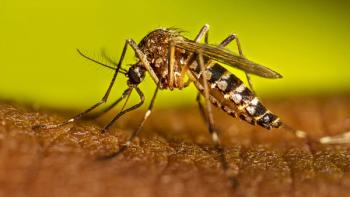
A phase 3 clinical trial found the Butantan-DV tetravalent dengue vaccine provided 80.5% protection against severe dengue with warning signs over 5 years and prevented hospitalizations among vaccinated participants.

A 6-year study in Liberia shows that Lassa fever is frequently missed in febrile patients, leading to preventable deaths and underscoring the urgent need for earlier diagnosis and improved testing.

Valneva has voluntarily withdrawn its US regulatory applications for its chikungunya vaccine, IXCHIQ, after the FDA suspended the license and placed the program on clinical hold pending investigation of a newly reported serious adverse event.

Sharon Carrasco DNP, APRN, ACNS-BC, ANP-C, CEN, FAEN, FAAN, FNAP, discusses her approach to training for these care scenarios.
Sharon Carrasco DNP, APRN, ACNS-BC, ANP-C, CEN, FAEN, FAAN, FNAP, talks about safely responding to deadly pathogens such as Ebola and Lassa fever, and where the US is in terms of thinking about preparedness on a national level.

Jill Morgan, RN, BSN, reviews this significant part of clinical care and how personal protective equipment (PPE) is essential to protecting healthcare workers.
In the second installment of this 2-part article on the WHO 2025 World Malaria Report, the authors point out the positive trends in the scaling up of prevention efforts with new-generation anti-mosquito netting, vaccines and periodic chemoprevention.
Advertisement
Advertisement