





The Ministry of Health (MOH) of Brazil has confirmed 1,271 nationwide cases of microcephaly.
The Ministry of Health (MOH) of Brazil has confirmed 1,271 nationwide cases of microcephaly.

Rohit Bhalla, DO, Chief of the Section of Infectious Diseases at the University Medical Center of Princeton, explains the current guidelines for women with regards to pregnancy and the Zika virus.

Turtles are one of the many pets that can infect people with Salmonella; they have been linked to four 2015 multistate outbreaks in the United States.

Recent data from Bahia State, Brazil, show that Zika virus infection during the first trimester of pregnancy, or early in the second trimester, is associated with the observed increase in infants born with microcephaly.
Zika, Dengue, Chikungunya. These are the most recent viruses causing outbreaks in several regions of the world, all spread through the bite of an infected female Aedes aegypti mosquito. There is currently no cure for these viruses, which makes infection prevention a priority.

The world’s first commercial Zika test has been approved for Emergency Use Authorization (EUA) by the US Food and Drug Administration (FDA).
Contagion™ recently spoke with FDA spokesperson, Siobhan DeLancey, who addressed some of the concerns regarding the release of OX513A, the genetically modified Aedes aegypti mosquito, in Key Haven, Florida.

Researchers analyzed archived blood donor samples collected during and after the 2014 epidemic of Chikungunya virus in Puerto Rico, and found that as many as 2 percent of the samples tested positive for Chikungunya RNA.

A sector of the US Department of Health and Human Services (HHS) will support Roche Molecular Systems Inc., of Branchburg New Jersey, in conducting trials to evaluate the company’s Zika blood screen test.

Study suggests that the risk of Zika virus transmission is particularly high in the southeast as well as in south Texas, where locally-acquired cases of Aedes-transmitted viruses have been reported previously.

The first case of sexually transmitted Zika infection in Canada was confirmed on April 25, 2016 by the Public Health Agency of Canada and the Ontario Ministry of Health and Long-Term Care.

Rohit Bhalla, DO, provides information healthcare practitioners should know about diagnosing a Zika virus infection, particularly as the virus moves in the United States.

On Friday, April 22, 2016, the Centers for Disease Control and Prevention (CDC) collaborated with the Occupational Safety and Health Administration (OSHA) to set interim guidance for those working in the fields where exposure to the Zika virus is inevitable.

Researchers find evidence to suggest virus strains in the most recent outbreak in the Americas evolved from an Asian lineage.

On Friday, April 15, 2016, WHO approved Sanofi Pasteur’s Dengvaxia (CYD-TDV), a live recombinant tetravalent vaccine for Dengue fever, first approved in Mexico in December 2015.

Researchers have revealed that the disease has been circulating in the region since at least January of 2015.

According to the National Institutes of Health (NIH), the first case of locally transmitted Zika virus infection in the continental United States is now inevitable. The virus already brings with it fears for pregnant women, and those women trying to become pregnant, but now, a Zika virus infection is likely a risk for all adults as the virus has been linked to yet another neurological disorder.
The Centers for Disease Control and Prevention (CDC) recently reported that the Zika virus can be transmitted from an infected man to a sex partner through anal sex.
After meticulously analyzing existing evidence, CDC scientists concluded that not only does the Zika virus cause microcephaly, but it is also the culprit behind other serious, fatal brain defects.

During a recent press conference, representatives from the CDC and NIAID agreed that the more researchers uncover about Zika, the scarier the virus appears to be.

Since January 2016, WHO has been notified of Lassa fever outbreaks in Nigeria, Benin, and Togo, with cases linked to the Togo outbreak in both Germany and Atlanta, Georgia in the United States.
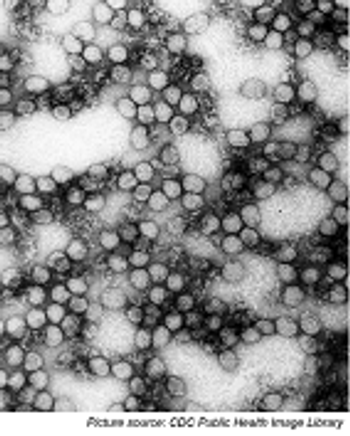
Sixteen of the 18 provinces in Angola have reported suspected cases of Yellow Fever. As of late March, there have been a total of 1132 suspected and confirmed Yellow Fever cases in the country, with 168 deaths.

The Obama administration recently announced plans to shift nearly $600 million in funds designated to battle the Ebola epidemic toward the fight against Zika.

The results of a double-blind, randomized, placebo-controlled trial in patients with persistent symptoms of Lyme disease have shown that long-term antibiotic treatment does not lead to better outcomes than short-term antibiotic treatment does.

The findings of a new study reinforce the value of making insecticide-treated nets and indoor residual spraying of insecticides universally available—even in countries where the mosquitoes that transmit disease bite primarily outdoors.