
Rita Olans, DNP, CPNP-PC, APRN-BC, assistant professor at MGH Institute of Health Professions, explains the importance of involving nurses in antimicrobial and antibiotic stewardship programs in hospitals.
Rita Olans, DNP, CPNP-PC, APRN-BC, assistant professor at MGH Institute of Health Professions, explains the importance of involving nurses in antimicrobial and antibiotic stewardship programs in hospitals.

Patient advocate Liz Kruvand brought a fresh perspective to the SHEA Spring 2017 Conference when she discussed her own trials and tribulations with infection prevention in the pediatric hospital setting.

Rebekah Moehring, MD, MPH, shared strategies for building internal capacity to meet infection prevention goals in resource-limited settings at the SHEA Spring 2017 Conference on March 29, 2017.
Lauri A. Hicks, DO, Director, Office of Antibiotic Stewardship, Centers for Disease Control and Prevention, explains an area of debate in the general medical field regarding antibiotics.

At the Society for Healthcare Epidemiology of America (SHEA) Spring 2017 Conference, Nimalie Stone, MD, MS, Team Lead, LTC, Division of Healthcare Quality Promotion at the Centers for Disease Control and Prevention (CDC), discussed infection prevention and control programs in nursing homes across the United States.

On March 30, 2017, at the SHEA Spring 2017 Conference, Thomas Sandora, MD, MPH, shared some tips regarding ways to manage movement outside of the room for patients who are on contact precautions.
Belinda Ostrowsky, MD, MPH, Health Systems Director of Epidemiology, Antimicrobial Stewardship & Infection Prevention, Montefiore Medical Center, and Associate Professor of Clinical Medicine, Division of Infectious Diseases, Department of Medicine, Albert Einstein College of Medicine, explains how to be more sensible when it comes to testing for Clostridium difficile.

Matt Linam, MD, MS, Assistant Professor, Pediatric Infectious Diseases, University of Arkansas for Medical Sciences, explains the best ways to reduce the number of respiratory viral healthcare-associated infections in children.

On March 30, 2017, at the SHEA Spring 2017 Conference, Matt Linam, MD, MS, discussed strategies to prevent healthcare workers from spreading healthcare-associated infections (HAIs).

On March 30, 2017, plenary speaker Matthew Kreuter, PhD, MPH, provided SHEA Spring 2017 Conference attendees with insight on how behavior change strategies play a part in infection prevention in hospital settings.
Snigdha Vallabhaneni, MD, MPH, Medical Epidemiologist, Mycotic Diseases Branch at the Centers for Disease Control and Prevention, discusses the threat that is Candida auris.

Nimalie Stone, MD, MS, Team Lead, LTC, Division of Healthcare Quality Promotion at the Centers for Disease Control and Prevention, explores the differences in infrastructure for clinical care and infection prevention in post–acute care and long-term care settings as compared to acute care hospitals.

Nicola Thompson, PhD, Epidemiologist, Division of Healthcare Quality Promotion, Centers for Disease Control and Prevention, discusses the lack of data on the burden of healthcare-associated infections in US nursing homes.

At the SHEA Spring 2017 Conference, Heather S. Reisinger, PhD, MAA, discussed the importance of including patients in healthcare-associated infection (HAI)-prevention strategies.

Sara Cosgrove, MD, MS, current president of the Society for Healthcare Epidemiology of America (SHEA), painted a picture of the new landscape of antibiotic stewardship in the Opening Plenary of the 2017 SHEA Spring Conference held in St. Louis, Missouri.

Emily Heil, PharmD, BCPS-AQ ID, assistant professor at the University of Maryland School of Pharmacy, describes what the ideal antibiotic stewardship team would look like.

New research suggests that the current National Health Safety Network (NHSN) catheter-associated urinary tract infection (CAUTI) definition may not truly reflect clinical UTI in neurosurgical intensive care unit (NSICU) patients.

Contagion® will be covering the conference, and so keep a look out for session coverage, as well as interviews with some of the key presenters.

Madeline King, PharmD, assistant professor of Clinical Pharmacy at the University of the Sciences, Philadelphia College of Pharmacy in Philadelphia, Pennsylvania, discusses her findings regarding patients treated with ceftazidime-avibactam for carbapenem-resistant Enterobacteriaceae infections and carbapenem-resistant Pseudomonas infections.
Carmen Zorrilla, MD, professor of obstetrics and gynecology, University of Puerto Rico, School of Medicine, discusses how the model of prenatal care centering works.
David A. Schwartz, MD, MS Hyg, FCAP, clinical professor of pathology at Medical College of Georgia, Augusta University, discusses Zika virus in indigenous populations.

Annelies Wilder-Smith, MD, PhD, professor at Lee Kong Chian School of Medicine in Singapore, examines the effectiveness of personal protection against Zika, Dengue, and Chikungunya viruses.

Jean-Paul Gonzalez, MD, PhD, Deputy Director, Center of Excellence for Emerging and Zoonotic Animal Diseases (CEEZAD), Kansas State University, Adjunct Professor, Kansas State University, discusses the Zika virus from a historical perspective.
Carmen Zorrilla, MD, professor of obstetrics and gynecology, University of Puerto Rico, School of Medicine, discusses the social stigma surrounding Zika- and HIV-positive women.

Romney Humphries, PhD, D(ABMM), section chief of Clinical Microbiology at the University of California, Los Angeles, sat down with Contagion™ to discuss antimicrobial susceptibility and resistance and new technologies in the field.
David A. Schwartz, MD, MS Hyg, FCAP, clinical professor of pathology at Medical College of Georgia, explains how the Zika virus pandemic has brought about a new form of research sharing.
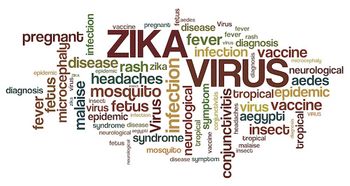
Robert W. Malone, MD, MS, has identified several already-licensed drugs that would be successful in blocking Zika virus replication in human tissues.
Adriano Schneider, MS, PhD Candidate, Bioinformatics and Genomics, UNC Charlotte, maps the evolution of the Zika virus.

Prenatal care for pregnant women with antenatal Zika-related microcephaly needs to be modified to include conversations that include pregnancy options as well as neonatal specialty consultations that will address infant special care needs, economic burden, and other factors.

Carmen D. Zorrilla, MD, professor of obstetrics and gynecology, University of Puerto Rico, School of Medicine, shared her research which aimed to evaluate the growth patterns of fetuses whose mothers acquired Zika virus during pregnancy “and showed no prenatally detectable structural anomalies or maternal conditions that could affect fetal growth.”