

A real-world analysis of the OPERA cohort found no HIV infections among 315 women using long-acting cabotegravir for PrEP, despite frequent short delays in maintenance injections, reinforcing the regimen's real-world effectiveness.
A real-world analysis of the OPERA cohort found no HIV infections among 315 women using long-acting cabotegravir for PrEP, despite frequent short delays in maintenance injections, reinforcing the regimen's real-world effectiveness.

Week 96 data from the LATA trial show Cabenuva was superior to daily oral therapy in adolescents with HIV, while new real-world OPERA cohort data reinforce comparable effectiveness in adults, both presented at AIDS 2026.

New research from Rutgers University suggests that bacterial responses to antibiotics vary significantly under nutrient-limited conditions, highlighting potential limitations of standard laboratory susceptibility testing and offering new insights into why some laboratory findings fail to predict clinical outcomes.

DOTS data on dalbavancin for complicated S aureus bacteremia and PETERPEN interim results for ESβL bloodstream infections provide potential options to revisit first-line therapy. Megan Klatt, PharmD, BCIDP, DPLA, discusses insights from these trials and how they can affect clinical practice and stewardship.

Lao-Tzu Allan-Blitz, MD, MPH, discusses treatment strategies including resistance-guided therapy with molecular gyrA assays and the goal of potentially reintroducing ciprofloxacin as therapy for this infection.

Preclinical findings demonstrate that the novel efflux pump inhibitor TXA14007 significantly enhances azithromycin activity against multidrug-resistant Gram-negative bacteria, supporting a potential new oral treatment strategy for difficult-to-treat infections. Jesus Rosado-Lugo, PhD, offers insights on the study at ASM Microbe 2026.

The American Society for Microbiology (ASM) is leveraging its new phage therapy coordination efforts to connect researchers and clinicians, standardize approaches, and explore how bacteriophages could complement antibiotics in the fight against antimicrobial resistance. Colleen Kraft, MD, offers some insights on the organization's plans to help grow this medical modality.

A novel antimicrobial susceptibility testing platform, ATB Finder, is designed to improve treatment outcomes by evaluating antibiotics under conditions that closely mirror the infection site and microbial communities found in patients. George Tetz, MD, PhD, offers insights on this platform.

Kelly Oakeson, PhD, explains how Utah public health officials are leveraging a statewide wastewater surveillance system to monitor measles activity, identify emerging outbreaks, and supplement traditional case reporting.

Incoming SIDP President Lisa Dumkow, PharmD, FIDP, BCIDP, highlighted plans to expand mentorship, strengthen research collaboration, and move the organization's initiatives forward. She also offered insights into the new combined MAD-ID/SIDP meeting.

At the MAD-ID and SIDP 2026 annual meeting, Zachary Nelson, PharmD, MPH, BCIDP, discussed how urine-specific breakpoints can improve treatment decisions for urinary tract infections by accounting for drug concentrations in the urinary tract rather than relying solely on traditional blood-level interpretations.

Emily Heil, PharmD, MS, FIDP, BCIDP, AAHIVP, discussed the growing prevalence of metallo-β-lactamase–producing organisms in the United States and highlighted emerging therapeutic strategies designed to overcome increasingly complex antimicrobial resistance mechanisms.
Preclinical in vitro and animal models remain essential for establishing antibiotic pharmacokinetic and pharmacodynamic targets, but experts say translating those findings into real-world patient care requires careful consideration of host factors, tissue penetration, and clinical context.
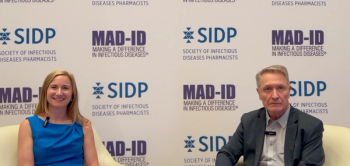
Leaders from SIDP and MAD-ID highlighted their new partnership and announced the launch of the Antimicrobials meeting in 2027, focused on combining cutting-edge science with clinical antimicrobial practice.

Meera Mehta, PharmD, says OPAT programs should move away from a “one-size-fits-all” monitoring model and instead tailor laboratory follow-ups based on patient risk factors, antimicrobial toxicity, and quality-of-life considerations.

SIDP President Erin McCreary, PharmD, BCIDP, FIDSA, explains how the new partnership between SIDP and MAD-ID brings together organizations with shared leadership and values to create a more accessible, collaborative meeting space for infectious diseases pharmacists and related specialties.

David Ha, PharmD, offers insights on how to build out a successful practice-based research project, including developing a strong research question, understanding IRB requirements early, and leveraging reliable institutional data sources and collaborations.

New real-world data from the CIRCE study underscore cefiderocol’s potential in treating metallo-beta-lactamase–producing Enterobacterales infections, particularly among critically ill and immunocompromised patients with limited therapeutic options. Christine Slover, PharmD, offers some insights around the study and these infections.

A major international study reveals that World Health Organization-recommended first-line antibiotics are effective in only one in four neonatal sepsis infections in low- and middle-income countries, underscoring the growing threat of antimicrobial resistance.

New research shows that antiretroviral therapy can reduce HIV-related accelerated biological aging by nearly 4 years, highlighting the critical importance of early and sustained treatment.

A large real-world study from the UK Health Security Agency presented at ESCMID Global 2026 finds that maternal RSV vaccination given at least two weeks before birth cuts infant hospitalizations by more than 80%.
The inaugural MAD-ID and SIDP 2026 meeting aims to provide new infectious diseases education offerings, dynamic speakers, and strong networking opportunities for younger clinicians. SIDP President Erin McCreary, PharmD, BCIDP, FIDSA, offers some insights around the upcoming event.

Eric Meissner, MD, PhD, discusses the takeaways of the ARTISTRY-2, phase 3 study, which compared bictegravir/emtricitabine/tenofovir alafenamide to bictegravir/lenacapavir in adults with HIV who were virologically suppressed.

Phase 1 data show that the long-acting HIV-1 capsid inhibitor VH-499 is well tolerated as a single intramuscular or subcutaneous injection and demonstrates pharmacokinetics supportive of long-acting dosing intervals.

Chloe Orkin, MD, MSc, discusses the takeaways of the ARTISTRY-1 phase 3 study, including its efficacy and safety profile and the potential benefits of a single-tablet regimen in this patient population.

New in vitro data presented at CROI show that Atea Pharmaceuticals’ oral nucleotide analogue AT-587 demonstrates markedly superior potency against hepatitis E virus compared with existing off-label options, supporting plans to advance the candidate into phase 1 clinical development in 2026.

Amy Colson, MD, MPH, discusses data from the MK-8591A-052 trial that showed that switching to doravirine/islatravir maintained durable virologic suppression with efficacy and safety comparable to continuing bictegravir/emtricitabine/tenofovir alafenamide.

New 96-week subgroup data from the PASO-DOBLE study show that adults with virologically suppressed HIV who switched to dolutegravir/lamivudine experienced significantly lower rates of steatotic liver disease than those who switched to bictegravir/emtricitabine/tenofovir alafenamide, particularly among individuals with clinically meaningful weight gain.

In the phase 3 ARTISTRY-2 trial, switching people with virologically suppressed HIV from B/F/TAF to a once-daily bictegravir/lenacapavir single-tablet regimen maintained viral suppression through week 48 with comparable safety and tolerability.

In a phase 3 study of virologically suppressed adults with HIV, switching to once-daily doravirine/islatravir (DOR/ISL 100/0.25 mg) maintained high rates of viral suppression through 96 weeks, with no emergent resistance and a favorable safety profile.