





Conference Coverage
about 2 months ago
No HIV Infections Seen With Cabotegravir PrEP in Real-World Studyabout 2 months ago
Cabenuva Beats Daily Oral Therapy in Adolescents With HIV in LATA TrialLatest Content








Advertisement
Shorts
0:55
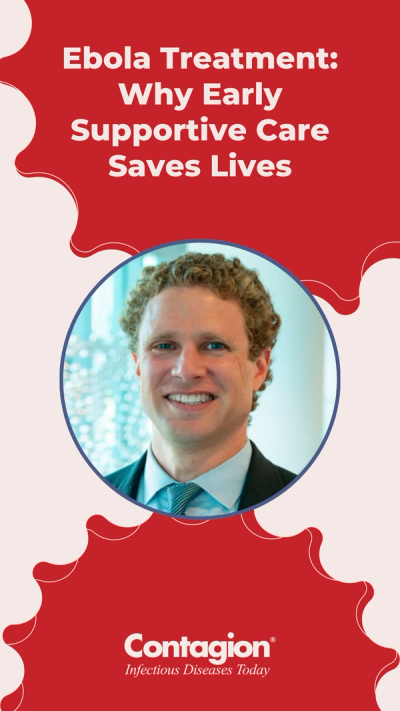
Early Aggressive Supportive Care Is Key to Surviving Ebola Infection
a day ago
by
Gavin H. Harris, MD(+1 more)

0:44
Who Keeps Food Safe?
6 days ago
by
Lynette Johnston, PhD(+1 more)

1:03
The Challenge of Capturing Complete Foodborne Numbers
7 days ago
by
Lynette Johnston, PhD(+1 more)

1:28
Can Monoclonal Antibodies Change Sudan Ebolavirus Treatment?
18 days ago
by
Gavin H. Harris, MD(+1 more)

1:01
Why Are Vaccine Rates Falling in the US?
21 days ago
by
Robert H. Hopkins Jr. MD(+1 more)

0:47
Physician Warns Kennedy Vaccine Task Force Is Poised to Undermine Immunization Schedule
a month ago
by
Jason Goldman, MD, MACP(+1 more)

1:11
Executive Orders vs Evidence: Why Vaccine Policy Must Follow the Science
2 months ago
by
Jason Goldman, MD, MACP(+1 more)

0:47
Ceftriaxone Resistance in Gonorrhea Underscores Need for Diversified Regimens
2 months ago
by
Lao-Tzu Allan-Blitz, MD, MPH(+1 more)

1:11
DOTS Trial Data Support Dalbavancin As an Option for Staph bacteremia
2 months ago
by
Megan E. Klatt, PharmD, BCIDP, DPLA (+1 more)

1:37
PeterPEN Data Could Bring Piperacillin-Tazobactam Back
2 months ago
by
Megan E. Klatt, PharmD, BCIDP, DPLA (+1 more)
Contagion: Summer 2025 Issue
View our interactive Summer 2025 issue, featuring articles on biosurveillance, aging in HIV, the NARROWS Framework for stewardship, and much more!

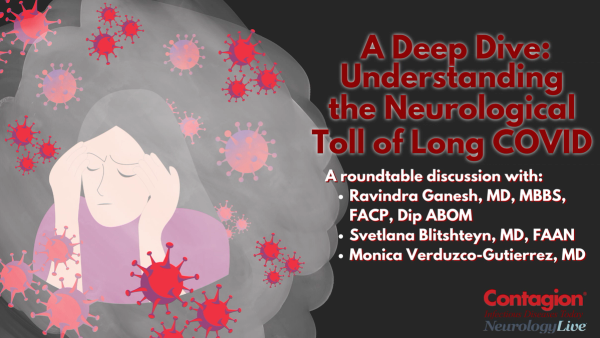
A Deep Dive: Understanding the Neurological Toll of Long COVID
Ravindra Ganesh, MD, MBBS, FACP, Dip ABOM, Svetlana Blitshteyn, MD, FAAN, and Monica Verduzco-Gutierrez, MD, discuss Long COVID's prevalence—noting that 1 in 5 Americans and 1 in 10 patients post-COVID may be affected.
Contribute to Contagion's Digital Book!
Contagion® is always looking for new contributors to the various sections of our book. Click to learn more about submitting.

Beyond the Virus: Long COVID’s Neurological Toll
There is increasing concern of Long COVID’s impact on the brain of patients previously infected with the virus. Featuring commentary from Jennifer Frontera, MD; Leigh Elkins Charvet, PhD; Neil Busis, MD; Alba Azola, MD; and Kristine Erlandson, MD.

COVID-19 Therapeutic Management and Prevention
Tina Tan, MD; Scott Roberts, MD; James Wilson, DO, FACP, FAWM, CTropMed; and Michael Curulewski, PharmD, BCPS, BCIDP, BCGP, discuss FDA-approved COVID-19 therapies, off-label treatments, and preventive modalities.
















Contagion Digital Edition

Widespread antimicrobial use disrupts vital microbial communities that regulate Earth’s biogeochemical cycles, driving antimicrobial resistance, worsening human and environmental health, and significantly contributing to climate change.

New data from the PETERPEN trial suggest that piperacillin-tazobactam may be noninferior to meropenem for early clinical outcomes in select patients with ESBL bloodstream infections, but carbapenems remain the standard of care until final mortality results are available and fully analyzed.

In mid-May, as the world was still grappling with an unexpected hantavirus outbreak aboard a tourism vessel, news broke of an Ebola outbreak in the Ituri Province of the Democratic Republic of the Congo spanning at least 3 health zones, including Bunia, Rwampara, and Mongbwalu.

Reported cases of Legionnaires’ disease have been on the rise for the past decade, and identifying Legionella bacteria requires specialized testing in the microbiology lab. Here is a clinical overview of Legionella bacteria, including required testing, treatment, and reporting to public health officials.

A retrospective multihospital study found that severe adverse events occurred at similarly low rates with ceftriaxone and other IV cephalosporins suggesting there is no evidence to support avoiding ceftriaxone despite recent health department safety alerts.

A retrospective study of 225 patients across Cook County Department of Health clinics found that the novel 1-month 1HP regimen (isoniazid plus rifapentine) for latent TB infection had a completion rate comparable to standard longer regimens and was well tolerated, suggesting it may be a viable shorter alternative.

Here is a review of glucagon-like peptide-1 receptor agonist use in people with HIV.

Editor in chief Jason Gallagher, PharmD, FCCP, FIDP, FIDSA, BCPS, discusses the proposed OMB rule restricting federal grants for international research collaboration, and how it threatens infectious disease medicine's inherently borderless surveillance networks, publication access, and knowledge-sharing systems.

Daptomycin-resistant Enterococcus faecium bacteremia is an emerging, high-mortality challenge in transplant and other high-risk patients, requiring early recognition, aggressive source control, and reliance on limited alternatives—most notably linezolid—with combination or salvage therapies considered when options are constrained.

Several combination products are currently in development for people with HIV. Here is a review of these treatments.







































































































































All News
Advertisement
Advertisement
New data from the PETERPEN trial suggest that piperacillin-tazobactam may be noninferior to meropenem for early clinical outcomes in select patients with ESBL bloodstream infections, but carbapenems remain the standard of care until final mortality results are available and fully analyzed.

Star Meat Delivery is recalling approximately 167,639 pounds of raw pork, beef, and goat products produced without federal inspection.

A new study in infants challenges the long-standing belief about the pathogen’s effects in the youngest pediatric population. Senior author Joseph Zackular, PhD, provides insights around his work including how it reshapes gut development and offers potential intervention strategies to shield neonates.

Outcomes from treating orthopedic infection with debridement and implanted antibiotic were similar whether followed by short or standard duration of systemic antibiotic.

Investigators accessed longitudinal human data from ebola virus vaccination for signals of efficacy against the Bundibugyo species now surging in the Democratic Republic of Congo.

In the first episode of our new series looking at the food safety network, Lynette Johnston, PhD, offers insights into how the federal government surveillance infrastructure operates and how epidemiologists serve as food detectives in determining bacterial pathogens and potential foodborne outbreaks.
In mid-May, as the world was still grappling with an unexpected hantavirus outbreak aboard a tourism vessel, news broke of an Ebola outbreak in the Ituri Province of the Democratic Republic of the Congo spanning at least 3 health zones, including Bunia, Rwampara, and Mongbwalu.
In this week's top infectious disease stories, a Pennsylvania teen became the state's fourth measles death in weeks, the CDC reported a 17% summer surge in rabies exposure calls, new research revisited whether cefepime raises mortality risk, a multihospital review examined ceftriaxone's safety after state alerts, and examining Legionella pneumonia diagnostics.
The latest CDC numbers show a 5.37% increase of measles cases from week-to-week. In Pennsylvania, the fourth measles-related death was reported in 2026. Additionally, the CDC has made a change in the way it will report deaths.
A "Clinician Outreach" from the Centers for Disease Control and Prevention (CDC) in April anticipated an increase in rabies exposures, and the striking surge in case reports this summer prompted a recent health advisory alert from the federal agency.
Advertisement
Reported cases of Legionnaires’ disease have been on the rise for the past decade, and identifying Legionella bacteria requires specialized testing in the microbiology lab. Here is a clinical overview of Legionella bacteria, including required testing, treatment, and reporting to public health officials.
A retrospective multihospital study found that severe adverse events occurred at similarly low rates with ceftriaxone and other IV cephalosporins suggesting there is no evidence to support avoiding ceftriaxone despite recent health department safety alerts.

The 18-year old resident of the state suffered from acute disseminated encephalomyelitis. Pennsylvania numbers are surging with some of the highest state totals of measles cases in the country.

In its second disease cluster this summer, city officials are cleaning building towers in the South Bronx amidst an ongoing investigation and are rolling out measures to prevent future Legionnaires' cases.
New gyrA testing guides ciprofloxacin use for gonorrhea, cutting ceftriaxone reliance while tackling resistance, access, and FDA hurdles.
Advertisement

Advertisement
Trending on Contagion Live
1
CDC Tracking 4 Active Foodborne Outbreaks
2
IDSA/ESCMID Statement on Staphylococcus aureus: Follow-Up Blood Cultures
3
Measles Update: September 25, 2026
4
On World Rabies Day, When to Seek Treatment, Clinical Considerations for Post Exposure Prophylaxis
5