
The Department of Health and Human Services (HHS) has decided to not move forward with the rewriting of the Advisory Committee on Immunization Practices (ACIP) charter specifying administrative errors.
The Department of Health and Human Services (HHS) has decided to not move forward with the rewriting of the Advisory Committee on Immunization Practices (ACIP) charter specifying administrative errors.
People with substance use disorder (SUD) face a disproportionate burden of hepatitis infections, underscoring the importance of testing, vaccination, and access to curative treatment during Viral Hepatitis Awareness Month. Stephanie Spivack, MD, offers some insights on the disease burden for this patient population as well as the challenging aspects of getting them into care.
Emily Heil, PharmD, MS, FIDP, BCIDP, AAHIVP, discussed the growing prevalence of metallo-β-lactamase–producing organisms in the United States and highlighted emerging therapeutic strategies designed to overcome increasingly complex antimicrobial resistance mechanisms.

The ongoing Ebola outbreak in Africa has seen the number of cases and deaths rise, and reporting shows some Americans have been exposed to the virus and will likely need quarantining.
Preclinical in vitro and animal models remain essential for establishing antibiotic pharmacokinetic and pharmacodynamic targets, but experts say translating those findings into real-world patient care requires careful consideration of host factors, tissue penetration, and clinical context.

New phase 3 data from the SCORPIO-PEP study showed that a 5-day course of ensitrelvir significantly reduced the risk of symptomatic COVID-19 after household exposure, highlighting its potential to transform prevention strategies for high-risk populations and future variant-driven surges.
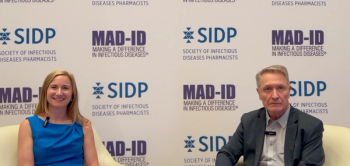
Leaders from SIDP and MAD-ID highlighted their new partnership and announced the launch of the Antimicrobials meeting in 2027, focused on combining cutting-edge science with clinical antimicrobial practice.
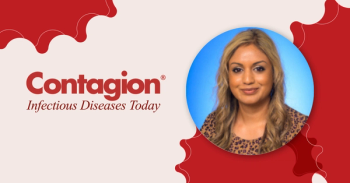
Meera Mehta, PharmD, says OPAT programs should move away from a “one-size-fits-all” monitoring model and instead tailor laboratory follow-ups based on patient risk factors, antimicrobial toxicity, and quality-of-life considerations.

SIDP President Erin McCreary, PharmD, BCIDP, FIDSA, explains how the new partnership between SIDP and MAD-ID brings together organizations with shared leadership and values to create a more accessible, collaborative meeting space for infectious diseases pharmacists and related specialties.

David Ha, PharmD, offers insights on how to build out a successful practice-based research project, including developing a strong research question, understanding IRB requirements early, and leveraging reliable institutional data sources and collaborations.

In the second installment of our interview with Andrew Handel, MD, he provides insights on Lyme Disease treatment in the pediatric population.

Federal agencies have airlifted 17 American citizens from the MV Hondius to Nebraska for evaluation and care following exposure to the Andes variant of hantavirus. One passenger currently has mild symptoms and another passenger tested mildly PCR positive for the Andes virus.
This week, listen to a clinician who has treated hantavirus, SIDP's latest column on the effects of antimicrobials on the microbiome, our podcast looking at how AI can help with stewardship, and more.

The growing incidence of resistant Gram-negative infections in hospitals is being fueled by evolving resistance mechanisms, antibiotic overuse, and the rapid global spread of mobile genetic elements. Mariana Castanheira, PhD, FIDSA, FAAM, chief scientific officer at JMI Laboratories, discusses this topic and an agent with utility against pathogens carrying Metallo-beta-lactamases (MBLs).
In this month's column, we talk to leaders from professional medical organizations about the revised Advisory Committee on Immunization Practices charter as well as commentary about the Centers for Disease Control and Prevention’s suppression of COVID-19 vaccine data.
This week, read about shorter treatment duration for community-acquired pneumonia, how integrating hepatitis C EMR prompts and innovative community outreach are increasing patients getting tested and treated, and how professional medical organizations are leading the fight for vaccines.

New real-world data from the CIRCE study underscore cefiderocol’s potential in treating metallo-beta-lactamase–producing Enterobacterales infections, particularly among critically ill and immunocompromised patients with limited therapeutic options. Christine Slover, PharmD, offers some insights around the study and these infections.
In this month's column, a federal district court struck down the

Gilead Sciences will receive FDA review for its investigational bictegravir/lenacapavir (BIC/LEN) single-tablet HIV regimen, with a decision expected by late summer.
This week, read a clinician's insights on a new FDA-approved HIV therapy, the CDC cancels publication of a COVID-19 vaccine study, moving up hepatitis C cure timelines, and more.

Doravirine/islatravir (Idvynso), is a non-INSTI, tenofovir-free alternative for virologically suppressed adults, with efficacy, safety, and potential benefits for aging populations managing complex treatment needs. Amy Colson, MD, MPH, offers some insights about the phase 3 trial and how clinicians may want to consider its use for patients.

Jonathan Batchelder, PhD, provides insights around his research that showed that Staphylococcus aureus can survive fluoroquinolone treatment under nutrient-limited conditions even without key DNA repair proteins, pointing to alternative survival pathways and implications for future therapies.
Emerging evidence suggests that confirming hepatitis C cure at 4 weeks post-treatment could improve patient engagement and reduce barriers to care without compromising accuracy. Meghan D. Morris, PhD, MPH, offers insights around her study on this subject.
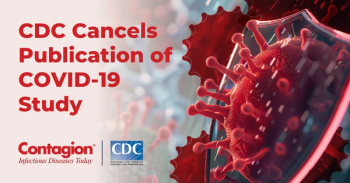
The agency’s acting director took the unusual step of withholding the publication of the study findings in the Morbidity and Mortality Weekly Report, which showed the vaccine was protective against hospitalization and emergency department visits.

Results from a large population-based study found that receiving influenza and pertussis vaccines on the same day during pregnancy does not increase the risk of adverse maternal, birth, or neonatal outcomes compared with pertussis vaccination alone.
The federal agency has given the nod to doravirine/islatravir (Idvynso), a once-daily, 2-drug HIV treatment that demonstrated noninferior efficacy to standard 3-drug regimens in phase 3 trials, expanding options for adults with virological suppression.

Our short survey underscores the critical role of audience feedback in shaping more relevant, impactful infectious disease coverage.

In the third part of our conversation with the Peggy Lillis Foundation’s CEO Christian Lillis, he says insurance restrictions are forcing people with C diff to endure inferior treatments and repeated infections raising both human suffering and long-term healthcare costs.

A major international study reveals that World Health Organization-recommended first-line antibiotics are effective in only one in four neonatal sepsis infections in low- and middle-income countries, underscoring the growing threat of antimicrobial resistance.
AMR Action Fund CEO Henry Skinner, PhD, MBE, provides insights around the legislation including its implementation challenges which may be slowing its path to passage despite bipartisan support in Congress as well as growing recognition of the global antimicrobial resistance crisis.