

The patient advocacy organization has events in place and is ready to launch its annual C diff awareness campaign.
John Parkinson is the assistant managing editor for Contagion. Prior to joining MJH Life Sciences in 2020, he has covered a variety of fields and markets including diabetes, oncology, ophthalmology, IT, travel, and local news. You can email him at [email protected].
The patient advocacy organization has events in place and is ready to launch its annual C diff awareness campaign.

A new study that went beyond the current standard of testing for the respiratory virus resulted in greater incidence rates and a truer accounting of case loads.

The company dosed its first study participant with its investigational vaccine, mRNA-1083. And this follows recent data reported from their phase 1/2 trial where the vaccine showed strong immunogenicity against influenza and COVID-19, with an acceptable reactogenicity and safety profile.
The federal agency sent out a health advisory to change the prescribing recommendations for the newer preventative respiratory syncytial virus (RSV) monoclonal antibody.

A joint meeting of WHO and FAO offered this assessment of these viruses that millions of people encounter.
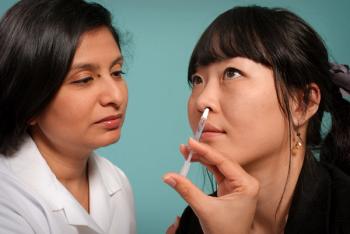
If approved, it would become the first nasal flu vaccine to be self-administered.
A clinician discusses the ongoing challenges presented with critically ill patients and the timing and scope of antibiotic prescribing practices.
This week's news included a new study that showed the association with Epstein-Barr virus reactivation and sets the need for an antiviral clinical trial with cardiopulmonary exercise testing as an endpoint; a clinician weighs in on the limited use of novel, gram-negative antibiotics; and the discussion around increasing hepatitis C testing for the pediatric population.

The antiretroviral, lenacapavir (Sunlenca 463.5 mg/1.5 mL injection), had reported resistance in only a minority of study participants according to the latest findings released at a conference.
The Pfizer product is indicated to prevent the 5 most common serogroups causing meningococcal disease in adolescents and young adults.

A study looked at patients’ microbiome profiles to see if they differed at study entry and whether microbiome recovery was dissimilar between subgroups, post-treatment.

A study reported at IDWeek looked at this population and found gaps in testing.

Company plans to start recruiting for its REPREVE study this year.

A study showed the Clostridioides difficile treatment remained effective after subsequent systemic antibiotic exposure.
A study presented at IDWeek details some of the shortfalls in utilization.

Contagion attended IDWeek, and here are some of the top stories we reported on while we were there. Continue to catch our coverage in the days to follow!

A number of factors has led to the increased incidence rates, but questions remain if the vector-borne disease's numbers are being captured accurately.
A Centers for Disease Control and Prevention (CDC) epidemiologist provides insights on a large study.
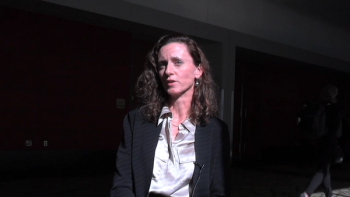
Heather Yun, MD, FACP, FIDS who is this year’s IDWeek Chair for the Infectious Diseases Society of America (IDSA) talks about the honor of the position, the collective effort to put together the conference, and offers insights on AMR during war, as well as new emerging infectious disease threats.
A late-breaking abstract presented at IDWeek reports on the data around the Prefusion F Protein vaccine.
Codagenix is reporting data at this year’s IDWeek for its live-attenuated vaccine candidate, CoviLiv.

The investigational treatment is being developed for this patient population.
Social determinants such as housing and transportation were strong predictors of patients receiving fecal microbiota transplants (FMT).

Earlier this year, cases of fungal meningitis were discovered at 2 surgical clinics in Matamoros, Mexico. The CDC offers an update on this deadly outbreak.

A study being presented at IDWeek 2023 demonstrated a 2-fold increase in HIV infections associated with barriers to treatment.
Investigators explored the makeup of antibiotic resistant genes after administration of the live biotherapeutic product, Rebyota (fecal microbiota, Live-jslm), to see what differences would be discovered.
Bradley Burnam, CEO of Turn Therapeutics, took his own personal medical experience with a severe skin infection and founded his company to address some of the unmet needs of wound care.

Hikers in Washington State experienced acute gastroenteritis along the Pacific Crest Trail.
In this week's infectious disease news, the Novavax COVID-19 booster gets authorized in the US; Moderna reports topline data on its influenza-COVID-19 combination vaccine; the differences between live biotherapeutic products and conventional FMTs; and the influence of alcohol on hepatitis C treatment.
Behind the scenes, laboratory professionals are processing tests, assays, and other diagnostics to determine data for clinicians to treat patients.