












































































































































During ID Week, Robert Read, MD, from University Hospital Southampton in Southampton, UK, discussed how a better understanding of meningococcal disease has led to more effective treatment strategies.
During ID Week, Robert Read, MD, from University Hospital Southampton in Southampton, UK, discussed how a better understanding of meningococcal disease has led to more effective treatment strategies.
A symposium at the annual meeting of the Infectious Diseases Society of America in New Orleans, Louisiana, highlighted initiatives designed to curb the spread of antibiotic resistance.

Rita Olans, DNP, CPNP-PC, APRN-BC, assistant professor at MGH Institute of Health Professions, discusses the importance of incorporating staff nurses in a healthcare setting's antimicrobial stewardship program.

Vikas Gupta, PharmD, BCPS, director of Clinical Strategy at Becton Dickinson, discusses his research on the national prevalence of multidrug-resistant organisms.
Speakers at the Infectious Diseases Society of America annual conference plenary symposium in New Orleans, Louisiana, discuss past successes, current challenges, and future efforts regarding infectious disease.

Vaccines are generally quite safe, but a recent study of BCG, DTP, and MCV raises concerns that warrant further exploration.

Marcos Pires, PhD, assistant professor at Lehigh University, explains the inspiration behind his team’s research in immunotherapy as a new way to fight bacterial infection.

Researchers from Sweden’s Linköping University discover the pathway that leads to deadly infections in people co-infected with HIV and TB.
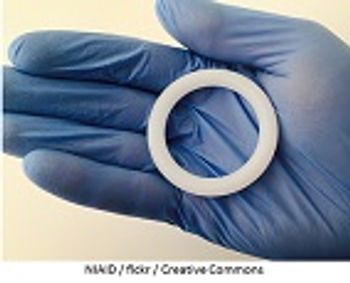
During the 2016 HIV Research and Prevention (HIVR4P) meeting in Chicago, researchers conducting trials to assess the safety and efficacy of the dapivirine vaginal ring announced several key findings and insights of the ASPIRE study, known as MTN-020.

Marcos Pires, PhD, assistant professor at Lehigh University, explains the main points behind his research regarding immunotherapy.

The United Nations Children’s Fund (UNICEF) has partnered with six vaccine makers and the Global Alliance for Vaccines and Immunization (GAVI) to offer 450 million doses of an inexpensive pentavalent vaccine for children.

The US Food and Drug Administration has approved Merck’s Zinplava, a monoclonal antibody that will reduce recurrence of Clostridium difficile in high risk patients.

A new study shows that using antimicrobial copper can kill surface bacteria and minimize pathogens in hospital rooms.

Research groups from around the world have identified potential therapeutic targets for treating active Zika virus.
Researchers at Sanofi Pasteur, have developed a “transmission model” for Dengue and assessed the population impact of vaccination in the 10 countries participating in the Phase III efficacy studies for CYD-TDV/Dengvaxia.

The new Centers for Disease Control and Prevention (CDC) recommendations call for a revised dosing schedule.

Technology gives men who have sex with men (MSM) new ways to assess their health status, prevent HIV and other STDs (sexually transmitted diseases), and find care.

Older Americans who are sexually active are not being tested for HIV and are not being educated about how to prevent disease transmission, new research suggests.

In a recent study in mice, researchers used a synthetic peptide to disrupt the bacterial stress response that causes abscess formation in skin infections with drug-resistant bacteria.

The US Food and Drug Administration has approved its quadrivalent formulation of the Flublok influenza vaccine.

As hospitals continue to search for new ways to limit their number of patients acquiring Clostridium difficile (C. difficile) infections, a new study shows promise in the use of ultraviolet light technology for ridding patient rooms of highly resistant C. difficile spores.

Although they’re often life-saving, all hospital operations come with the risk of surgical site infections. C-section are no different, researchers, in a recent medical trial, have found a way to slash post-operative infection rates with the use of an extra antibiotic.
In the 10 years since the human papilloma virus (HPV) vaccine first became available, a series of new studies have come out showing just how effective the virus really is and how HPV vaccination rates can be improved in adolescents.

Researchers in a recent study investigated how mixed messages delivered by vaccine manufacturers may prevent women from receiving the safe and effective influenza vaccine during pregnancy.

The National Institutes of Health have granted $3 million to researchers at the University of Missouri Bond Life Sciences Center to study hepatitis B and develop new, effective treatment options.