










































































































































Students from the University of Sheffield in the United Kingdom have developed a new diagnostic tool which promises a novel way to detect bacterial infections and prevent the inappropriate use of antibiotics for viral infections.
Students from the University of Sheffield in the United Kingdom have developed a new diagnostic tool which promises a novel way to detect bacterial infections and prevent the inappropriate use of antibiotics for viral infections.

Weight gain during tuberculosis treatment is an important marker of the restoration of health.

A new study from United Kingdom researchers finds that nearly one-quarter of the global population is infected with latent tuberculosis (TB), a finding that exposes the challenges ahead for the World Health Organization’s End TB Strategy.

Rebekah Stewart Schicker, MSN, MPH, APRN, Epidemic Intelligence Service (EIS) Officer at the Centers for Disease Control and Prevention, explains her recent research on influenza antiviral treatment prescribing practices in 60 outpatient settings across the United States.
Researchers in the United States and South Korea recently studied the use of an experimental nanoparticle treatment that acts as a decoy to stop and kill the influenza virus.
Marcos Pires, PhD, assistant professor at Lehigh University, explains whether or not his team’s strategy to use immunotherapy as a substitute for antibiotics will vary from patient to patient.

There is a stigma that incoming refugees pose a health risk to European communities. In order to assess the risk of possible outbreaks and jump-start prevention, the European Centre for Disease Prevention and Control (ECDC) recommends implementing a multi-step Syndromic Surveillance system.

Drug maker Melinta has submitted their new antibiotic Baxdela for review by the US Food and Drug Administration, with the hopes that it will bring a new treatment option for people suffering from methicillin-resistant Staphylococcus aureus (MRSA).

The World Health Organization (WHO) has released their Global Tuberculosis Report for 2016, emphasizing that today’s global actions and investments are falling far short of what is needed to stop the worldwide tuberculosis (TB) epidemic.

Susan Kline, MD, MPH, associate professor of medicine, Division of Infectious Diseases and International Medicine, medical director for Infection Control, lead physician for Antibiotic Stewardship, University of Minnesota, discusses how restricting use of vancomycin impacted the emergence of vancomycin-resistant enterococci.
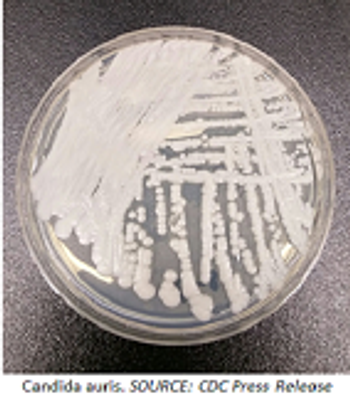
Seven cases of Candida auris have been identified within the United States, according to a report in the latest Centers for Disease Control and Prevention’s Morbidity and Mortality Weekly Report.

Rapid syphilis screening tests can be useful in community-based facilities, according to the results of five studies presented in a mini-plenary on September 22 at the Centers for Disease Control and Prevention 2016 STD Prevention Conference in Atlanta, Georgia.

At the Centers for Disease Control and Prevention's 2016 STD Prevention Conference, researchers discussed three novel prevention strategies for HIV, other STIs, and unintended pregnancies.

Vikas Gupta, PharmD, BCPS, director of Clinical Strategy at Becton Dickinson, explains his team’s unique approach to understanding multidrug-resistant infections.

With new US Food and Drug Administration rules on antibiotics in agriculture taking effect at the start of 2017, challenges remain when it comes to the reduction of antimicrobial use in livestock.

Methicillin-resistant Staphylococcus aureus (MRSA) causes more than 11,000 deaths in the United States each year and a new study shows how this pathogen is able to evade last-line antibiotics.

Public-health experts recommend that the seasonal influenza vaccine be available in more non-medical settings in hopes that with increased accessibility, more people will choose to get vaccinated.

Researchers have not been able to develop a vaccine for hepatitis C, which causes 700,000 deaths around the world annually, and now, a new study shows why developing a vaccine for the virus has been so difficult.

The monoclonal antibody, ibalizumab, has proven to be both safe and effective in treating patients who are infected with multi-drug-resistant HIV-1 and have been previously treated.


At the ID Week meeting in New Orleans, Louisiana, a trio of speakers addressed some of the outpatient challenges regarding antimicrobial stewardship.