







































































































































A recent study found that caregivers at daycares and preschools may not be washing their hands sufficiently, adding to the problem of germs and illnesses in group child care facilities.
A recent study found that caregivers at daycares and preschools may not be washing their hands sufficiently, adding to the problem of germs and illnesses in group child care facilities.

California health officials’ “Getting to Zero” plan aims to dramatically cut the number of HIV cases in California through increased surveillance, access to care, and treatment.

Microbes found in New York City park soil samples contain an array of microbes capable of producing known pathogen-fighting compounds, along with a large number of recently discovered compounds.
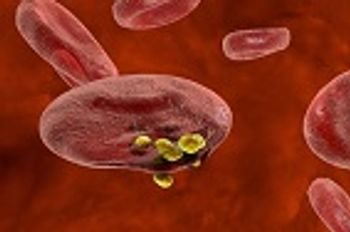
Nicholas J. White, MD, shares his “Personal View” on mass drug administration (MDA) as a means of malaria prophylaxis.

Researchers at the Mailman School of Public Health at Columbia University are the first to develop a computer model that predicts influenza activity down to the local level.

New research from University of California Santa Cruz biologists shows how antibodies work to stop astrovirus infections, offering a potentially new way to develop a vaccine and treatment for this infection.

Ten years ago in Geneva, the World Health Organization (WHO) unveiled what is now called the Global Action Plan for Influenza Vaccines (GAP), a comprehensive approach to meeting the demand for vaccines should there be a pandemic anywhere in the world. How is it doing?

John Mohr, PharmD, president and founder of Medical Affairs Strategic Solutions, LLC, discusses global and national initiatives for the development of new antibiotics.

Researchers from the University of California-San Francisco tested the ability of 2,177 FDA-approved compounds to reduce viral proliferation in Zika-susceptible cells.
In honor of World AIDS day, the National Institutes of Health reflected on advancements made in the fight against HIV and address future goals designed to end the HIV/AIDS pandemic.
The National Institute of Mental Health has granted researchers at the University of Pennsylvania School of Nursing and New York Blood Center $769,578 to go towards efforts to create an HIV awareness program for women.

Lauri A. Hicks, DO, captain, US Public Health Service, director, Office of Antibiotic Stewardship, medical director, Get Smart: Know When Antibiotics Work, Division of Healthcare Quality Promotion, Centers for Disease Control and Prevention, examines the threat that antibiotic resistance poses to modern medicine.
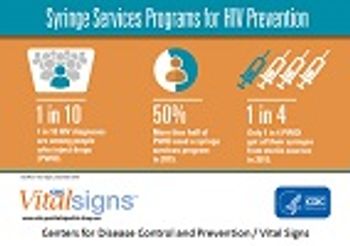
This afternoon, the CDC held a telebriefing on how the use of syringe services programs by injection drug users has increased, but access to these programs needs to improve in order to improve HIV prevention efforts.

John Mohr, PharmD, president and founder of Medical Affairs Strategic Solutions, LLC, discusses the economic opportunities driving the development of new pharmaceuticals.

The first HIV vaccine efficacy study in seven years is currently being conducted in South Africa, with researchers testing if a new vaccine regimen called HVTN 702 can provide adequate protection against HIV.
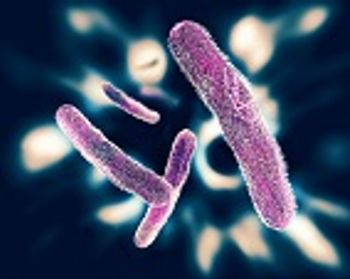
Researchers in the United Kingdom have found that predatory bacteria can be used to safely treat antibiotic-resistant Shigella infections, which affect more than 1 million people worldwide each year.

Recent outbreaks of highly pathogenic H5N8 avian influenza in Northern Europe, Russia, and the Middle East are worrying neighboring countries and have led to the culling of tens of thousands of chicken, turkeys, and ducks.

Following best practices for the “placement, maintenance, and removal” of catheters is just as important as appropriate testing in order to reduce catheter-associated urinary tract infections (CAUTIs).

Two cases of meningococcal disease strain B have been confirmed at Oregon State University, urging officials to take preventive measures.

Lauri A. Hicks, DO, captain, US Public Health Service, director, Office of Antibiotic Stewardship, medical director, Get Smart: Know When Antibiotics Work, Division of Healthcare Quality Promotion, Centers for Disease Control and Prevention, discusses how antibiotic stewardship programs are impacting antibiotic resistance.

A recent study assessed if laws pertaining to the screening and reporting of hepatitis B may increase identification in pregnant women and thus, allow for more infants who have been exposed to the virus to receive post-exposure prophylaxis.
On their quest to put an end to a threat that may change modern medicine as we know it, researchers discovered four chemicals that disrupt AcrA, an efflux pump protein, that contributes to antibiotic resistance in bacteria.

Marcos Pires, PhD, assistant professor at Lehigh University, discusses future applications of immunotherapy.
In mid-November, the CDC released the “Core Elements of Outpatient Antibiotic Stewardship.”

A study of 100 chickens collected from a marketplace in India finds multidrug-resistance in an emerging bacterial pathogen, and has researchers calling for improved food safety, monitoring, and surveillance.