

































































































































A new service in the United Kingdom, made possible by the National Health Service, reportedly offers a fast and accurate diagnosis of bacterial throat infections, promising a new way to reduce unnecessary antibiotic prescriptions.
A new service in the United Kingdom, made possible by the National Health Service, reportedly offers a fast and accurate diagnosis of bacterial throat infections, promising a new way to reduce unnecessary antibiotic prescriptions.

Researchers have found that molecules left on a individual's phone can reveal a good deal about his/her lifestyle.
Lauri A. Hicks, DO, captain, US Public Health Service, director, Office of Antibiotic Stewardship, medical director, Get Smart: Know When Antibiotics Work, Division of Healthcare Quality Promotion, Centers for Disease Control and Prevention, discusses antibiotic stewardship programs in both the hospital and outpatient settings.
Lauri A. Hicks, DO, captain, US Public Health Service, director, Office of Antibiotic Stewardship, medical director, Get Smart: Know When Antibiotics Work, Division of Healthcare Quality Promotion, Centers for Disease Control and Prevention, explains what antibiotic stewardship is and what ideal antibiotic stewardship programs in hospitals look like.
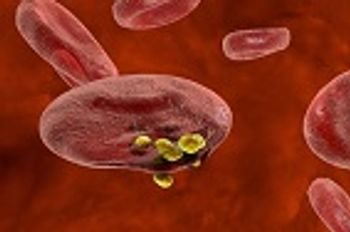
Researchers at Houston Methodist have discovered a protein that facilitates immunity against malaria and may be used to inform future vaccine development.
Lauri A. Hicks, DO, captain, US Public Health Service, director, Office of Antibiotic Stewardship, medical director, Get Smart: Know When Antibiotics Work, Division of Healthcare Quality Promotion, Centers for Disease Control and Prevention, warns of the potential downsides to taking antibiotics.
Lauri A. Hicks, DO, captain, US Public Health Service, director, Office of Antibiotic Stewardship, medical director, Get Smart: Know When Antibiotics Work, Division of Healthcare Quality Promotion, Centers for Disease Control and Prevention, explains how antibiotics can be harmful if they are not used appropriately.
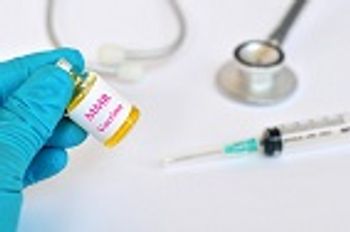
For a small group of individuals with immunodeficiencies, the MMR vaccine can be deadly.
New research out of the University of Pennsylvania on a DNA-based Zika virus vaccine is showing promising results.
Lauri A. Hicks, DO, captain, US Public Health Service, director, Office of Antibiotic Stewardship, medical director, Get Smart: Know When Antibiotics Work, Division of Healthcare Quality Promotion, Centers for Disease Control and Prevention, compares antibiotic prescribing data in the United States to data in Europe.
In a new study, researchers from the United Kingdom have found that cystic fibrosis patients are more likely to pick up multi-drug resistant infections in hospitals than was previously believed.
Lauri A. Hicks, DO, captain, US Public Health Service, director, Office of Antibiotic Stewardship, medical director, Get Smart: Know When Antibiotics Work, Division of Healthcare Quality Promotion, Centers for Disease Control and Prevention, talks about the importance of educating patients on antibiotic use.
Lauri A. Hicks, DO, captain, US Public Health Service, director, Office of Antibiotic Stewardship, medical director, Get Smart: Know When Antibiotics Work, Division of Healthcare Quality Promotion, Centers for Disease Control and Prevention, discusses antibiotic prescribing data, with an emphasis on outpatient settings.

Scientists from the National Institute of Allergy and Infectious Diseases have discovered a broadly neutralizing antibody that is able to neutralize 98% of HIV strains.

York’s Lassonde School’s Micro and Nano-scale Transport (MNT) Lab researchers have discovered “DipTreat,” a water treatment device capable of detecting and removing E. coli from drinking water.
A recent analysis by the Centers for Disease Control and Prevention found that strides have been made in the fight against measles; however, the work still falls short of goals set by the World Health Assembly (WHA).

The National Institutes of Health (NIH) has led an international team of experts from multiple disciplines in putting together a series of articles on harnessing the power of "Big Data" to help with infectious disease surveillance.
European researchers have found that bacterial DNA molecules called plasmids are driving the evolution of antibiotic resistance in ways previously unknown.

Marcos Pires, PhD, assistant professor at Lehigh University, discusses the threat of antibiotic resistance.

Creutzfeldt-Jakob disease, a rare & fatal degenerative brain disorder, has been confirmed in a patient at Maine Medical Center.

A new potential case of the Ebola virus has been reported in Canada.

Satellite images of nighttime lights can improve vaccination coverage in shifting populations.

Vikas Gupta, PharmD, BCPS, director of Clinical Strategy at Becton Dickinson, explains how his team identified national projections of drug-resistant pathogens.
The scope of multidrug-resistant tuberculosis in West Africa, until recently, has not been well-understood, but a new study on eight countries in the region shows that the superbug is more common than previous estimates suggested.

A new study has found no correlation between receiving the Tdap vaccine during pregnancy and birth defects.